
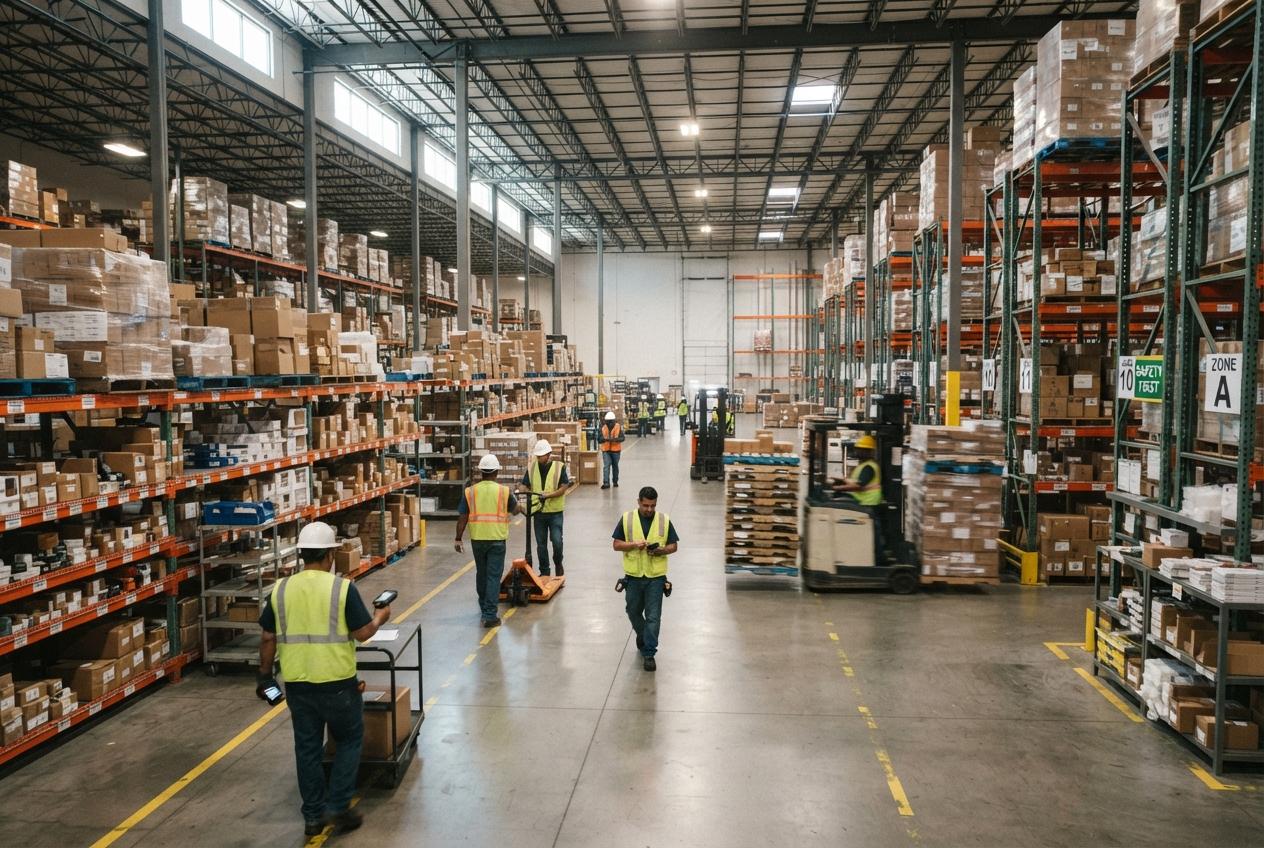
An organised warehouse equipped with effective tracking can dramatically improve supply chain efficiency, reduce costs, and enhance customer satisfaction , proving that the path to smarter supply chains begins on the warehouse floor.
The most effective supply chains often begin in the least glamorous place: the warehouse floor. That is where delays, miscounts and misplaced equipment first emerge, and where small inefficiencies can ripple through production, fulfilment and delivery. The Association for Supply Chain Management describes warehousing as a critical link between production and distribution, while industry guides stress that it does far more than hold stock; it helps regulate flow, support order processing and keep goods moving reliably.
What makes warehouses so important is not simply their size, but their role in turning physical inventory into something usable. When stock is stored badly, picked slowly or left unaccounted for, the consequences spread quickly: dispatches slip, customer orders are delayed and managers lose confidence in the numbers on screen. As several warehousing industry publications note, the building itself is where time and place utility are created, giving businesses the ability to bridge the gap between supply and demand.
That is why storage design matters so much. Fast-moving items need to be placed where teams can reach them quickly, while the footprint itself should be organised to make the best use of vertical and horizontal space. Matching the right container or racking system to the load can reduce wasted movement, improve safety and make inventory easier to locate. In practice, a more structured warehouse is easier to trust because people know where items belong and how they should move through the site.
Visibility matters just as much as order. Warehouses do not only lose time; they also lose assets. Returnable cages, tools, pallets and other mobile items often disappear between sites or customer locations, creating avoidable cost and unnecessary replacement spend. The technology sector has increasingly pushed lightweight tracking tools for this problem, arguing that location data can help businesses identify underused assets, recover missing equipment and improve utilisation across the network.
The deeper point is that storage and tracking reinforce one another. Good slotting and sensible racking reduce the time spent finding what should already be on site, while asset visibility helps reveal what has left, stalled or gone astray. Together they make the warehouse more legible, which in turn improves the accuracy of the wider supply chain data that planning systems depend upon. That is especially important in a sector where warehousing is also expected to absorb uncertainty, stabilise inventory and support customer service.
For companies trying to improve performance, the answer is not necessarily a grand transformation programme. It is often a more practical exercise: fix one problem zone, organise it properly, then track the assets that most often go missing. Once one area becomes easier to manage, the next becomes easier too. In that sense, a smarter supply chain does not start with software alone. It starts with knowing exactly what is in the building, where it is, and how it moves.
Source Reference Map
Inspired by headline at: [1]
Sources by paragraph: - Paragraph 1: [2], [4] - Paragraph 2: [3], [6] - Paragraph 3: [1], [5] - Paragraph 4: [1], [7] - Paragraph 5: [2], [4], [5] - Paragraph 6: [1], [3], [7]
