
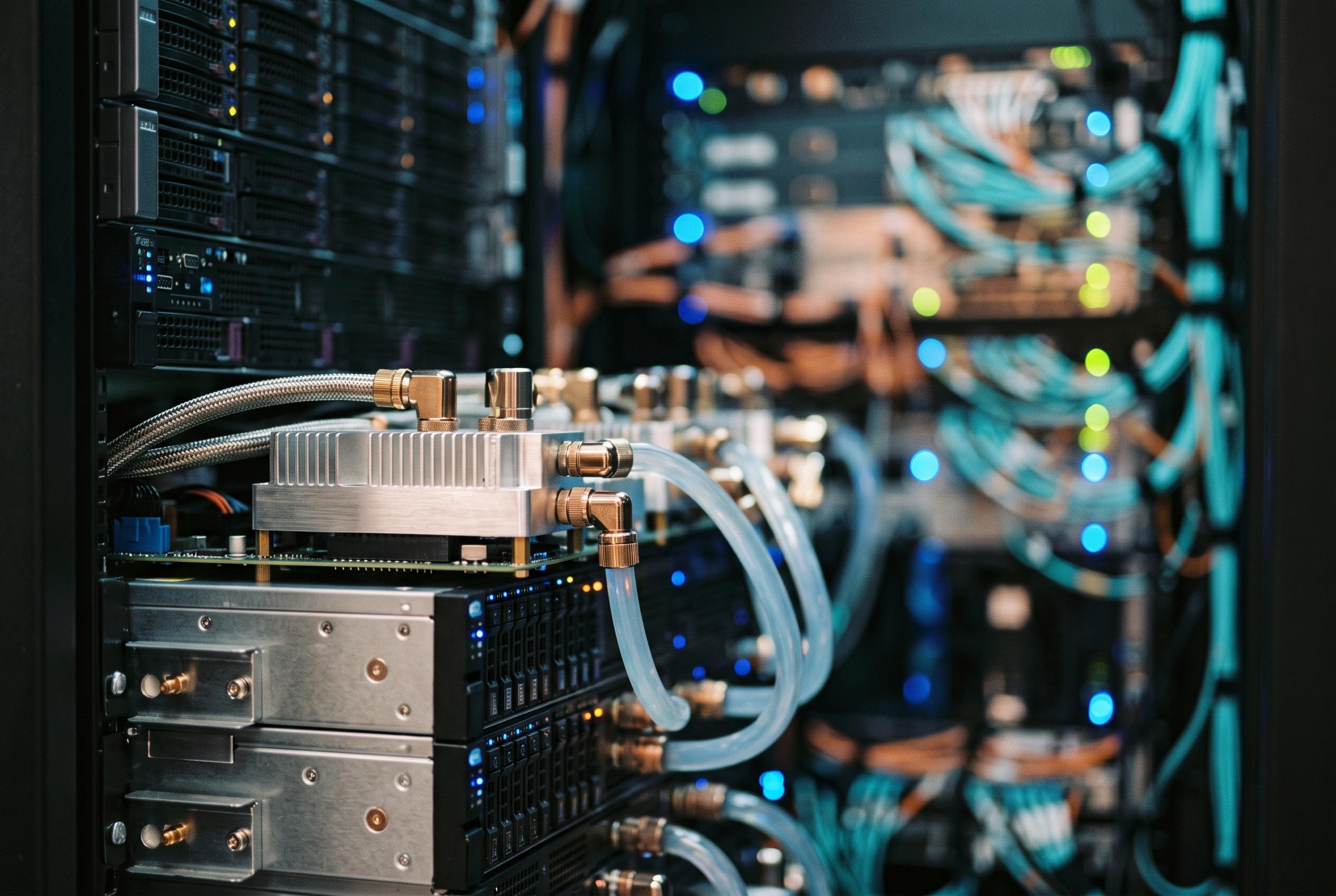
Investors and tech watchers are looking toward 2027 as Samsung Electronics and SK hynix stand to benefit from rising memory prices, tighter supply, and surging AI workloads. The key shift is that high-bandwidth memory, or HBM, could join conventional DRAM and NAND in a broad-based growth cycle.
Essential Takeaways
- - Memory prices are climbing: Fourth-quarter conventional DRAM prices could rise 10% to 15%, while NAND may gain 15% to 20%.
- - HBM could be next: Long-term contracts have delayed the impact of higher memory prices, but new agreements may reset pricing.
- - AI demand remains powerful: More advanced models and cheaper AI services could drive a sharp increase in total computing activity.
- - Supply won't catch up quickly: New semiconductor facilities can take more than three years to build, limiting near-term capacity.
- - Samsung and SK hynix remain favored: KB Securities estimates relatively low 2027 price-to-earnings ratios for both companies.
AI Is Turning Memory Into the Next Big Bottleneck
The strongest signal is simple: AI systems are using more memory even as the cost of each individual query falls. According to the Korea Economic Daily and related industry reporting, more capable frontier models are expanding the ceiling for performance, while lower-cost systems are bringing AI to a much wider audience.
That combination matters. A premium AI model may consume vast computing resources, but an efficient model can attract far more users and encourage more frequent use. The result could be a larger overall appetite for memory, servers, and storage, even when prices per token decline.
For chipmakers, this is a welcome but demanding setup. The industry isn't relying on one narrow AI application anymore. It has both high-end model development and mass-market inference pushing demand from different directions.
Conventional DRAM and NAND Are Already Moving Higher
TrendForce forecasts that fourth-quarter conventional DRAM prices could increase by 10% to 15% from the previous quarter. NAND prices may rise even more, with an expected gain of 15% to 20%, according to industry coverage cited by Korean financial publications.
Server DRAM and enterprise solid-state drives are central to that outlook. AI inference workloads are also expected to lift SSD bit demand by more than 80% year over year, creating pressure across both memory and storage supply chains.
That makes this more than a temporary upgrade cycle. When servers need additional memory and storage at the same time, manufacturers have less room to redirect capacity without creating shortages elsewhere. It’s a familiar semiconductor squeeze, but this time the engine is AI infrastructure rather than smartphones alone.
Why HBM Pricing Could Change the Story in 2027
HBM has become one of the most important components in advanced AI accelerators, but its pricing typically follows annual contracts. That structure means it doesn't immediately reflect every jump in conventional DRAM prices.
The situation could change with 2027 contracts. Reports from financial and technology outlets indicate that tighter supply and higher memory costs are likely to be reflected more directly in HBM pricing, potentially giving chipmakers a stronger boost after a period when contract terms muted the benefit.
Market research cited by Silicon Analysts also points to higher average selling prices for future HBM products, with newer HBM4 stacks expected to command a premium. The practical takeaway is that HBM growth may eventually come from two directions: more units shipped and more revenue per unit.
Supply Takes Years to Build, So Shortages Can Linger
Memory manufacturers can add output, but not overnight. New cleanrooms and fabrication plants often require more than three years to construct and qualify, while existing facilities are increasingly being converted to HBM production.
That conversion is strategically sensible because HBM is critical to AI accelerators, but it can restrict the supply of conventional DRAM and NAND. Reuters and Korean business outlets have reported similar concerns from Micron leadership, with memory conditions in 2027 and 2028 expected to be tighter than in 2026.
This is where the outlook gets especially interesting. Demand can rise quickly when a new AI service catches on, but semiconductor capacity responds slowly. The mismatch often creates sharp price moves, and buyers may find that even a small supply disruption feels unusually expensive.
Samsung and SK hynix Remain the Names to Watch
KB Securities identified Samsung Electronics and SK hynix as its preferred stocks in the sector. Its estimates put Samsung's 2027 forward price-to-earnings ratio at about 4.1 times and SK hynix's at roughly 3.8 times, suggesting the broker doesn't view current valuations as excessive against the expected earnings recovery.
Still, low valuation multiples aren't a guarantee. Memory companies remain cyclical, and forecasts can change quickly if AI investment slows, supply expands faster than expected, or customers delay server spending.
For now, though, the setup is unusually broad. Conventional memory is gaining momentum, HBM pricing may strengthen, and AI usage continues to spread. That's why analysts increasingly see 2027 as an acceleration phase rather than merely another year of recovery.
The memory boom may be getting wider, not just hotter.
Disclaimer: This article may have been created with AI assistance and reviewed by our editorial team. It is provided for general informational purposes only. Readers should verify information independently before relying on this content.
