
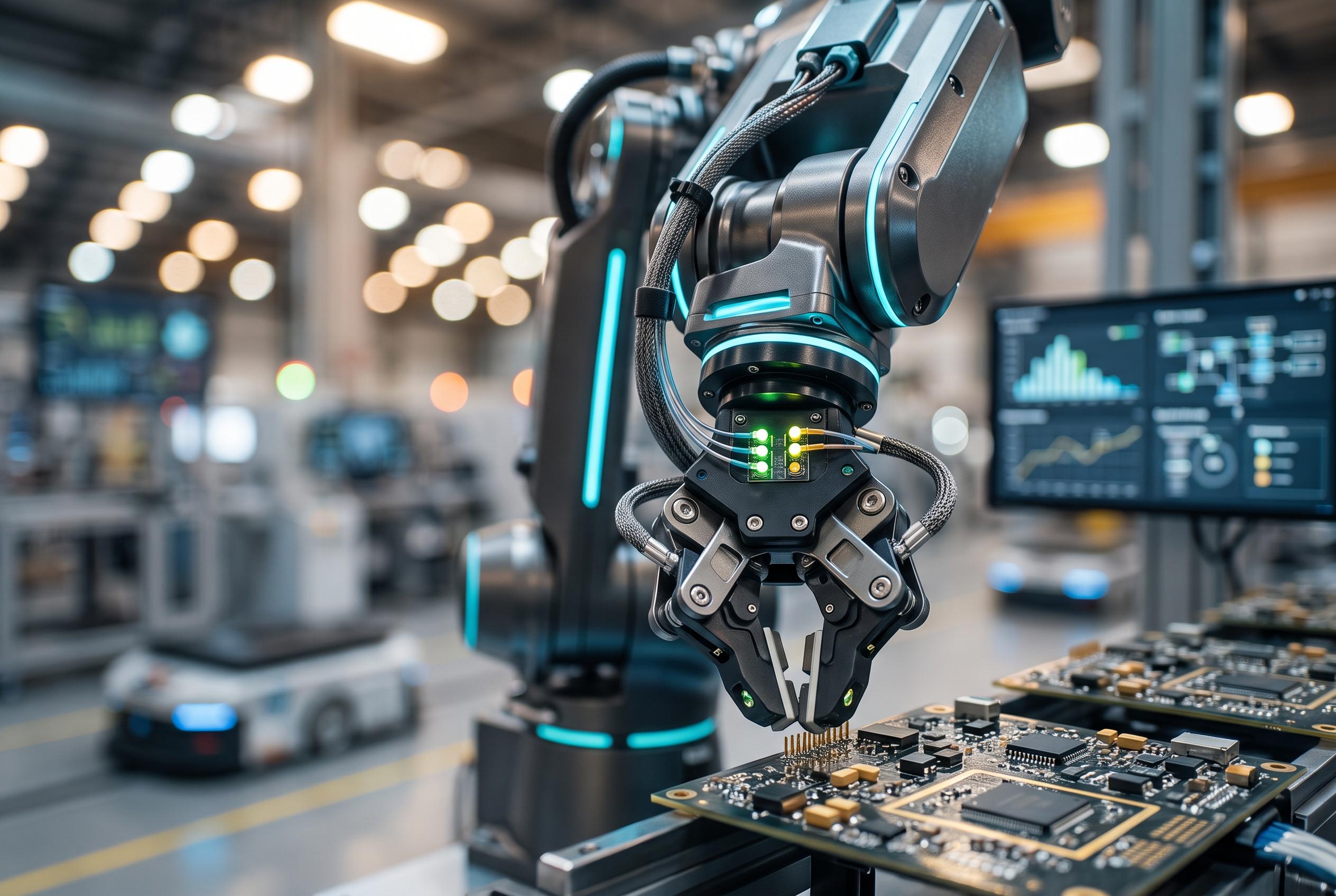
Vietnam’s push for industrial self-reliance is moving from broad ambition to practical priorities. At a recent Industry and Trade seminar, officials, researchers, universities, and businesses highlighted energy security, smart manufacturing, robotics, artificial intelligence, and logistics as key areas where stronger domestic capabilities could lift productivity and competitiveness.
Essential Takeaways
- - The priority is selective mastery: Vietnam doesn’t need to develop every technology, but it does need control over systems critical to economic security and industrial growth.
- - Energy remains central: Electrical equipment, storage systems, transformers, and related technologies are among the strategic focus areas.
- - Research needs a route to market: Prototypes still require testing, certification, standards, funding, and business involvement before commercial use.
- - Smart manufacturing is expanding: Robotics, automation, industrial data, digital twins, and artificial intelligence are becoming essential skills.
- - People are as important as equipment: Engineers must understand design, production, software, simulation, quality control, and real-world operations.
Vietnam’s technology strategy starts with the biggest industrial problems
The strongest message from the seminar was refreshingly practical: technological self-reliance isn’t about building everything alone. It’s about deciding which capabilities matter most, then developing enough expertise to design, operate, improve, and eventually export them.
That distinction matters. According to Vietnam Industry and Trade Magazine, the sector is facing three linked challenges: protecting energy security, strengthening domestic manufacturing, and modernizing commerce through smarter data and logistics systems. Those priorities point directly toward electrical equipment, energy storage, automation, artificial intelligence, traceability, and supply-chain technology.
For consumers, these subjects can sound distant and highly technical. But they influence familiar things, from the reliability of the power grid to the availability of locally made equipment and the speed at which goods move through the country.
Energy and advanced manufacturing lead the priority list
Vietnam’s mechanical engineering sector already offers a useful example of how capability grows. Research institutions have contributed to major hydropower projects, while domestic companies have gradually moved from assembling or purchasing equipment toward designing and producing more complex systems.
Industry officials have described this development as a ladder. Some technologies are already mature enough for domestic design and manufacturing. Others can be delivered through engineering, procurement, and construction contracts. A third group includes newer fields such as industrial robots, autonomous systems, high-voltage switchgear, digital twins, smart factories, and rail technology.
The challenge is choosing wisely. Researchers say a strategic technology should respond to a real national need, have a sizeable potential market, and match the country’s existing skills and infrastructure. In plain English, it should be ambitious, but not a science-fiction shopping list.
Why promising research often stalls before production
A clever prototype is only the beginning. Before a new machine or industrial system reaches customers, it must be refined, tested at a realistic scale, assessed against technical standards, certified, funded, manufactured, and supported in the field.
Vietnam Industry and Trade Magazine reported that the gap between research and production remains one of the sector’s central bottlenecks. Researchers may focus on what can be built in a laboratory, while companies are thinking about cost, maintenance, operating conditions, safety, and customer confidence. Both sides are necessary, but they don’t always meet early enough.
One practical example involves a medical-waste treatment system developed by a mechanical engineering institute with an environmental equipment company. The business helped define the design around real operating conditions, and after testing, around 20 systems entered use. That kind of early collaboration gives a prototype a much better chance of becoming a dependable product.
Businesses need a seat at the table from day one
Universities and research institutes can provide scientific expertise, but companies bring something equally valuable: working environments, customer knowledge, production constraints, data, testing facilities, and a clear view of what people will actually buy.
Professor Huynh Trung Hieu of Ho Chi Minh City University of Industry identified several recurring weaknesses, including research questions that don’t closely match factory needs, limited funding between prototype and commercial product, and inflexible rules around intellectual property and revenue sharing. These issues can turn a promising invention into an impressive demonstration that never leaves the lab.
The more effective model is collaborative from the start. Businesses can help define technical requirements, supply data, test prototypes, and judge whether a product is ready. Researchers, meanwhile, can help companies move beyond short-term fixes toward deeper design and engineering capabilities.
From transformers to smart factories, skills make the difference
The development of high-voltage transformers illustrates how technological self-reliance is accumulated over time. Dong Anh Electrical Equipment Corporation progressed from lower-voltage systems toward 500-kilovolt transformer technology by building expertise in design, simulation, materials, manufacturing, testing, and quality control.
That experience shows why self-reliance isn’t simply a matter of buying better machinery. The more valuable assets are the engineering knowledge, verified data, production discipline, and skilled teams behind the equipment. A company that masters the entire product lifecycle is in a far stronger position than one that only operates imported technology.
The same principle applies to smart manufacturing. Vietnam’s future workforce will need more than traditional engineering skills. Universities and employers are being urged to strengthen training in robotics, industrial internet systems, artificial intelligence, automation, simulation, data analysis, and digital platforms. The most useful graduates may be those who can move comfortably between a factory floor, a software dashboard, and a design meeting.
The next step is turning priorities into products
The seminar’s broader outlook is clear: Vietnam is trying to shift from technology adoption to technology ownership. That doesn’t mean rejecting international cooperation. It means building enough domestic capability to choose, integrate, verify, maintain, and improve important systems rather than remaining dependent on outside suppliers for every critical step.
Strategic technology products will likely emerge where national needs, market demand, and existing expertise overlap. Energy equipment, industrial automation, logistics platforms, traceability systems, and advanced manufacturing tools all fit that description.
It’s a demanding roadmap, but also a sensible one. Technological independence is built one tested product, trained engineer, and successful factory deployment at a time.
Explore the technologies that can turn Vietnam’s industrial priorities into lasting domestic capability.
Disclaimer: This article may have been created with AI assistance and reviewed by our editorial team. It is provided for general informational purposes only. Readers should verify information independently before relying on this content.
