
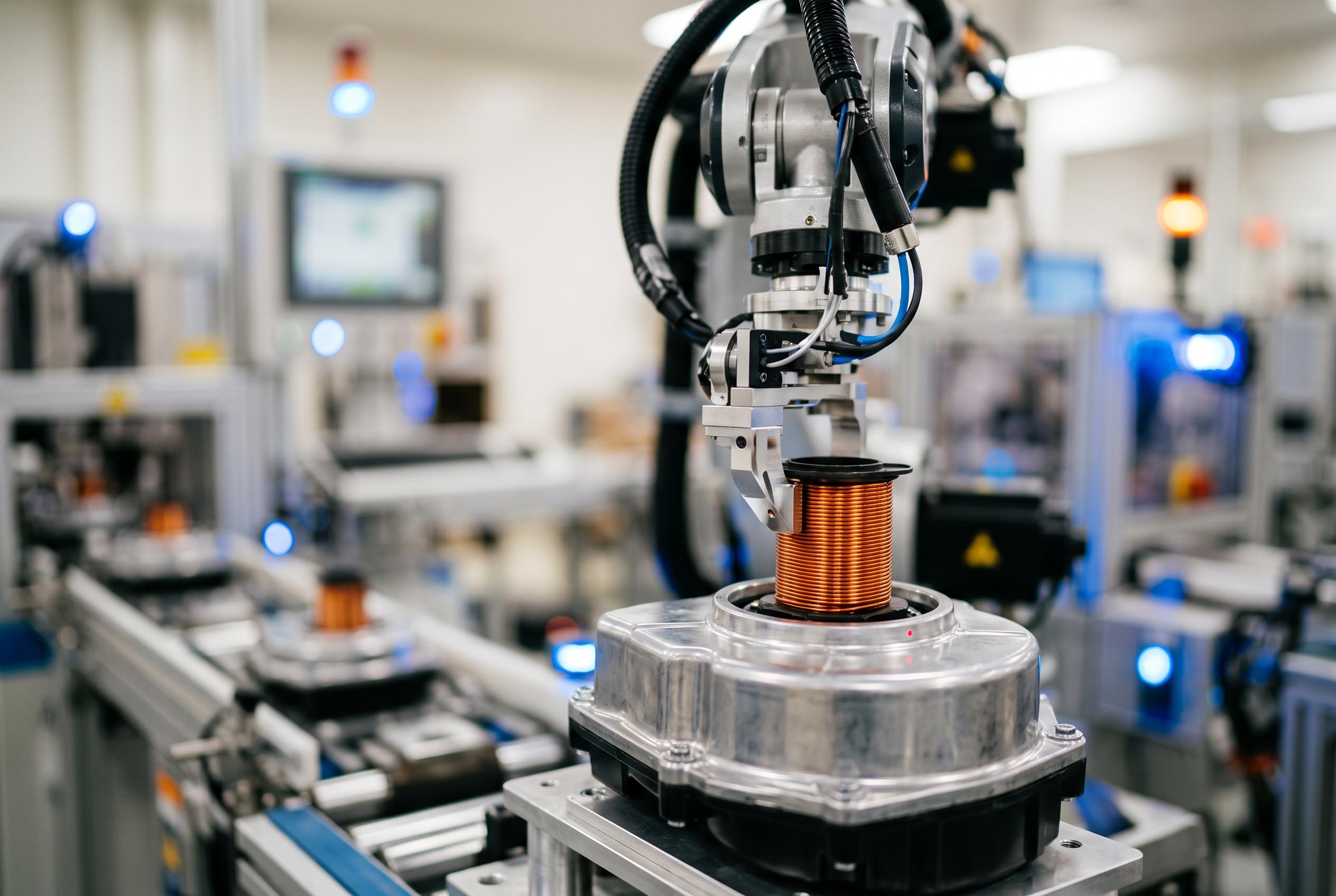
KNS subsidiary Eunsung FA is supplying two automated ABS brake module production lines to a Tier 1 supplier serving a Japanese global mobility company, highlighting how smart manufacturing is moving deeper into vehicle-component production.
Essential Takeaways
- - Two production lines: The equipment is designed to manufacture more than 1 million ABS brake modules annually.
- - Vietnam deployment: The lines will be installed at the supplier's local production facility in Vietnam.
- - End-to-end automation: Processes span component molding, coil assembly, inspection, and ABS housing production.
- - Broader industrial push: Demand is rising for unmanned and AI-enabled factories across mobility, batteries, semiconductors, and data centers.
A major automation order for vehicle safety components
The headline figure is hard to miss: two automated lines capable of producing more than 1 million ABS brake modules each year. For KNS and its subsidiary Eunsung FA, the agreement represents more than another equipment sale. It's a foothold in the increasingly competitive global automotive automation market.
ABS systems are safety-critical, so manufacturing equipment must deliver more than speed. It needs repeatability, precise inspection, and dependable handling across multiple stages. According to the company, Eunsung FA's equipment will support production for a Tier 1 supplier that provides braking, suspension, and damper components to a Japanese global mobility group.
The order is also notable because it will be used in Vietnam, where vehicle and component manufacturers continue to expand regional production capacity. The shift gives suppliers a practical reason to automate: higher output, tighter quality control, and less exposure to labor shortages.
What the new ABS production lines will handle
The planned system covers several key operations rather than focusing on a single machine. One section will form coils for pin-bobbin injection, while another will assemble and inspect the yoke and bobbin components. A separate housing-forming line will produce and check ABS housings.
That connected approach matters. When molding, assembly, and inspection work within one coordinated production system, manufacturers can reduce handoffs and identify defects earlier. It also creates a cleaner trail of production data, which is increasingly valuable when customers expect consistent quality across factories and countries.
Industry coverage from NewsPim and Newsis has highlighted KNS's broader push into automated equipment for advanced manufacturing, including mobility and electronic components. In that context, the ABS order looks like part of a wider strategy rather than a one-off project.
Why Vietnam is becoming an important automation base
Vietnam has become an increasingly attractive location for manufacturers serving Asian supply chains. It offers access to regional customers and production networks, but factories still face the familiar challenge of finding and retaining skilled workers. Automated lines can help companies increase capacity without expanding headcount at the same pace.
For a brake-component supplier, the location also makes operational sense. A local production base can shorten logistics routes and help the supplier respond more quickly to a major mobility customer's needs. The equipment's annual capacity suggests the facility is being planned for sustained, high-volume production rather than occasional or limited runs.
That scale is where automation earns its keep. A sleek robot may attract attention, but the real value lies in quietly repeating thousands of precise tasks without fatigue. For manufacturers, that consistency can be more persuasive than flashy technology.
From automated machinery to smart factories
The order arrives as manufacturers increasingly explore so-called dark factories and AI-enabled smart factories. These facilities use sensors, connected machinery, software, and robotics to reduce manual intervention while tracking production in real time.
KNS says its group companies are targeting several sectors, including secondary batteries, semiconductors, mobility, and data centers. Startup School's coverage of the company's overseas automation ambitions also points to a broader move toward supplying specialized equipment to global customers and their component partners.
Still, full automation isn't simply a matter of installing machines. Manufacturers need reliable inspection systems, maintenance plans, worker training, and software that can communicate across the line. The most successful projects tend to combine mechanical precision with practical factory management, which is less glamorous but far more important.
What this means for KNS's global growth
The contract gives Eunsung FA a useful reference in a demanding customer environment. Meeting the requirements of a Japanese-linked mobility supply chain can help demonstrate that its equipment is ready for international production standards, particularly in applications where quality failures carry serious consequences.
The company has said it wants to use its accumulated automation expertise to win additional contracts as the market expands. That ambition will be tested by competition from established equipment makers, as well as by customers' growing expectations for local service and fast technical support.
For now, the Vietnam project shows where the industry is heading: automated production isn't limited to electronics or battery plants anymore. It's moving into the detailed, safety-sensitive work behind everyday mobility, one precisely assembled brake module at a time.
A quieter factory could be the next big competitive advantage in global mobility manufacturing.
Disclaimer: This article may have been created with AI assistance and reviewed by our editorial team. It is provided for general informational purposes only. Readers should verify information independently before relying on this content.
