
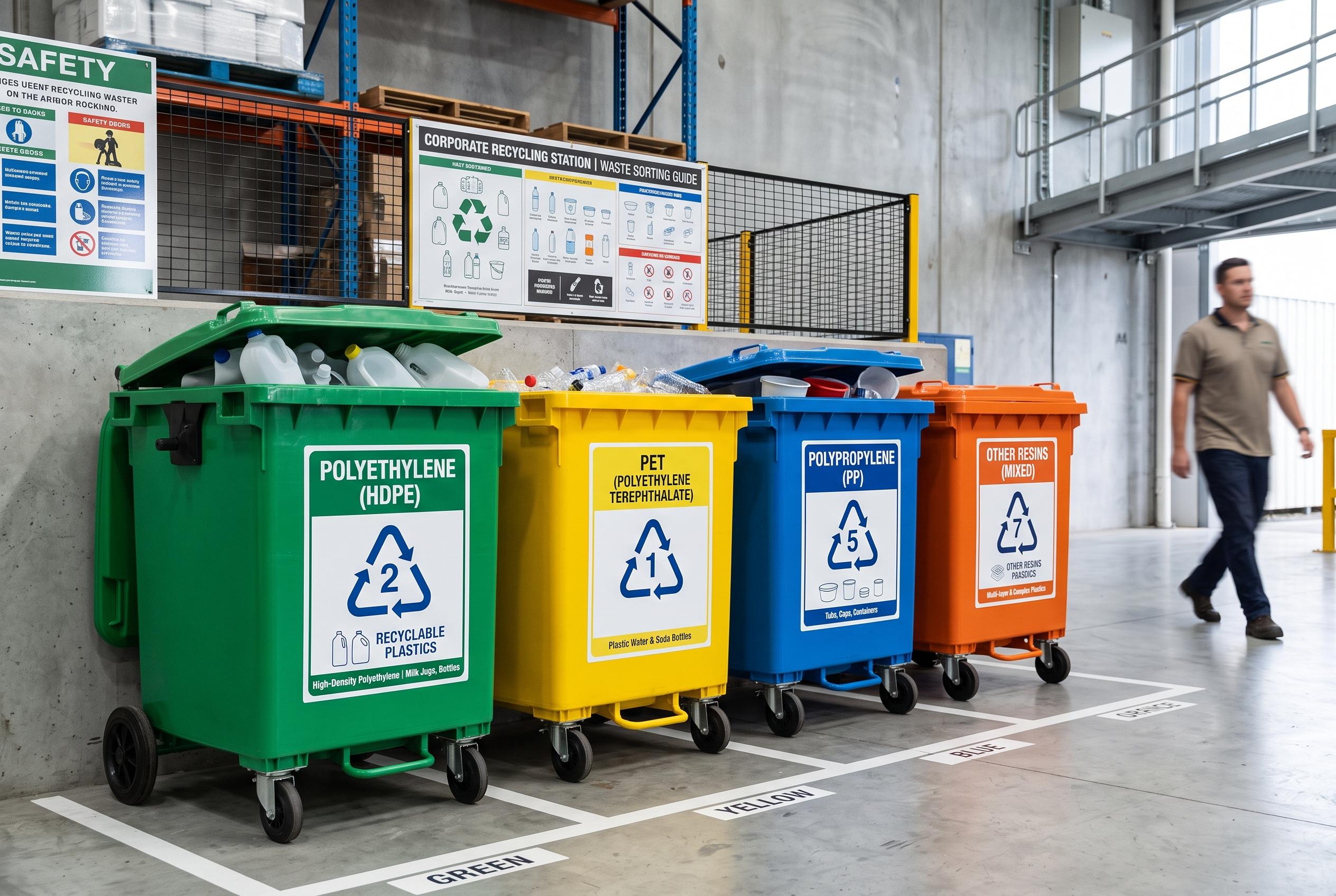
- Proper resin-specific labeling and source separation can significantly reduce contamination risks.
- Employee training and workplace organization are key to maintaining high-quality scrap streams.
- Regular audits and clear operational routines improve recycling efficiency and material value.
When it comes to manufacturers selling post-industrial plastic scrap, contamination can be the deciding factor between a stream that’s recoverable and one that’s immediately discounted, rejected, or downgraded. Seraphim Plastics points out that this issue isn’t just about obvious trash: things like mixed polymers, metal pieces, dirt, labels, adhesives, moisture, and other debris can all seriously cut down the commercial value of resin that, on the surface, seems recyclable. Understanding contamination can help manufacturers protect scrap value, reduce rejected loads, and build more efficient recycling programs.
That’s because recyclers aren’t just buying loose plastic in a vacuum, they’re purchasing feedstock that has to meet certain quality benchmarks. For example, if a processor needs a steady supply of HDPE regrind, then a load mixed with polypropylene, cardboard, or dirt can add sorting, labor, processing, disposal, equipment risk, and quality-control risk. Those costs affect the economics of the scrap.
Some contamination is obvious, but other contamination is much harder to detect. HDPE mixed with polypropylene may simply look like plastic to an employee, but those polymers have different properties and cannot automatically be processed as one material. That’s why collection containers should identify resin, not simply say “PLASTIC RECYCLING.” Use “HDPE ONLY” or “PP RUNNERS ONLY” instead. Specific instructions reduce mistakes.
Metal can create serious problems. It isn’t merely unwanted weight; it can damage size-reduction equipment and create operational hazards. Facilities should prevent bolts, fasteners, tools, machine components, and other metal objects from entering plastic scrap streams.
Moisture and outdoor storage can also hurt material quality. Plastic itself may tolerate water, but the recycling process doesn’t necessarily benefit from it. Outdoor storage can introduce dirt, leaves, gravel, rainwater, and other debris. Whenever possible, protect material from unnecessary exposure.
How to Prevent Plastic Scrap Contamination
Separate at the Source Put collection containers where scrap is generated.
Label Containers Clearly Specify resin and, where important, color.
Train Employees Explain why separation matters rather than simply telling employees to recycle.
Don’t Use Recycling Bins for Trash A half-empty scrap container can become an inviting garbage bin. Make actual trash containers equally accessible.
Cover Material Protect outdoor material where necessary.
Inspect Before Shipping A quick visual inspection can catch obvious contamination before a problem becomes a rejected load.
Contamination Prevention Can Improve the Bottom Line Consider a manufacturer producing 300,000 pounds of recyclable plastic scrap annually.
Even a small difference in material quality can become financially meaningful at that scale.
Better separation can potentially:
- - Improve marketability
- - Reduce sorting
- - Reduce rejected material
- - Improve consistency
- - Reduce disposal
- - Strengthen recycler relationships
This is why recycling quality should be treated as an operational KPI.
A strong plastic scrap program is really a sourcing and logistics program as much as it is a recycling program. The more consistently a facility can source clean, well-identified material from the point of generation, the easier it becomes to move that material through internal logistics without creating extra handling, delays, or quality losses. In many cases, the biggest gains come not from buying new equipment, but from tightening the habits around collection, storage, and inspection.
For manufacturers that handle multiple resin types, the risk often comes from routine operations rather than major errors. One misused tote, one poorly marked box, or one bin that gets treated as a general dump site can affect an entire load. Over time, those small mistakes can create a pattern of contamination that lowers confidence from recyclers and weakens the predictability of the scrap stream. Consistency matters because predictable scrap is easier to price, easier to move, and easier to process.
It also helps to think about employee behavior in practical terms. Workers are more likely to separate material correctly when the process is simple, visible, and reinforced. Clear bin labels, strategically placed containers, and short explanations about why certain plastics must stay separate all support better results. If a team understands that mixed polymers may create downstream problems, they are more likely to pause before tossing material into the wrong container. That small pause can save money later.
The same logic applies to housekeeping. A clean production area usually produces cleaner scrap. When loose labels, packaging, and trash are allowed to accumulate around collection points, contamination becomes more likely. In that sense, contamination prevention is not just about recycling; it is also about workplace discipline, operational efficiency, and better logistics flow. Facilities that build good habits around scrap handling often find that those habits spill over into broader manufacturing performance.
There is also a lifestyle lesson in this process, even for industrial operations: systems work better when they are designed around ease and repetition. People follow the path of least resistance, so if the easiest option is to toss everything into one container, that is what will happen. If the easiest option is to separate scrap by resin, keep trash nearby, and clearly mark each bin, compliance improves. Good recycling programs acknowledge human behavior instead of fighting it.
For companies evaluating their current program, the first step is often a basic material audit. What types of plastic are being generated? Where does each type originate? Which containers are being used? What kind of contamination shows up most often? Answers to those questions can reveal where the losses are happening. In some facilities, the issue is not the scrap itself but the absence of a clear process for moving material from production to storage to pickup.
It is also worth remembering that recyclers are managing their own logistics and quality risk. They need material that can be processed efficiently and consistently, and contamination interrupts that goal. A clean, well-sorted load can be easier to accept, easier to move, and more attractive in the marketplace. By contrast, a dirty or mixed load may trigger added inspection, additional sorting, or outright rejection. That is why sellers benefit when they think like buyers.
Need Help Evaluating a Plastic Scrap Stream?
Seraphim Plastics works with manufacturers to evaluate and recycle commercial quantities of post-industrial plastic.
If you’re unsure whether contamination is reducing the recyclability or potential value of your material, consult with Seraphim Plastics.
The easiest contamination to remove is the contamination that never enters the scrap stream.
Takeaways
- - Contamination can lower value even when plastic looks recyclable.
- - Resin-specific labeling is better than generic “plastic” labels.
- - Separation at the source is the most effective prevention method.
- - Clean, consistent scrap supports better sourcing, logistics, and recycler relationships.
- - A quick audit can reveal where contamination is entering the stream.
