
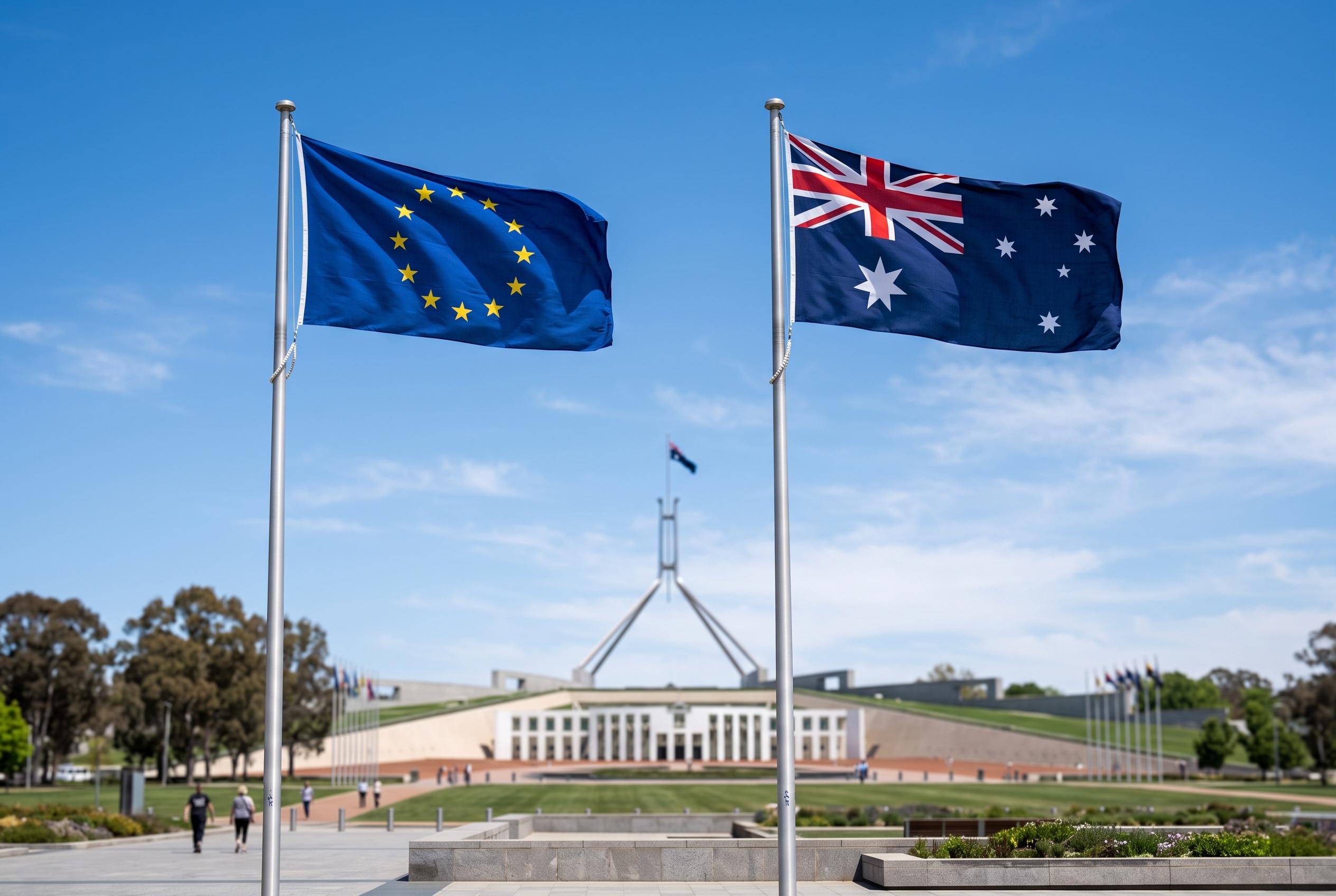
As the EU strengthens its carbon border adjustment mechanism, Australian manufacturers and exporters face emerging compliance and competitiveness challenges, prompting businesses to adapt measurement, contractual, and strategic approaches to stay ahead in a carbon-aware global trade environment.
Carbon border adjustment mechanisms are moving from theory to trade reality, and Australian manufacturers, miners and exporters need to treat them as a commercial issue as much as a climate-policy one. In simple terms, a CBAM places a cost on imported goods according to the emissions embedded in their production, with the goal of reducing "carbon leakage" when dirty production shifts offshore rather than being cut overall. The European Union's version entered into force on January 1, 2026, and the Council of the European Union moved in June to tighten the framework further, while the European Parliament later backed an expansion into a broader set of downstream products.
For now, the EU regime covers cement, iron and steel, aluminum, fertilizers, electricity and hydrogen, and it requires importers to buy certificates linked to the EU Emissions Trading System price. According to guidance from the European Commission and technical material from the International Institute for Sustainable Development, importers can deduct carbon prices already paid in the country of origin, but only if they can substantiate those payments and emissions with the right documentation. The compliance burden is already being phased in, with only a small share of the full charge due at first and the system scheduled to reach full strength later in the decade.
The commercial effect is broader than a single tax line. The Council’s June simplification deal widened a de minimis exemption for small import volumes, signaling that Brussels wants to reduce administrative friction for smaller firms without weakening the policy. At the same time, the European Parliament’s July position added a much longer list of downstream products and tougher anti-circumvention rules, underscoring that the mechanism is still evolving and may reach deeper into supply chains than many businesses expected.
Australia is now considering its own answer. A carbon leakage review released on February 13, 2026, recommended a phased domestic border adjustment, beginning with cement and clinker and later extending to products including lime, hydrogen, ammonia, steel, iron and glass. The review sits alongside the Albanese government’s Safeguard Mechanism reforms, which are already tightening emissions baselines for large industrial facilities through 2030. Officials have indicated that any domestic response would be considered during the 2026-27 Safeguard Mechanism review, making near-term implementation unlikely.
Industry is pushing the debate from another direction. Jindal Steel International, shortlisted in May as a preferred bidder for the Whyalla steelworks, has said it would be prepared to invest in low-carbon steel production there, but that the economics of green steel in Australia would require a tariff on high-carbon imported steel. That argument treats border carbon policy not simply as environmental housekeeping, but as a condition for locking in private capital for decarbonized manufacturing.
For exporters, the immediate issue is data. European buyers will increasingly demand verified, product-level emissions figures from Australian suppliers, and businesses that cannot provide them risk falling back on default values that are less favorable and can carry a penalty markup. The Commission’s methodology is installation- and product-specific, not the same as corporate climate accounting under frameworks such as the GHG Protocol, so Australian producers will need measurement, reporting and verification systems that can withstand EU scrutiny. The same applies to industries selling iron, steel, aluminum, fertilizers and hydrogen into Europe.
Contract terms will matter just as much as emissions engineering. Existing supply and offtake agreements may not clearly allocate responsibility for carbon-border costs, leaving buyers or sellers exposed if CBAM liabilities are passed through unexpectedly. New contracts increasingly need explicit carbon-cost clauses, change-in-law language and pricing review triggers. For businesses weighing new plants or long-term procurement in cement, steel, aluminum, lime and hydrogen, the direction of travel is clear: carbon is becoming a border cost, and investments should be modeled on the assumption that more trading partners will adopt similar rules within the next few years. WTO rules, meanwhile, remain an open question, with a Russian challenge already moving through the dispute process and broader concerns still centered on non-discrimination and the treatment of foreign climate policies.
That means the practical response should start well before any tariff bill arrives. Companies should map their exposure by product, market and customer, then identify where embedded emissions are likely to be most visible to regulators and buyers. In many cases, the biggest risk is not just the direct cost of a certificate or tariff equivalent, but the knock-on effect on procurement decisions, tender eligibility, financing terms and customer trust. Sectors tied closely to heavy industry, construction and infrastructure are likely to feel this first, but the ripple effects can spread into transport, packaging, electronics components and other supply chains where metals and energy-intensive inputs are embedded. For businesses in logistics, this also means tracking origin, routing and documentation more carefully, because even small administrative gaps can delay customs clearance or complicate proof of emissions data.
It is also a moment for Australian firms to treat carbon data as a commercial asset. Better emissions measurement can support negotiations with European buyers, strengthen access to premium markets and reduce the risk of being priced off contracts by default values. Companies that can prove lower emissions intensity may be able to preserve margins even as border carbon policy expands. In that sense, the conversation is no longer only about compliance; it is also about product positioning, sourcing strategy and the ability to compete in a market where climate performance is increasingly part of the price signal.
For policymakers, the challenge is to align trade, climate and industrial policy without creating unnecessary complexity. A poorly designed domestic response could raise costs without protecting investment, while no response at all could leave Australian exporters exposed as trading partners move ahead. The balance will likely involve phased implementation, targeted support for measurement and verification, and careful attention to how border adjustments interact with existing industrial decarbonization programs. In the meantime, the safest assumption for business is that carbon-border rules are not an isolated experiment. They are becoming part of the operating environment for global trade, and companies that adapt early will be better placed to manage risk, secure customers and finance the transition.
Takeaways
- - CBAMs are becoming a real trade issue, not just a climate-policy idea.
- - Australian exporters should prioritize product-level emissions data and documentation.
- - Contract language should address carbon costs, change-in-law risk and pricing.
- - Border carbon policy may influence sourcing, logistics and investment decisions across heavy industry.
- - The most prepared firms will treat carbon as a normal commercial variable, like freight or energy cost.
Sources by paragraph:
