
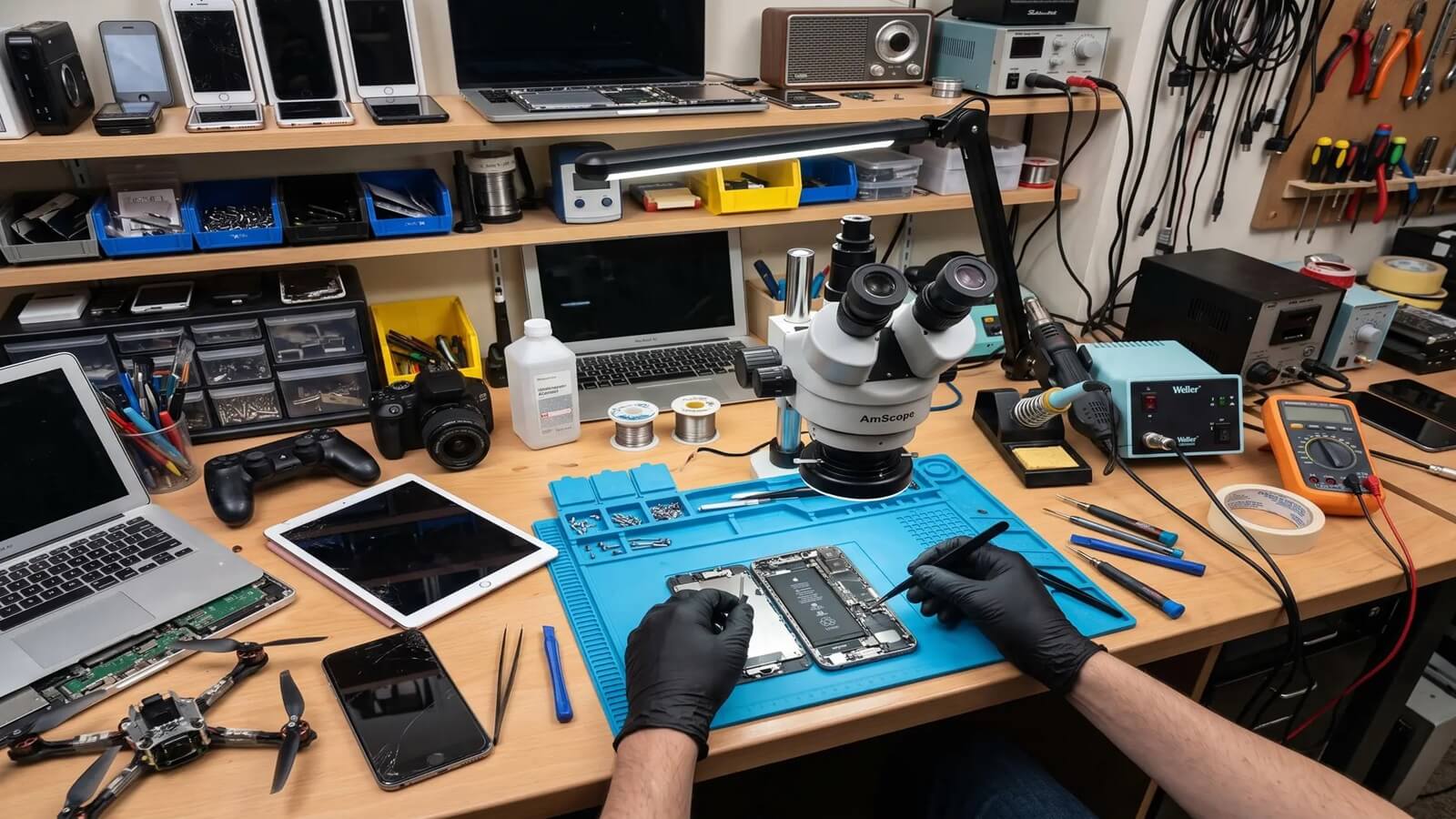
Consumers in Cyprus and the EU are beginning to experience the practical impact of the bloc’s new right-to-repair regime, a policy shift aimed at making repair a more normal, accessible and economically sensible choice than replacement. The directive is designed to encourage longer product life cycles, reduce waste and reshape consumer habits around everyday electronics and household goods. Products covered include washing machines, vacuum cleaners, smartphones and tablets, placing a clear focus on items central to modern lifestyle and mobile use. For households, that means repair is no longer treated as a secondary option. For the wider market, it signals a meaningful change in sourcing, logistics and aftersales support across the EU.
At the core of the new framework is a simple but significant principle: if a product is technically repairable, manufacturers must repair it when consumers request it. That obligation applies under conditions intended to make the process practical rather than burdensome. Repairs must be completed within a reasonable time and at a reasonable cost, unless the repair is offered free of charge. In consumer terms, the policy aims to remove some of the friction that often pushes people toward replacement instead of repair. In commercial terms, it sets a clearer standard for how electronics and other common goods should be supported after sale.
The European Parliament said the rules go further by strengthening warranty-related protections. Products repaired during the warranty period will receive an additional year of legal guarantee, extending the value of repair for consumers who might otherwise hesitate to invest in fixing a device or appliance. That extra year matters because it links repair directly to consumer confidence. If a smartphone, tablet, or other covered product can be repaired and then continue under warranty protection, the choice to repair becomes easier to justify. The directive also requires companies to provide clearer information on repair options and access to spare parts at reasonable prices, which is an important part of the broader sourcing and service ecosystem behind modern electronics.
This transparency element is especially relevant for consumers who have long faced uncertainty about what can be fixed, how long it will take and whether the necessary parts are available. Under the new approach, repair should be easier to understand and more visible at the point of decision. That includes better information on availability, as well as a more open path to spare parts. In practice, this may help narrow the gap between what a consumer wants to keep and what a manufacturer is willing to support. It also places a stronger emphasis on product design and service planning, especially in electronics categories where replacement has often been the default outcome.
The Council of the European Union gave final approval to the directive in May 2024, completing the legislative process after earlier agreement in Parliament. That final approval is important because it turns the policy from a political goal into an operational framework that can be applied across member states. The directive’s wider purpose is not limited to household convenience. It is also intended to reduce waste and resource use while supporting a more circular economy. In other words, the measure reflects a shift in how the EU wants products to move through the market: not straight from purchase to disposal, but through a longer chain of use, repair, and reuse.
The European Commission estimates that the rules could generate about €4.8 billion ($5.6 billion) in growth and investment across the EU. That estimate points to the commercial side of repair policy, which extends beyond consumers and manufacturers to include independent repair services, parts suppliers, and the broader logistics networks that move components and refurbished items through the market. As repair becomes more central, businesses that specialize in servicing electronics and appliances may see stronger demand, while firms that manage sourcing and distribution of spare parts may find new opportunities in a more repair-oriented economy. The policy therefore touches not only consumer behavior but also the structure of supply chains and service industries.
The directive also looks ahead to digital support for repair. A wider online European repair platform is expected to go live in 2027, with country-specific sections designed to help consumers find repair services and refurbished-goods outlets more easily. This is a practical step because access to repair often depends on information, not just legal rights. A consumer may be willing to repair a mobile device, tablet or home appliance, but still need a reliable way to find a suitable service provider or a source for refurbished alternatives. By creating a centralized platform with national sections, the EU is trying to make repair more visible and easier to navigate across different markets.
That platform is likely to matter most for consumers who want convenience without losing the benefits of repair. In daily life, people often make quick decisions about whether to replace or fix a product based on time, price, and uncertainty. A clearer digital route to repair services could help reduce those barriers. It may also support more informed comparisons between repair and replacement, especially where consumers are already considering refurbished goods. In that sense, the platform is not just an information tool; it is part of a broader lifestyle shift toward keeping devices and appliances in use for longer.
For suppliers and manufacturers, the new framework is expected to increase pressure to design products that last longer, are easier to service and come with more transparent after-sales support. That pressure is likely to be felt across the electronics sector in particular, where product cycles are short and consumer expectations are high. If repair is more accessible and more attractive, then product design will matter more. Devices that are simple to service, supported by available spare parts and backed by clear repair information will fit more naturally into the new EU environment. This is not a matter of changing consumer preferences alone; it is also a question of how firms organize sourcing, manufacturing and logistics to support longer product use.
The directive’s implications extend beyond the technical language of regulation. It reflects a broader policy direction in which durability, repairability, and reuse become part of the market value of a product. For consumers in Cyprus and throughout the EU, that can translate into a more practical ownership experience, especially for everyday electronics and household items that are central to work, communication, and lifestyle. A smartphone or tablet is not just a device; it is often part of daily mobile connectivity. A vacuum cleaner or washing machine is not simply a home appliance; it is part of the routine of domestic life. If these items can be repaired more easily, the economic and environmental benefits can accumulate over time.
The right-to-repair regime also has a signaling effect. By making repair rights clearer and more enforceable, the EU is indicating that disposal should no longer be the automatic first choice when something breaks. That has consequences for market behavior, including consumer expectations about pricing, service availability, and parts access. It may also encourage businesses to think more carefully about how products are supported throughout their lifespan. In a market increasingly shaped by sustainability concerns, repair becomes not only a legal issue but also a competitive one.
At the same time, the framework preserves a practical balance. It does not suggest that every product can always be fixed instantly or at no cost. Instead, it sets expectations around reasonable timeframes, reasonable pricing, and clearer information. That approach is important because it gives consumers rights while still recognizing technical limits. The emphasis on technically repairable goods is especially relevant in electronics, where some failures may be fixable and others may not be. The policy therefore works by improving access where repair is feasible, rather than promising a universal solution for every broken item.
As the rules take hold, the market may increasingly reward companies that treat repair as part of their long-term relationship with customers. Better sourcing of spare parts, smarter logistics for service networks, and clearer communication around warranty and repair options can all become competitive advantages. Consumers, meanwhile, may find that keeping a product in service is less complicated than before. That shift could gradually change attitudes toward ownership, especially for mobile devices and other electronics that are frequently upgraded even when they are still repairable.
In practical terms, the directive is a reminder that policy can reshape everyday behavior when it reaches the point where people make decisions about their devices and appliances. If repair becomes easier to understand, easier to access, and easier to justify financially, then more consumers may choose to fix rather than discard. Over time, that could support a more circular economy while also giving repair businesses a stronger place in the market. The EU’s message is clear: extending product life is no longer just an environmental ideal. It is becoming part of the structure of consumer rights, commercial planning, and modern product support.
For consumers, the main takeaway is simple: check repair options before replacing a broken product, especially if it falls within the categories covered by the new rules. For businesses, the message is just as clear: the future of electronics and household goods will increasingly depend on how well companies support products after sale, from sourcing spare parts to organizing logistics and repair services.
Takeaways
- The EU’s right-to-repair rules apply to common goods such as washing machines, vacuum cleaners, smartphones and tablets.
- Manufacturers must repair technically repairable goods when consumers request it, within a reasonable time and at a reasonable cost unless free.
- Products repaired during the warranty period get an additional year of legal guarantee.
- The European Commission estimates the rules could generate about €4.8 billion ($5.6 billion) in growth and investment across the EU.
- A European repair platform is expected in 2027 to help consumers find repair services and refurbished-goods outlets.
Disclaimer: This article may have been created with AI assistance and reviewed by our editorial team. It is provided for general informational purposes only. Readers should verify information independently before relying on this content.
