
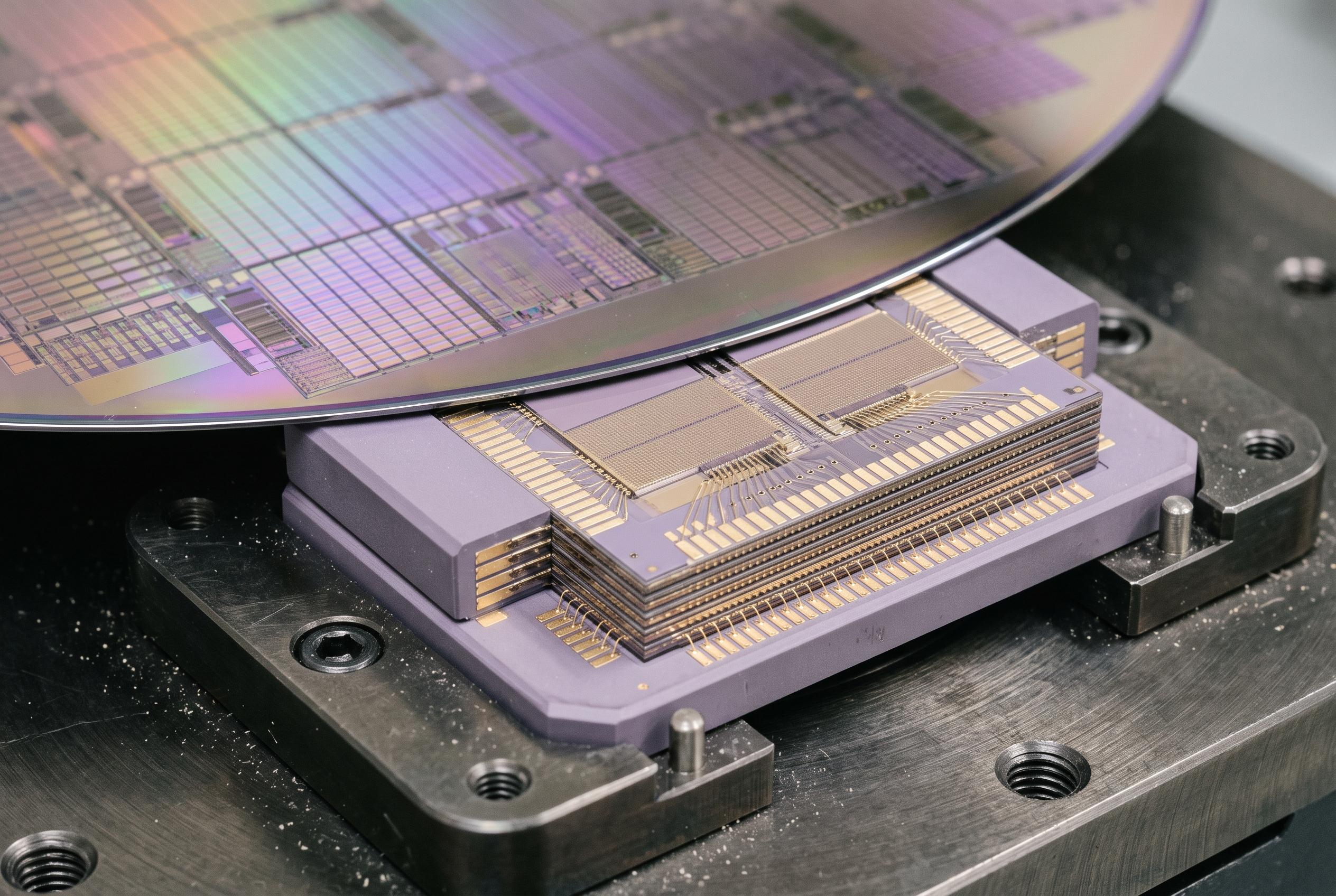
Samsung and SK hynix are turning SEDEX 2026 into a showcase for faster, denser AI memory, with HBM4E, vertically stacked designs, and high-bandwidth flash pointing to a future where memory sits closer to the processor.
AI memory is moving closer to the action
The headline at this year's semiconductor show is clear: memory can no longer sit quietly at the edge of an AI system. Samsung is presenting a broader architecture that links memory, logic chips, foundry manufacturing, and advanced packaging, according to Samsung Newsroom.
That matters because AI processors spend much of their time moving data rather than simply calculating. A shorter route can mean lower delay, better efficiency, and less wasted energy. In practical terms, the technology may help large AI systems feel less like a collection of separate parts and more like one tightly coordinated machine.
The shift is easy to picture. Instead of sending data back and forth across a crowded electronic board, future designs could place memory almost directly alongside, or even above, the processor.
HBM4E is the next performance push
Samsung has already begun shipping commercial HBM4 for AI computing, while its next HBM4E samples have gone to customers, according to Samsung Semiconductor. SK hynix is also displaying 12-layer HBM4E samples, highlighting how the market is pursuing both speed and greater capacity.
HBM, or high-bandwidth memory, stacks memory dies vertically and connects them with extremely wide interfaces. That arrangement gives AI accelerators a much wider data highway than conventional memory, which is why HBM has become one of the most important components in data-centre hardware.
Still, faster memory isn't a magic wand. It must be matched with compatible processors, advanced packaging, cooling, and reliable manufacturing. The impressive figures are only useful when the entire system can keep up.
Samsung's 3D memory vision changes the layout
Samsung's zHBM concept takes the next step by stacking memory directly above an AI accelerator rather than placing it beside the chip. The company says the approach can reduce the distance data travels, a small physical change with potentially large effects on latency and power use.
The idea is part of a wider industry trend described by Tom's Hardware, where memory and computing functions are becoming more closely integrated. Future HBM roadmaps could bring more logic and processing capability into the memory package itself, reducing the need to shuttle every task back to a separate processor.
That doesn't mean traditional chip layouts will disappear overnight. Manufacturing yields, heat, repairability, and cost all become harder when components are stacked. But the direction is unmistakable: AI hardware designers are running out of easy gains and are now rethinking the shape of the system itself.
High-bandwidth flash could widen the AI memory pool
Samsung is also showing zNAND-O, a three-dimensional NAND flash concept aimed at faster storage for on-device AI. Unlike HBM, flash is not intended to replace the fastest working memory. Its appeal is that it can offer much more capacity, potentially at a lower cost per bit.
That could prove useful as AI models become too large to keep entirely in a system's fastest memory. A quicker flash tier may help phones, edge devices, and compact servers load models and data with less waiting, particularly when local processing matters.
The best AI systems will likely use several memory layers rather than one universal solution. HBM can handle intense, immediate workloads, while advanced flash stores larger models and supporting data. It's a little like a well-organised kitchen: the ingredients used constantly stay within reach, while the bulk supplies sit nearby.
SK hynix is pushing capacity as well as speed
SK hynix's HBM4E display shows that the competition isn't limited to raw bandwidth. More stacked layers can increase capacity, helping accelerators work with larger data sets without repeatedly reaching for slower storage, according to the company's announcement.
The company has also outlined high-bandwidth flash, or HBF, as another possible route for AI infrastructure. That approach reflects a broader reality in the market: one type of memory won't solve every bottleneck, especially as AI models grow and energy budgets tighten.
Meanwhile, Samsung's work across memory, logic, and foundry services could give customers a more integrated route to building AI hardware. Tom's Hardware reported that the company is also pursuing broader relationships with chip designers, underlining how strategic memory supply has become.
What SEDEX 2026 reveals about AI hardware
SEDEX 2026 runs from October 14 to 16 at COEX in Seoul under the theme "The Era of Silicon Intelligence." With roughly 300 participating companies, the event offers a useful snapshot of where the semiconductor industry believes the next pressure points will be.
The most interesting story isn't simply that HBM4E is faster. It's that companies are displaying the connections around the memory, including packaging, processors, storage, and system design. That broader view suggests the next breakthrough may come from arrangement and integration rather than from a single dramatic specification.
For buyers and technology watchers, the practical takeaway is simple: pay attention to the whole platform. A dazzling memory component still needs a capable accelerator, efficient cooling, fast interconnects, and software that knows how to use it. The future of AI memory looks powerful, but it also looks increasingly architectural.
The next big AI memory gains may come from putting every piece in the right place.
Disclaimer: This article may have been created with AI assistance and reviewed by our editorial team. It is provided for general informational purposes only. Readers should verify information independently before relying on this content.
