
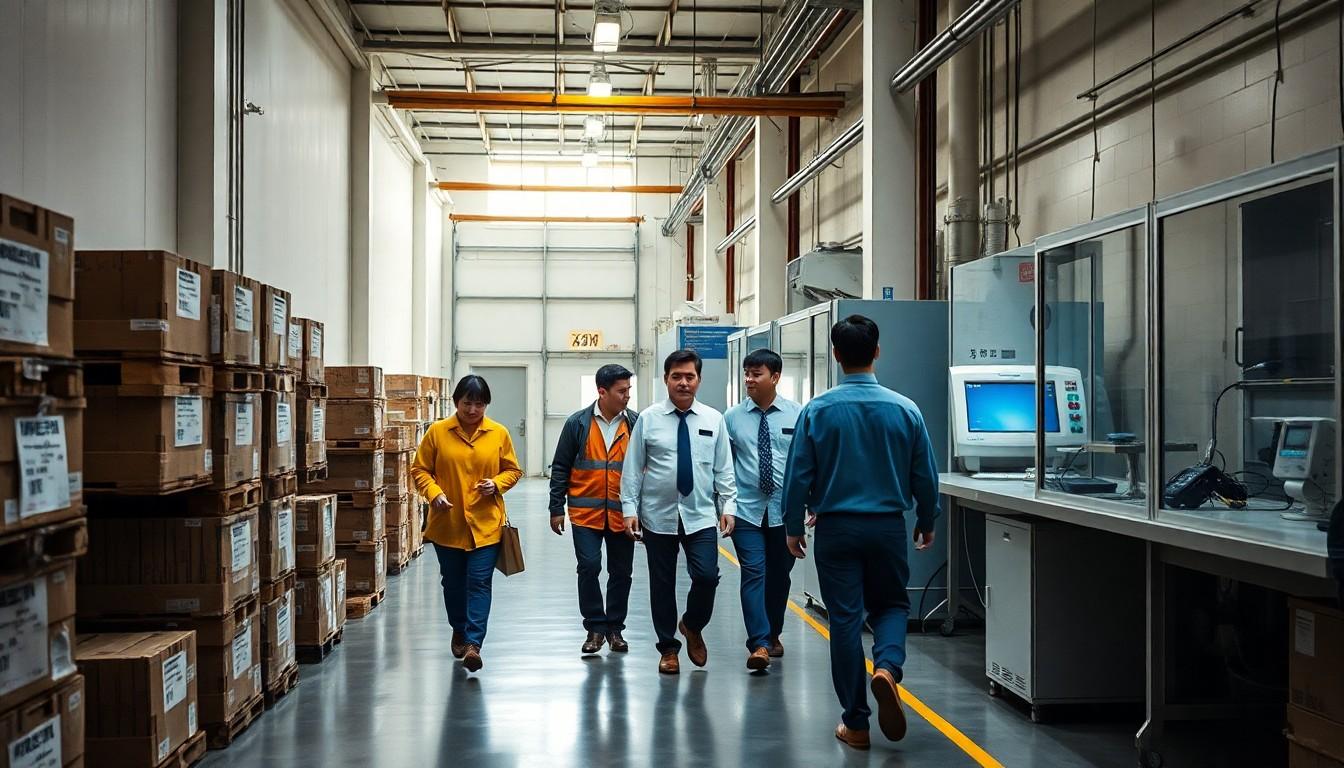
SK hynix is giving partner companies a faster route from promising idea to production, with upfront R&D funding, factory testing access, low-interest loans, and a larger supplier-payment fund. The semiconductor maker says the program will strengthen its supply chain, reduce development pressure, and help smaller partners build technology with more confidence.
Essential Takeaways
- - Upfront funding: Eligible partners could receive up to 50 percent of initial R&D costs.
- - Lower development risk: SK hynix says projects can receive a post-development settlement even without a purchase order.
- - Factory access: Suppliers will be able to use production infrastructure to test performance and reliability.
- - Broader financial support: Low-interest financing and consulting will extend to second- and third-tier suppliers.
- - Bigger payment fund: Support for supplier payments will double to 100 billion won, or about $73.6 million.
SK hynix wants suppliers moving faster
The strongest part of SK hynix's announcement is its willingness to fund technology before the commercial outcome is known. Under the new program, partner companies may receive up to half of their initial R&D costs upfront, giving them more room to develop without carrying the entire financial burden.
That matters in semiconductors, where testing cycles are long, equipment is expensive, and a technically sound project can still miss a purchasing decision. The Korea Times reported that SK hynix plans to recognise a partner's technological achievements and contribution in a later settlement, even when a project doesn't lead to a successful product or purchase. [2], [4]
A failed project won't necessarily mean wasted work
For smaller suppliers, the difference between a promising experiment and a finished product can come down to cash flow. Engineers may have the expertise, but not the spare capital to absorb months of design changes, testing, and certification.
SK hynix's proposed settlement approach is designed to acknowledge that work. It doesn't remove commercial risk, but it could make partners more willing to attempt ambitious projects rather than choosing only the safest ideas. That sort of confidence can be especially valuable in a sector where one breakthrough component may improve an entire production process. [3], [5]
Testing inside a real production environment
Funding is only one piece of the puzzle. SK hynix also plans to open relevant infrastructure, including production lines, so partners can verify how their products perform under realistic conditions.
That access could save suppliers from relying solely on laboratory results or small-scale demonstrations. A component that looks reliable on a test bench still has to cope with demanding factory conditions, tight tolerances, and continuous operation. As SK hynix describes its shared-growth approach, practical verification is meant to help partners build products that are ready for industrial use, not merely impressive prototypes. [2], [4]
Financing reaches deeper into the supply chain
Once a product clears testing, SK hynix plans to offer low-interest financing through its shared-growth fund. The company also intends to expand consulting support beyond direct partners to include second- and third-tier suppliers.
That wider reach is significant because modern chip production depends on a network that extends well beyond the most visible contractors. A weakness several layers down can still affect delivery schedules, quality, or resilience. Industry coverage has also highlighted SK hynix's push to secure advanced manufacturing capacity and equipment, making dependable supplier relationships increasingly important. [5], [7]
The supplier-payment fund is getting much larger
At the sales stage, SK hynix says it will double the fund supporting supplier payments from 50 billion won to 100 billion won, equivalent to roughly $73.6 million.
For suppliers, predictable payment can be just as useful as an R&D grant. It helps companies pay staff, purchase materials, and keep production steady while larger industry cycles rise and fall. The move also arrives as the memory-chip market faces intense demand and occasional supply strain, conditions that make financial stability throughout the chain more than a corporate nicety. [4], [6]
SK hynix's wider message is straightforward: a stronger semiconductor business needs more than headline investments at the top. It needs suppliers that can experiment, test, finance, and deliver with fewer obstacles. That may sound practical rather than flashy, but in chipmaking, practical support is often what keeps the whole system humming.
It's a small-business lifeline with big implications for the chip supply chain.
Source Reference Map
Story idea inspired by: [1]
Sources by paragraph: - Paragraph 1: [2], [4] - Paragraph 2: [3], [5] - Paragraph 3: [2], [4] - Paragraph 4: [5], [7] - Paragraph 5: [4], [6]
