
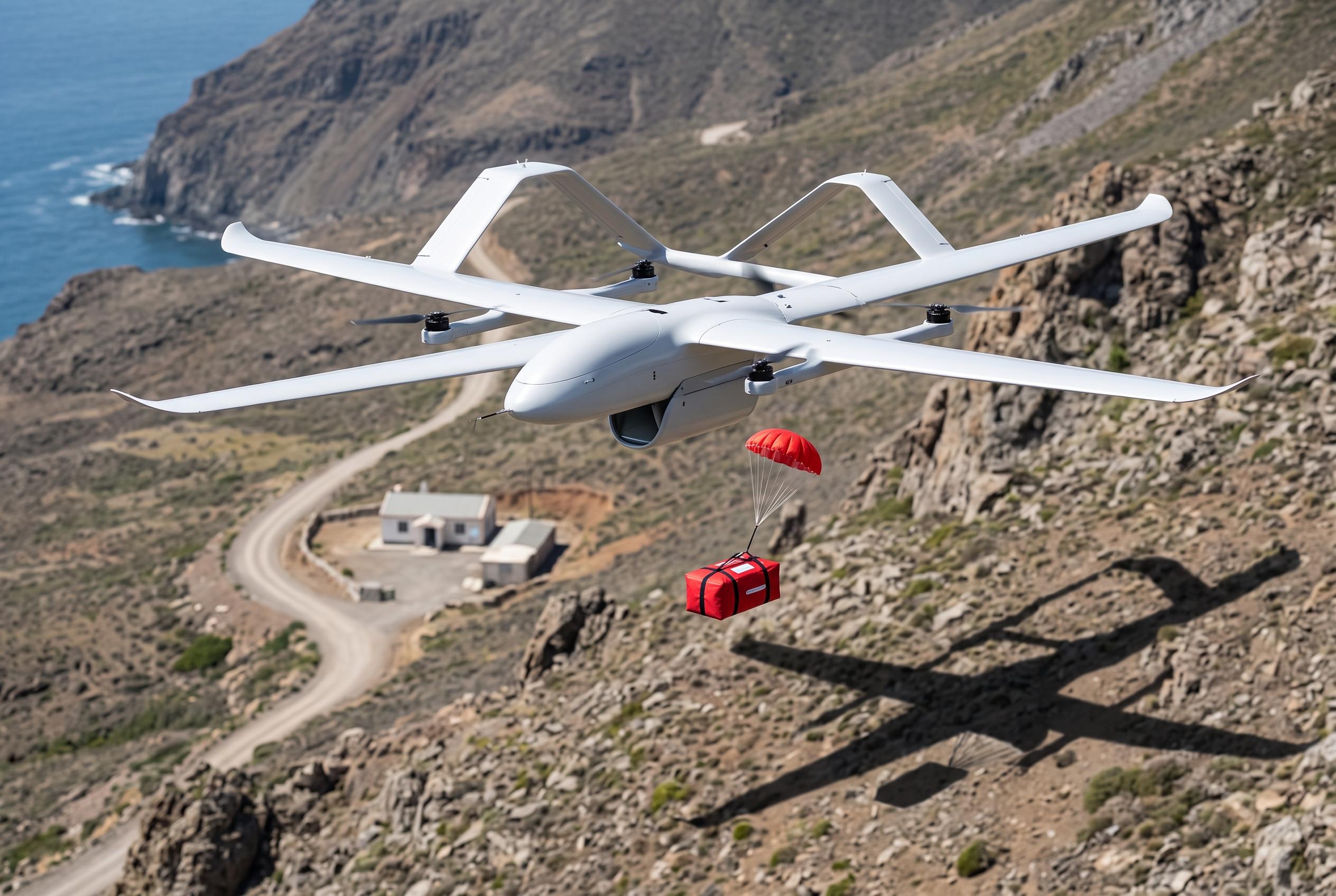
The Trump administration imposes up to 100 percent tariffs on imported drones and components, intensifying efforts to reduce dependence on Chinese suppliers and reshape the US drone industry amid growing security and economic concerns.
Trump Administration Escalates Drone Tariffs as US Seeks to Reduce Reliance on Chinese Suppliers
The Trump administration has imposed tariffs of as much as 100 percent on imported drones and key components, escalating a policy push designed to reduce US dependence on Chinese suppliers and encourage more domestic production.
According to the White House, the duties were announced in August and justified on national security grounds following a Commerce Department review of the drone sector. The move affects a market that spans public safety, infrastructure inspections, commercial operations and other specialized uses. It also arrives as federal regulators consider additional restrictions on foreign-made aircraft and technologies.
Together, the tariffs and proposed regulatory changes could reshape the US drone market. Importers may face higher costs, commercial users may need to reconsider their equipment sourcing strategies, and domestic manufacturers could receive stronger incentives to expand. At the same time, critics warn that American production may not yet be capable of replacing imported electronics, components and complete aircraft at the scale required by government agencies and businesses.
Tariff rates vary by drone type and origin
The steepest tariff applies to drones weighing more than 25kg, or 55 pounds, as well as models equipped with thermal imaging. Smaller drones face a 25 percent duty.
The administration has also established different rates for imports from several US allies. Drones from the EU, Japan, South Korea, Switzerland and Taiwan face levies of 15 percent, while drones produced in Britain are taxed at 10 percent, according to the administration’s fact sheet and related reporting.
The structure of the policy means that the effect will vary depending on a company’s sourcing arrangements, the technical capabilities of its equipment and the country where a product is manufactured. A lightweight aircraft without thermal imaging may face a lower tariff than a heavier or more specialized model. However, users that depend on thermal cameras for nighttime operations could face a more significant increase in procurement costs.
The tariff system could also affect components rather than only finished drones. Manufacturers and distributors that rely on international supply chains may need to reassess how they purchase motors, imaging systems, communications hardware, batteries and other electronics. Even when a drone is assembled in the United States, imported components could still contribute to higher costs.
For public agencies and commercial operators, those costs may influence decisions about fleet expansion, replacement schedules and maintenance. A department considering a new drone for search-and-rescue work, for example, could face a different financial calculation depending on the aircraft’s weight, imaging capabilities and country of origin.
China remains central to the global drone market
The policy lands in a market still heavily shaped by China. Industry estimates cited in coverage of the move say Shenzhen-based DJI produces more than 70 percent of the world’s commercial drones.
That market position has made Chinese equipment an important part of operations for law enforcement agencies, firefighters and commercial users. Drones are used for wildfire monitoring, search-and-rescue work and infrastructure inspections, among other purposes. Their value often depends on a combination of aircraft design, flight controls, cameras, thermal imaging and related software.
The dominance of Chinese suppliers means that replacing existing products may not be straightforward. Domestic companies may need to expand manufacturing capacity, develop new electronics supply chains and produce aircraft that can meet the specialized requirements of public safety and commercial customers. They may also need to compete on price while maintaining reliability and technical performance.
Critics argue that the US drone industry is not yet ready to replace Chinese supplies at scale. In their view, tariffs could create a gap between the administration’s objective and the market’s ability to respond. If imports become more expensive before domestic alternatives are widely available, users could be forced to pay more without gaining access to comparable equipment.
That concern is particularly significant for organizations with limited budgets. Local law enforcement agencies, fire departments and smaller commercial operators may not be able to absorb a sudden increase in equipment prices. They could delay purchases, continue using older aircraft or reduce the number of drones available for field operations.
The impact could extend beyond the initial purchase price. A change in supplier may require new training, replacement batteries, updated control systems and different maintenance arrangements. Operators may also need to adjust their workflow if a new platform does not offer the same camera technology, software features or flight characteristics as an existing model.
Public safety agencies warn of higher costs
Scott Mlakar, chief of the Lake County Drone Unit outside Cleveland, said thermal drones are used daily to find lost children and crime suspects at night. He called the policy protectionist rather than a genuine security measure, arguing that many communities will be priced out of tools they now rely on.
His concerns illustrate the tension at the center of the policy. Thermal imaging is one of the capabilities specifically targeted by the highest tariff, yet it can play an important role in nighttime operations. A drone equipped with that technology may provide public safety teams with information that is difficult to obtain through conventional methods.
If tariffs make those aircraft substantially more expensive, agencies may have to weigh the benefits of the equipment against budget limitations. Some may postpone purchases or select less capable models. Others could face pressure to replace existing fleets if future rules prevent certain aircraft from remaining available in the US market.
Commercial operators at a drone expo in Las Vegas voiced similar anxiety. Some warned that the rules could force costly fleet replacements and disrupt public safety and business operations.
For companies that use drones for inspections or monitoring, a replacement may involve more than buying a new aircraft. Employees may need to learn a different mobile control system, data platform or maintenance process. Existing equipment may also be integrated into established logistics and reporting workflows. A sudden shift in suppliers could therefore affect scheduling, training and operating costs.
These concerns are not limited to large enterprises. Small drone businesses may be especially exposed if they have built their services around equipment that becomes more expensive or difficult to source. A higher cost base could affect the prices they charge customers, the services they offer and their ability to compete with larger operators.
Tariffs are part of a broader regulatory squeeze
The tariffs arrive alongside a broader regulatory squeeze. The Federal Communications Commission has proposed reclassifying drones that use technologies such as thermal imaging, LiDAR and aerosol spraying as military grade.
Industry groups say the proposal could effectively bar many existing models from the US market. The FCC already moved in December to block new foreign-made drone models without a waiver, and the latest proposal would go further by reaching some previously authorized aircraft.
The combination of trade restrictions and communications regulations could create uncertainty for companies that manufacture, import or operate drones. A product might face a tariff when entering the country and then encounter additional regulatory hurdles related to its technical capabilities. Previously authorized aircraft could also be affected if the proposed rules reach older models.
More than 3,000 comments have been submitted, reflecting concerns that the combined policies could reshape the commercial drone market far beyond the administration’s stated goal of strengthening supply chains.
The debate therefore involves more than the question of whether the United States should produce more drones domestically. It also concerns how quickly users can transition, which technologies should remain available, and whether public agencies and businesses will have practical alternatives during that transition.
Supporters of the policy view reduced dependence on Chinese suppliers as a national security priority. From that perspective, tariffs and restrictions could encourage investment in US manufacturing and help establish a more resilient electronics and drone supply chain.
Critics, however, argue that a supply chain cannot be rebuilt immediately through trade barriers alone. Domestic companies may need time to expand production, obtain components and develop products capable of serving a wide range of users. Until that capacity exists, import restrictions could place the greatest burden on organizations that have few alternatives.
Trump family connections draw renewed scrutiny
The policy has also drawn renewed attention because of Trump family links to the sector.
Donald Trump Jr. and Eric Trump are shareholders and advisory board members of Dominari Holdings. The company has invested in Powerus, a Florida drone maker. Donald Trump Jr. also serves on the advisory board of Unusual Machines, a leading U.S. drone components manufacturer.
Those connections have fueled scrutiny of an industry policy that could benefit some domestic firms while squeezing import-dependent users. The issue has attracted attention because the tariffs and regulatory proposals may create stronger opportunities for US-based manufacturers and component suppliers.
The stated national security rationale offered by the administration remains central to the debate, while questions about who may benefit from the policy have emerged alongside questions about whether the measures will actually produce more resilient domestic production.
For the industry, the outcome will depend on how tariffs are implemented, how the FCC proceeds with its proposal and whether US manufacturers can expand quickly enough to meet demand. Users will also be watching the cost of replacement aircraft, the availability of specialized electronics and the reliability of new sourcing options.
The central challenge is balancing long-term supply-chain goals with the immediate needs of organizations already using drones. Law enforcement agencies, firefighters, infrastructure companies and other operators may support greater domestic production while still warning that abrupt restrictions could disrupt essential work.
Key Takeaways
- - The highest tariff reaches 100 percent for drones weighing more than 25kg or equipped with thermal imaging.
- - Smaller drones face a 25 percent duty, while imports from several allied markets face lower rates.
- - China remains a dominant force in commercial drones, with DJI estimated to produce more than 70 percent of the world’s commercial drones.
- - Public safety and commercial users warn that higher costs could limit access to equipment and force fleet changes.
- - Proposed FCC rules could add further restrictions on drones using thermal imaging, LiDAR and aerosol-spraying technologies.
- - Trump family connections to companies in the drone sector have intensified scrutiny of the policy.
Disclaimer: This article may have been created with AI assistance and reviewed by our editorial team. It is provided for general informational purposes only. Readers should verify information independently before relying on this content.
Sources:
