
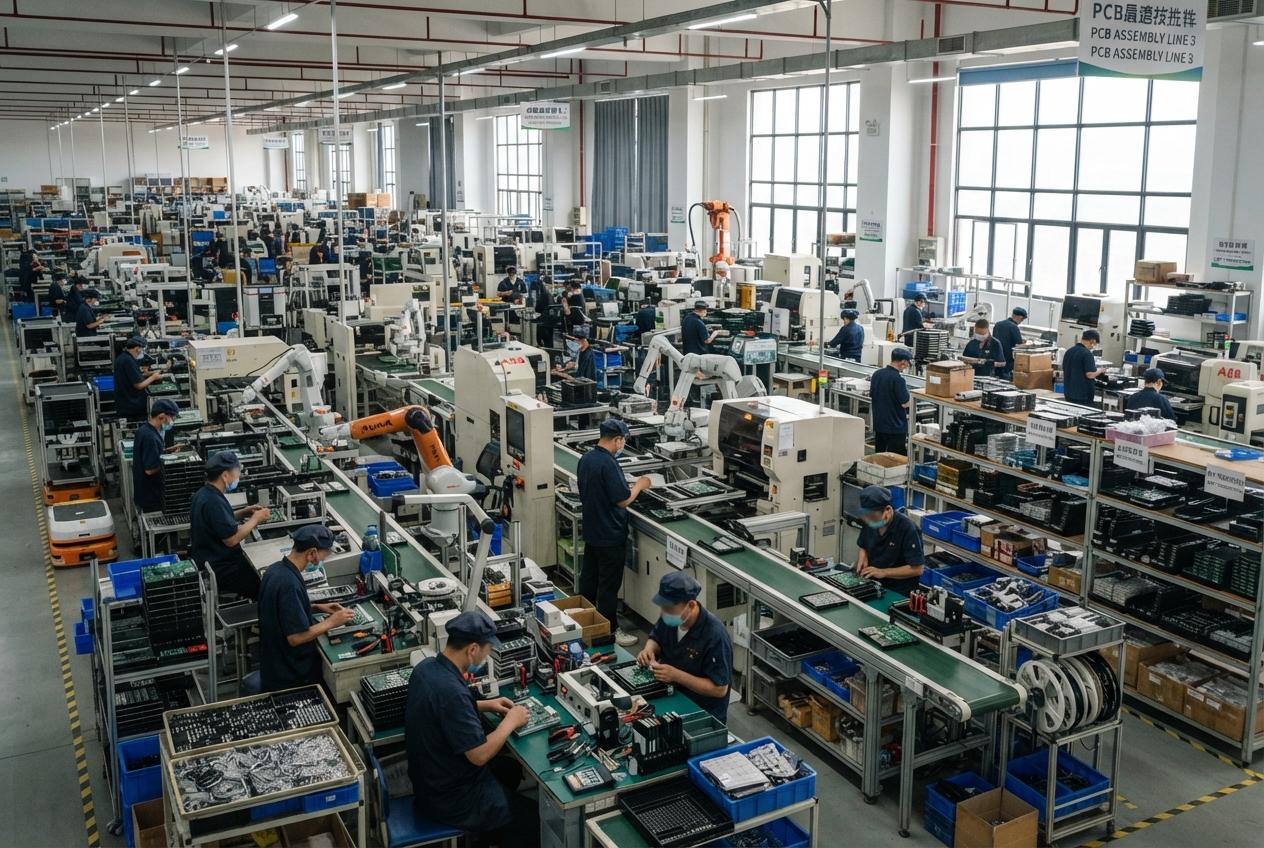
Chipmakers in the United States are investing heavily in domestic production, but the supply chain remains global from factory floor to raw-material refinery. The biggest vulnerability isn't necessarily China's chip equipment exports. It's the rare earths and processed minerals that help make advanced semiconductors possible.
America Can Build More Chips, But Not Everything Around Them
The uncomfortable truth is that a “made in America” chip still relies on a remarkably international production network. US manufacturers such as Intel, GlobalFoundries, and Texas Instruments buy specialized tools, wafer-processing equipment, and advanced materials from companies across several continents.
American chip companies spend about $27 billion a year on those supplies. Much of that spending goes to European, Japanese, and US-based companies, which can make the chain look more domestic or allied than it really is.
That distinction matters. A supplier's headquarters doesn't always reveal where a product was actually made. Equipment sold by a Dutch or American company may include components manufactured in Germany, Singapore, Taiwan, or China. The logo on the invoice is only part of the story.
China Isn't the Main Source of US Chip Machines
When it comes to the machines used directly to manufacture integrated circuits, the US is more dependent on the Netherlands, Japan, Germany, Taiwan, and domestic suppliers than on China. Companies such as ASML, Tokyo Electron, Applied Materials, Lam Research, and KLA are central to that ecosystem.
A closer look still finds Chinese manufacturing in the background. Xataka reported that China represents roughly 1% of the direct supply of semiconductor equipment and advanced materials when analysts count supplier headquarters, but around 5% when they trace where products are actually manufactured. Across Southeast Asia, the share rises to about 10%.
Those figures aren't large enough to make China the primary source of chipmaking machinery. But they do show why supply-chain maps can be misleading. A product may be sold by a trusted partner while relying on a much wider network of factories and subcontractors.
Rare Earths Create the More Serious Bottleneck
The bigger concern sits further upstream, in the minerals needed for modern manufacturing. China reportedly produced about 270,000 metric tons of rare earths in 2025, out of roughly 390,000 tons mined worldwide, giving it close to 69% of global output.
Mining, however, is only half the equation. Rare earths must be separated and processed before manufacturers can use them, and China dominates that stage even more strongly. Its share of global processing capacity is estimated at roughly 90%.
That combination gives Beijing considerable leverage. Even if American companies secure mineral deposits elsewhere, they may still depend on Chinese facilities to refine and prepare the material. It's a quiet vulnerability, but a powerful one.
Why Building US Fabs Isn't Enough
The push to expand domestic chip production has focused heavily on fabs, the highly specialized facilities where processors and memory chips are made. That investment is important, but it doesn't automatically create a complete supply chain.
A fab needs lithography tools, specialty gases, chemicals, silicon wafers, metals, replacement parts, and a steady stream of processed minerals. If one critical input comes from a concentrated foreign market, a disruption can affect production long before a finished chip reaches a customer.
This is why the supply-chain challenge is more complicated than moving factories across borders. The US and its allies need new mines, recycling systems, chemical plants, refining facilities, and more resilient logistics. That work is slower, less glamorous, and often more expensive than announcing a new semiconductor plant, but it's where long-term resilience will be decided.
The Next Chip Race Is Also a Minerals Race
China has used its strength in rare earths as economic pressure on rivals in recent years, making the issue relevant far beyond semiconductors. Taiwan, South Korea, Japan, Europe, and the US all face versions of the same problem because advanced electronics depend on overlapping global suppliers.
For consumers, the consequences may eventually show up as higher prices or slower launches for phones, computers, cars, and AI hardware. For manufacturers, even a temporary shortage can mean idle equipment and costly delays.
The most realistic path forward is diversification rather than instant independence. More sources, more processing outside China, better recycling, and closer cooperation between allies could reduce the risk. Until then, the American chip industry may be building more at home while still depending on a supply chain that stretches far beyond its borders.
It's a reminder that semiconductor independence starts long before the clean room, in the mines, refineries, and factories that make the whole system possible.
Disclaimer: This article may have been created with AI assistance and reviewed by our editorial team. It is provided for general informational purposes only. Readers should verify information independently before relying on this content.
