
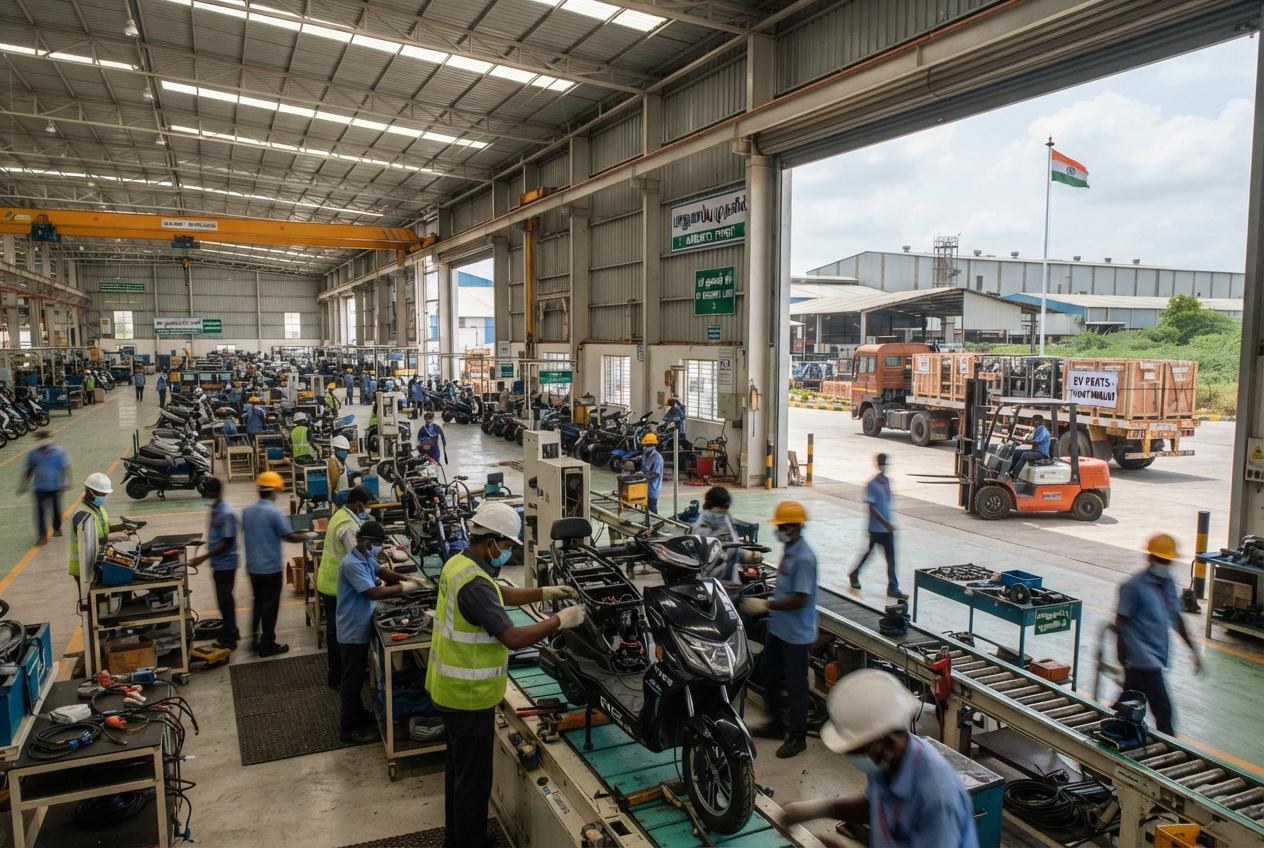
VinFast is turning its Thoothukudi, Tamil Nadu, factory into a launchpad for affordable premium EVs in India. Built at striking speed, the plant anchors a broader strategy involving local jobs, stronger supply chains, electric scooters and expanded production, giving India’s fast-growing electric vehicle market another ambitious challenger to watch.
A new EV factory arrives at remarkable speed
The most eye-catching detail is the timeline. VinFast moved from planning to an operating assembly plant in Thoothukudi in around 17 months, a brisk pace for a major automotive project. The result is a fresh industrial site designed to support the Vietnamese company's push into one of the world's most closely watched EV markets.
The factory is more than a building with vehicles moving through it. It represents VinFast's attempt to establish a full local presence, from assembly and quality control to supplier development and workforce training. The company's Tamil Nadu facility was formally inaugurated as its first manufacturing base in India.
That speed matters because India's electric vehicle market is developing quickly, but it isn't standing still. New brands need to arrive with competitive pricing, dependable after-sales support and products suited to local driving conditions, not simply a glossy badge and a large launch event.
Why Tamil Nadu matters to VinFast's India strategy
Tamil Nadu has become one of India's most important automotive manufacturing hubs, with established suppliers, ports, engineering talent and a deep industrial ecosystem. For VinFast, locating near Thoothukudi offers a practical base for building vehicles locally while gradually increasing the amount of Indian content.
The company has outlined an investment of roughly $1 billion across passenger vehicles and electric two-wheelers. Its stated ambition is to strengthen local supply chains and eventually expand production capacity to about 150,000 vehicles a year, positioning the site as a regional growth platform rather than a small assembly outpost.
That regional angle is significant. A factory serving India first could eventually support wider Asian ambitions, while local production may help VinFast manage costs, respond faster to demand and qualify for relevant policy incentives. In other words, the plant is both a manufacturing project and a long-term bet on India's role in the electric mobility industry.
Can affordable premium EVs find the sweet spot?
VinFast is presenting its Indian offering around the idea of affordable premium electric vehicles. That's a tricky middle ground: buyers want a polished cabin, useful range and modern technology, but they also remain highly sensitive to purchase price, charging costs and ownership confidence.
The company will need to compete with established Indian manufacturers and newer electric specialists that already understand local preferences. Safety standards, charging access and service support could prove just as important as acceleration figures or screen size. Industry coverage has highlighted VinFast's focus on these areas as it prepares to introduce its products to Indian customers.
For shoppers, the practical question is simple: does the vehicle feel worth the money after the showroom excitement fades? A comfortable cabin and quiet electric drive are appealing, but buyers will also want predictable maintenance, accessible service centres and clear battery support. Those unglamorous details often decide whether an EV becomes a sensible daily companion.
Local talent is part of the product
A modern EV factory depends on people as much as machinery. VinFast has begun building a local workforce at Thoothukudi, including an initial group of around 200 hires, while training employees in production processes and quality standards. The recruitment effort gives the project a human dimension that factory announcements can sometimes overlook.
Training also helps address one of the biggest challenges for a new automaker: creating consistent output at scale. Battery systems, software, electronics and high-voltage safety all require careful procedures, so quality control can't be treated as a final inspection alone.
The company says it wants to maintain global standards while developing Indian capabilities. That balance will be watched closely as production grows. A factory can open quickly, but earning customer trust takes longer, one well-built vehicle and one trouble-free service visit at a time.
Electric scooters could broaden the pitch
VinFast's India plans aren't limited to passenger cars. The company has also discussed electric scooters and two-wheeler manufacturing, a move that could give it access to a much larger part of the country's daily transport market.
India's two-wheeler buyers tend to care deeply about affordability, running costs, reliability and convenience. Electric scooters can make a strong case when charging is easy and battery performance holds up through ordinary commuting, but the category is fiercely competitive. VinFast will need products that feel practical rather than merely futuristic.
Charging infrastructure remains another important piece. Wider adoption depends on a mix of home charging, workplace options and public networks, especially for buyers without private parking. VinFast's emphasis on infrastructure and localisation suggests it understands that selling EVs requires building confidence around the entire ownership experience, not just the vehicle itself.
The next test is turning ambition into volume
VinFast's Indian factory gives the company a physical foothold, an expanding workforce and a sizeable production target. It also gives the brand a chance to learn what Indian customers actually want, from vehicle size and range to pricing and service expectations.
The early momentum is encouraging, but the harder phase is still ahead. Scaling production, developing suppliers, launching appealing models and supporting owners across a large country will test whether the company's rapid start can become durable momentum. Reports on the facility have also framed it as part of VinFast's wider Asian expansion plans, raising the stakes beyond a single market entry.
For Indian EV shoppers, competition is welcome. More serious manufacturers can mean more choice, improved technology and pressure on everyone to offer better value. VinFast has made a fast entrance; now it has to prove that the experience of owning its vehicles can be just as convincing.
It's a fast-built factory, but customer trust will be the real long-term measure of success.
Disclaimer: This article may have been created with AI assistance and reviewed by our editorial team. It is provided for general informational purposes only. Readers should verify information independently before relying on this content.
