




Table of Contents
Original Design Manufacturing (ODM)
Original Equipment Manufacturing (OEM)
Original Brand Manufacturing (OBM)
ODM, OEM, & OBM head-to-head comparison
Finding ODM, OEM, & OBM services on GlobalSources.com
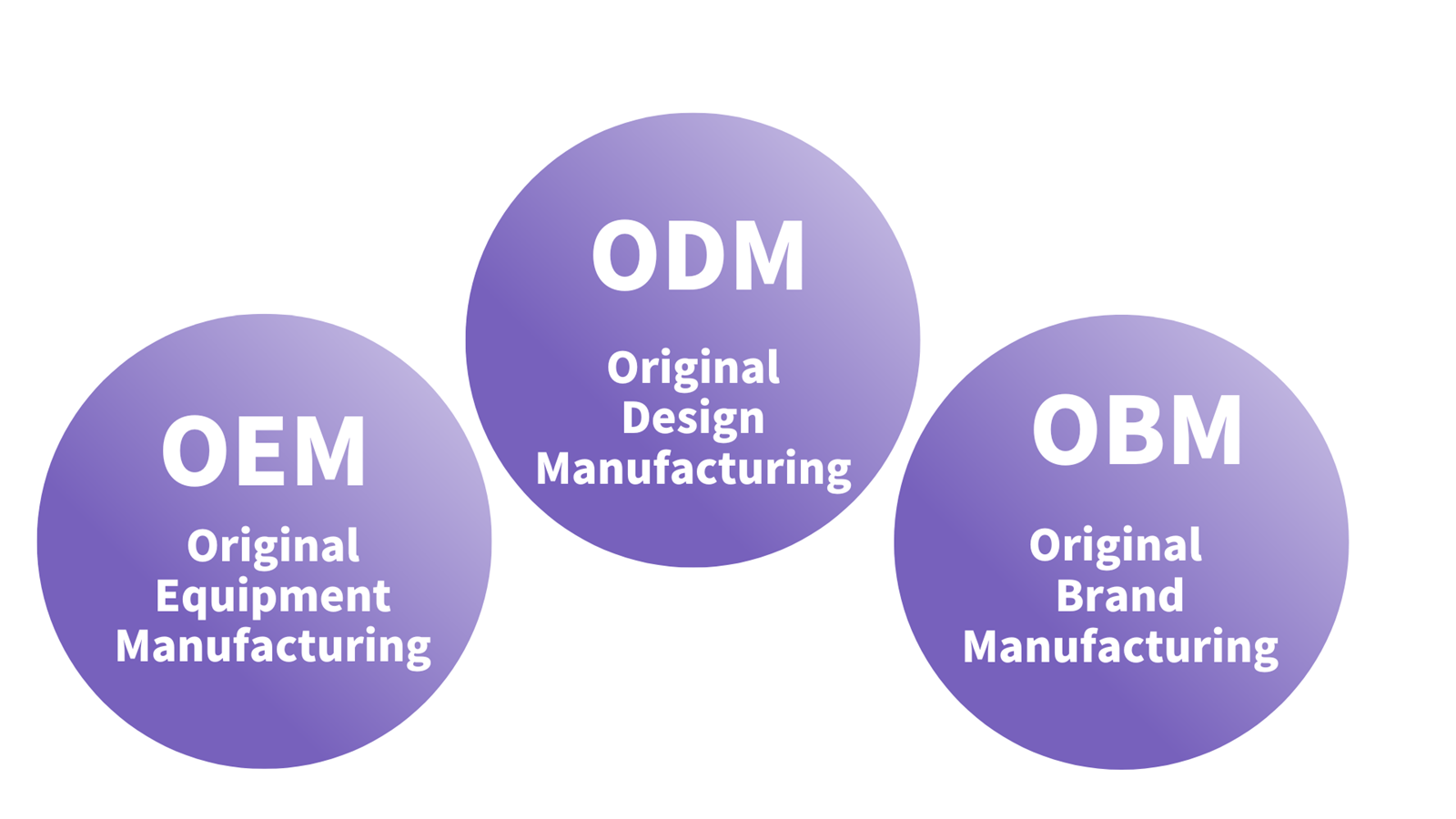
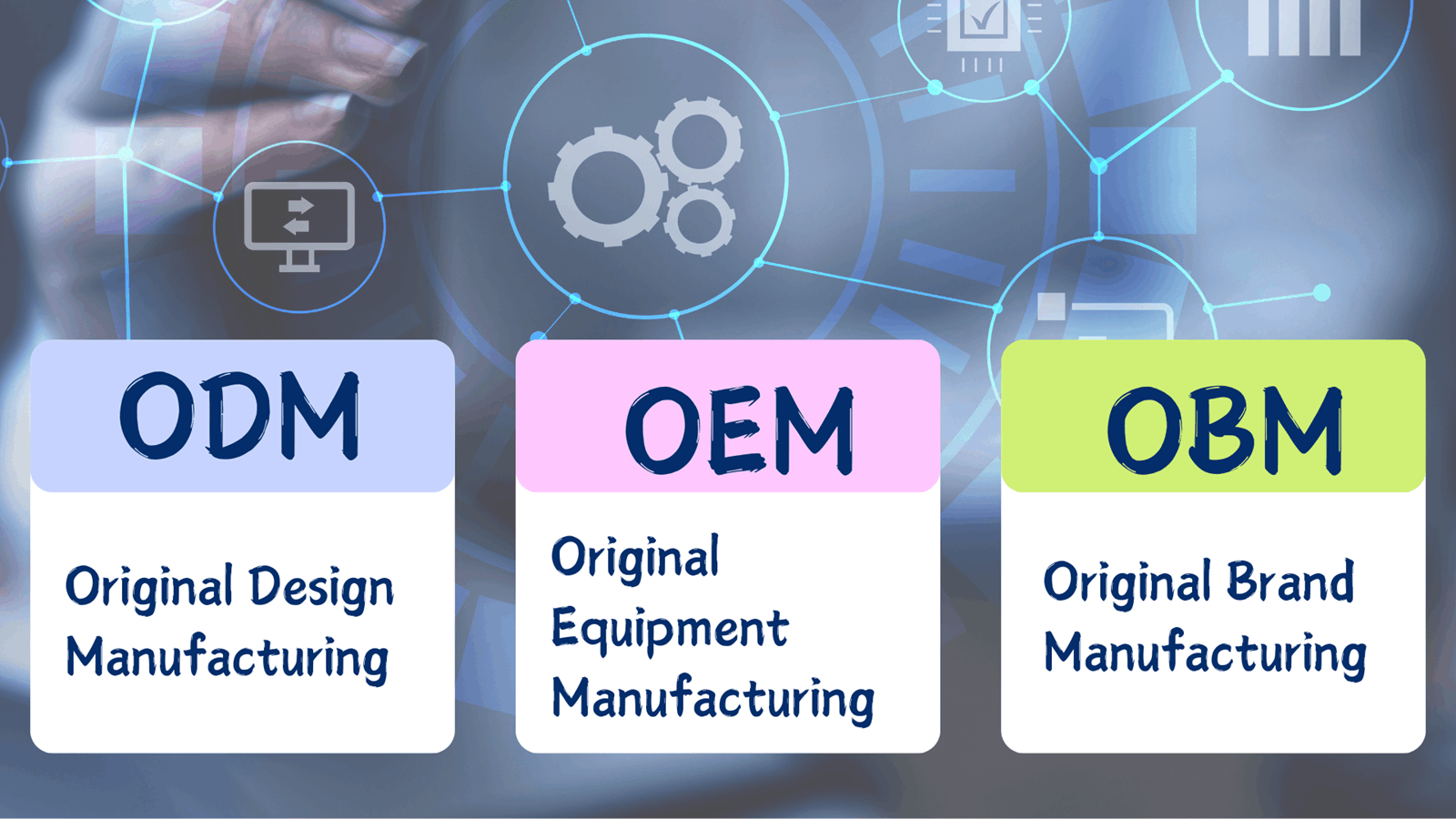
In the world of manufacturing and product development, three key terms are frequently used to describe different types of business models: Original Design Manufacturing (ODM), Original Equipment Manufacturing (OEM), and Original Brand Manufacturing (OBM). These manufacturing models each offer distinct approaches to how products are developed, produced, and brought to market, catering to different business needs and strategic goals. Understanding the distinctions between them is crucial for businesses looking to develop and market products.
Original Design Manufacturing (ODM)
ODM refers to a company that designs and manufactures a product that is eventually branded by another firm for sale. This model allows the company that brands the product to focus on branding and selling the product without having to invest in the research, development, or infrastructure required to create it. ODM providers offer their expertise and production capabilities to produce products according to the purchasing company's specifications or even provide existing products that can be rebranded. This model is especially attractive for businesses looking to expand their product lines without the significant investment in R&D.
Real-life examples of ODM include companies like Foxconn, which manufactures a variety of electronic components and products that are sold under other brands. For instance, they produce some components that go into Apple's iPhone, which Apple then integrates into its final product.
Original Equipment Manufacturing (OEM)
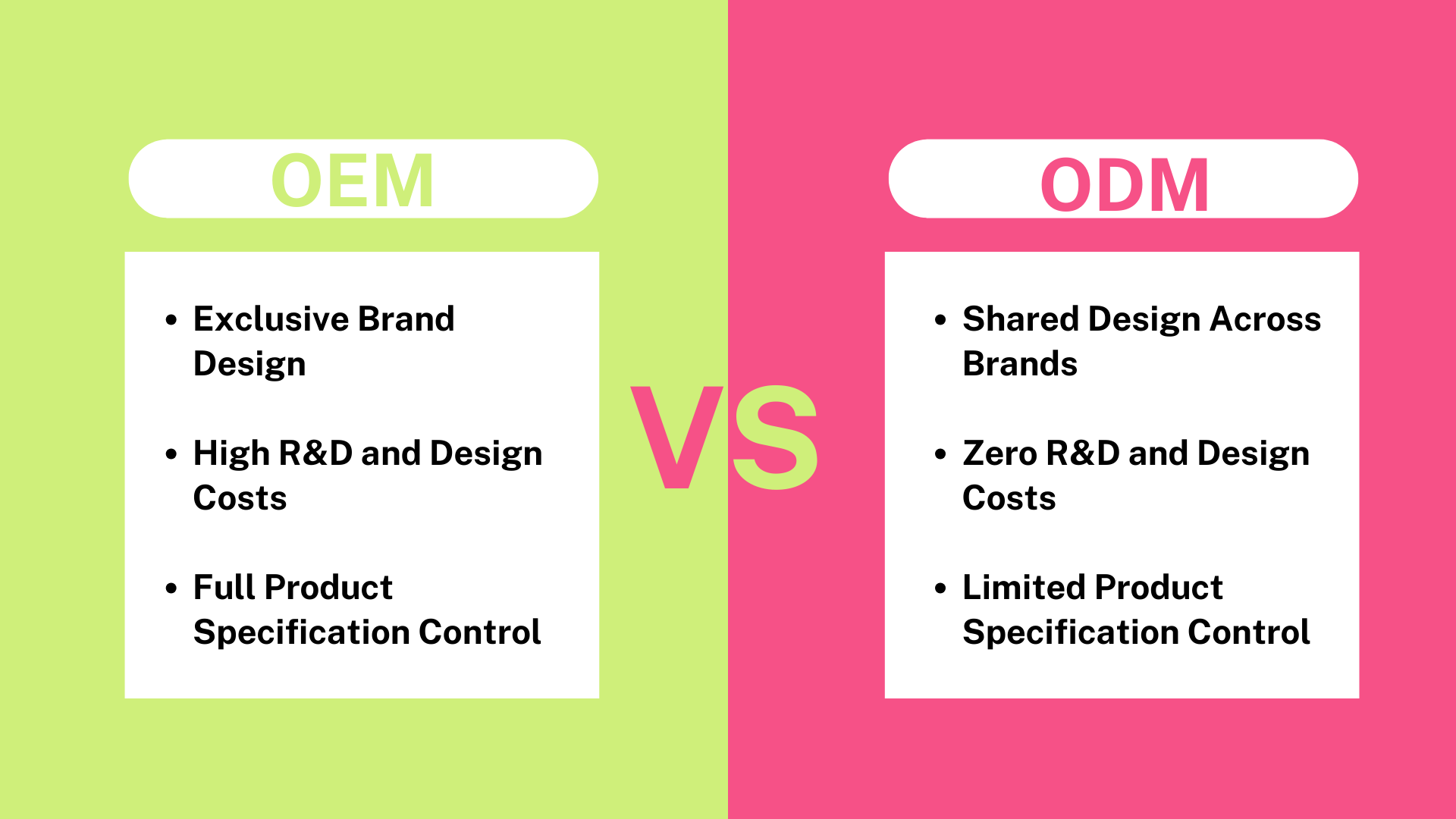
OEM is a model where the buyer provides the design and specifications for a product, which the manufacturer then produces. The final product is branded and sold by the buying company. The term originally referred to a company that produced parts used in another company's product. However, it has evolved to include companies that manufacture complete products for other companies to sell under their brand name. This model is prevalent in industries where brand identity and design control are crucial.
For example, Hewlett-Packard (HP) may contract with an OEM like Quanta Computer to produce laptops. Quanta produces the hardware based on HP's design and specifications, and HP then markets and sells the finished product under its brand.
Original Brand Manufacturing (OBM)
OBM represents a fully integrated approach where the manufacturer not only designs and produces the product but also brands and markets it under their own name. These companies control the entire process from design through production to marketing and sales. OBMs invest heavily in all stages of the product lifecycle, including research and development (R&D), design, marketing, distribution, and customer service.
A well-known example of an OBM is Samsung. Samsung designs, manufactures, and sells its own range of products from smartphones to televisions under the Samsung brand. It maintains control over every aspect of production and branding, allowing for a cohesive brand identity and quality control.
Key differences
The key differences between ODM, OEM, and OBM can be broken down into various aspects:
- Product Design: ODMs design products that other companies can brand; OEMs manufacture products based on another company's design; OBMs design and manufacture their own branded products.
- Branding: In ODM, the branding is undertaken by the purchasing company. In OEM, the manufacturing company produces goods for another brand to sell. In OBM, the manufacturing company creates and sells products under its own brand name.
- Research and Development: ODMs may conduct their own R&D or use designs provided by the purchasing company. OEMs use the designs and specifications provided by their clients. OBMs invest in their own R&D to innovate and develop new products.
- Control over Production: ODMs have significant control over production as they are responsible for creating the designs. OEMs have less control over the product's final design but are responsible for the production quality. OBMs have full control over both design and production.
- Cost: For businesses, using an ODM can be less costly than developing a product from scratch due to shared R&D costs. Working with an OEM can reduce investment in manufacturing infrastructure. OBMs bear the full cost of product development but retain all sales profits.
- Quality Assurance: In ODM and OEM arrangements, quality assurance is a shared responsibility between the manufacturer and the branding company. In OBM, quality assurance is solely the responsibility of the brand itself.
- Market Positioning: ODMs and OEMs typically operate behind the scenes, allowing other companies to position the product in the market. OBMs position their own products in the market and engage directly with consumers.
- Intellectual Property: In ODM arrangements, IP rights can be complex as designs are often created by the manufacturer but used by another brand. In OEM, the client company usually retains IP rights. In OBM, IP rights are held by the brand that designs and manufactures the product.
Real-life examples
To illustrate these differences further, let's look at some real-life examples:
- Apple Inc. (OBM): Apple designs its own devices like iPhones and iPads and has them manufactured by OEM partners such as Foxconn. Apple maintains strict control over design and quality while relying on its manufacturing partners for production scale.
- Flex (ODM): Flex, previously known as Flextronics, is an example of a company that provides ODM services. It designs and manufactures electronics products that other companies sell under their own brands.
- Intel (OEM): Intel is an OEM providing processors to computer manufacturers like Dell or Lenovo, who then incorporate these processors into their own branded computers.
Understanding these three business models—ODM, OEM, and OBM—is vital for any business involved in product development and manufacturing. Each model offers different benefits and challenges, and choosing the right one depends on a company's capabilities, resources, market goals, and strategic direction. By carefully considering these factors, businesses can select a model that aligns with their objectives and maximizes their competitive advantage in the market.
ODM, OEM, & OBM head-to-head comparison
| Aspect | ODM (Original Design Manufacturing) | OEM (Original Equipment Manufacturing) | OBM (Original Brand Manufacturing) |
|---|---|---|---|
| Definition | The manufacturer designs and produces a product, which is then branded and sold by another company. | The manufacturer produces products or components according to another company's design and specifications. The buying company then brands and sells these products. | The manufacturer designs, produces, brands, and sells the products under its own brand name, handling the entire process from start to finish. |
| Control | Design and manufacturing control, but not branding or marketing. | Production control is based on another company’s design and specifications. | Full control over design, manufacturing, branding, and marketing. |
| Investment | Lower investment in branding and marketing. | Lower investment in design and R&D, focus on manufacturing efficiency. | Higher investment in R&D, design, branding, and marketing. |
| Customization | High level of customization for products. | Manufactures to the specifications provided by the brand owner. | Full freedom in product design and customization. |
| Examples | Foxconn manufactures electronic components for Apple products like the iPhone. | Quanta Computer produces laptops for HP based on HP’s designs and specifications. | Samsung designs manufactures, and markets its range of products like smartphones and TVs under its own brand. |
| Advantages | Reduced time-to-market for new products; lower development costs for the buyer; access to the manufacturer’s expertise and innovation | High level of control over the product’s design and quality; flexibility to choose among different manufacturing partners; cost-effective for brand owners; no need for manufacturing infrastructure | Brand recognition; higher profit margins; complete quality control |
| Risks | Dependence on the branding company for sales; less control over market positioning; potential for less differentiation from competitors using the same ODM provider | Requires detailed design and specification documentation; dependence on the orders from the brand owners; potential for IP issues | Higher risk due to more significant investment; responsible for entire product lifecycle management |
Finding ODM, OEM, & OBM services on GlobalSources.com
Business-to-business (B2B) sourcing platform GlobalSources.com provides an extensive list of trusted manufacturers and suppliers offering ODM, OEM, and OBM services, enabling companies to efficiently find partners that meet their specific production and development requirements. Here are helpful steps to seamlessly navigate GlobalSources.com's directory:
1. Define your manufacturing needs clearly
Before diving into the vast sea of manufacturers on GlobalSources.com, have a clear understanding of what you are looking for. Are you in need of OEM services to produce items based on your proprietary designs? Is an ODM manufacturer who can offer design services and manufacture the product more aligned with your business model? Or perhaps you are searching for OBM products that you can resell under your brand? Defining your needs will streamline your search and save you invaluable time.
2. Master the search functionality
GlobalSources.com is equipped with a powerful search engine designed to help you find the exact type of manufacturer you're looking for. Use specific keywords that match your product idea or manufacturing requirement. For example, "eco-friendly ODM apparel" or "high-tech OEM electronics" will yield more precise results than general terms. The right keywords are the keys to unlocking a directory of potential manufacturing partners.
3. Utilize advanced filters
Once you have a list of potential manufacturers, it's time to narrow down your options. GlobalSources.com offers advanced filtering tools that allow you to sort manufacturers by business type (OEM, ODM, or OBM), qualifications, certifications, and more. This feature is particularly useful when you have specific compliance standards or business practices you want your manufacturing partner to meet.
4. Analyze manufacturer profiles
Every manufacturer on GlobalSources.com has a detailed profile that provides insight into their business operations. These profiles include information on company history and product specializations, and manufacturing capabilities. Take the time to read through these profiles carefully to ensure that the manufacturer's expertise aligns with the quality and standards required for your product.
5. Engage with verified manufacturers
Prioritize engagement with verified manufacturers on GlobalSources.com. These manufacturers have been pre-screened for certain quality standards and are generally more reliable. Engaging with verified manufacturers can give you peace of mind, knowing that they have a history of delivering quality products and adhering to international business standards.
6. Communicate and sample before vommitting
After narrowing down your list, reach out to the manufacturers directly through the platform. Good communication is vital in establishing a strong business relationship. Discuss your needs in detail and ask for samples before placing large orders. Sampling gives you a tangible sense of the product quality and craftsmanship, which is critical before making any commitments.
By following these steps and making full use of the resources available on GlobalSources.com, you can find a manufacturing partner that not only meets your product requirements but also aligns with your business ethos and goals. This strategic approach will set the foundation for a successful and enduring partnership in the competitive world of product manufacturing and sales.
You May Also Like:
How to Safely Source and Sell Products on GlobalSources.com
OEM: What Is an Original Equipment Manufacturer?
What is Original Design Manufacturing (ODM)?
[2024] Ultimate Guide: What is Contract Manufacturing?
2024 Ultimate Guide: What Is Original Brand Manufacturing (OBM)?

