




As the world moves into 2026, the telecommunications industry will continue to serve as the backbone of modern society, but its role is becoming even more strategic and transformative. On the basis of the rapid development in recent years, global operators and equipment vendors are further accelerating network upgrades, expanding coverage, and deepening the integration of telecommunications with cloud computing, artificial intelligence and the Internet of Things. Driven by continuous investment and policy support, the global communications network is evolving from simply providing connectivity to becoming a comprehensive digital infrastructure that supports innovation in all industries.
In 2026, the focus of the telecommunications industry will gradually shift from large‑scale 5G deployment to value realization, ecosystem building and early layout of 6G. On the one hand, operators will continue to explore new business models in areas such as industrial Internet, smart cities and autonomous driving; on the other hand, they will actively participate in international cooperation and standardization work related to 6G, green communications and data governance. At the same time, the rapid growth of connected devices, the expansion of data traffic and the increasing complexity of network architectures are bringing higher requirements in terms of network security, privacy protection and regulatory compliance.
Against this background, the key trends that were already emerging in 2025—such as 5G and 6G network evolution, the Internet of Things and smart devices, cloud and edge collaboration, cybersecurity and privacy, artificial intelligence and machine learning, sustainability and green communications, as well as the policy and regulatory environment—will continue to deepen and expand in 2026. The following sections of this article, based on the 2025 perspective, provide a systematic overview of these core trends and their impact on the future development of the telecommunications industry, offering useful reference points for enterprises, policymakers and practitioners as they plan for the coming years.
As the infrastructure of modern society, the telecommunications industry can be traced back to the invention of the telegraph and telephone. With the rise of the Internet and mobile communications, the telecommunications industry has undergone several technological revolutions and gradually evolved into today's global communication network. At present, the global telecommunications market is huge, and major players include AT&T, Verizon, Huawei, Ericsson and other companies, providing a variety of services from traditional voice services to high-speed Internet access.
The telecommunications industry has a profound impact on global economic and social development. It not only provides communication and entertainment services for individuals, but also plays a key role in corporate operations and digital transformation. Advances in telecommunications technology have promoted the development of smart cities, autonomous driving and the Internet of Things, making society more connected and efficient.
This article aims to explore the main trends in the telecommunications industry in 2025, including the development of 5G and 6G networks, innovations in the Internet of Things and smart devices, the rise of cloud computing and edge computing, network security and privacy protection, the application of artificial intelligence and machine learning, sustainability and green communications, and the policy and regulatory environment. These trends will profoundly affect the future development direction of the industry.
Table of Contents
Development of 5G and 6G Networks
Internet of Things (IoT) and Smart Devices
Cloud computing and edge computing
Network security and privacy protection
Artificial Intelligence and Machine Learning
Sustainability and Green Communications
Policy and Regulatory Environment
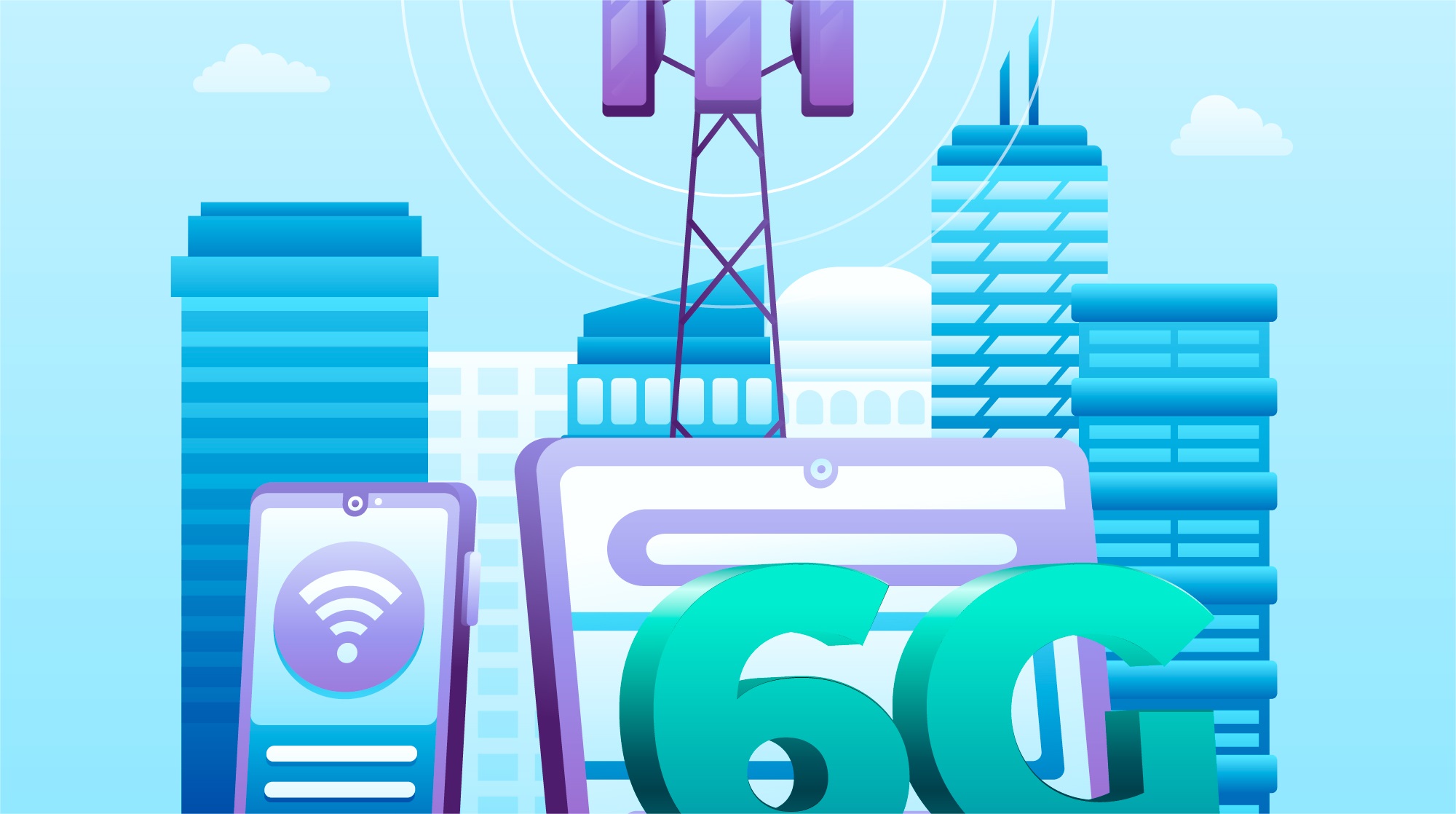
Development of 5G and 6G Networks
1. Popularization of 5G Networks
5G technology is rapidly gaining popularity around the world with its high speed, low latency and large capacity. 5G networks not only improve the performance of mobile communications, but also support network slicing and edge computing to meet the needs of different application scenarios. Major countries and regions around the world have deployed 5G networks on a large scale, and operators such as Verizon, AT&T, Huawei and other companies are actively promoting the construction of 5G infrastructure. The application of 5G in fields such as smart cities, autonomous driving and the Internet of Things is changing the operating models of various industries. For example, the traffic management system in smart cities uses 5G networks to achieve real-time data transmission and analysis, improving traffic efficiency and public safety.
2. Outlook of 6G Networks
Although the popularization of 5G networks has not yet been fully realized, research on 6G has begun. 6G technology is expected to be put into use around 2030, and its features include ultra-high-speed communication, holographic transmission and new application scenarios. At present, multiple research projects and trials are underway around the world to explore the potential and challenges of 6G. 6G will further improve communication speed and capacity, and provide support for emerging technologies such as virtual reality, augmented reality and holographic communication. However, 6G technology and standardization face many challenges, and commercialization and market acceptance also need further observation.
Internet of Things (IoT) and Smart Devices
1. Expansion of IoT
The Internet of Things (IoT) connects various devices to the Internet to collect, transmit and analyze data, and is widely used in smart homes, industry, and medical fields. It is expected that by 2025, the number of IoT devices worldwide will reach tens of billions, and the market size will continue to expand. The application of IoT in smart homes includes smart appliances and security systems, production monitoring and equipment maintenance in the industrial field, and remote monitoring and health management in the medical field.

2. Innovation of Smart Devices
Innovations in smartphones, wearable devices, and smart home devices continue to drive market development. The new generation of smartphones has stronger processing power and richer functions, wearable devices excel in health monitoring and sports tracking, and smart home devices improve the convenience of life through interconnection and control. The combination of artificial intelligence technology enables these devices to provide more personalized services and smarter user experience. For example, smart voice assistants can interact with users, provide information, and execute commands through natural language processing technology.
Cloud computing and edge computing
1. The continued growth of cloud computing
Cloud computing has become an important tool for digital transformation of enterprises with its flexibility, scalability and cost-effectiveness. The comparison of private cloud, public cloud and hybrid cloud shows the advantages in different application scenarios. Cloud service providers such as Amazon AWS, Microsoft Azure and Google Cloud occupy an important position in the market. Cloud computing plays a key role in data storage, processing and application development, helping enterprises improve operational efficiency and competitiveness.
2. The rise of edge computing
Edge computing reduces latency and bandwidth requirements by processing and analyzing data close to the data source. The main advantages of edge computing include real-time data processing and the application of intelligent edge devices, which are suitable for scenarios requiring low latency and high efficiency. The coordinated development of edge computing and cloud computing makes hybrid architecture and collaborative processing possible, further improving the overall performance and reliability of the system.
Network security and privacy protection
1. Challenges of network security
The telecommunications industry faces a variety of network security threats, including DDoS attacks, malware and data leaks. The types of network attacks are diverse and increasingly complex, and defense strategies need to be continuously updated and improved. Recent major cybersecurity incidents, such as data breaches at some large companies, remind us of the importance and urgency of cybersecurity.
2. The need for privacy protection
Data privacy is a common concern for users and companies. Global privacy protection regulations, such as GDPR and CCPA, impose strict requirements on companies' data management and protection. Companies need to take effective data management and protection measures to ensure that user privacy is respected and protected, and to avoid legal risks and reputational losses.

Artificial Intelligence and Machine Learning
1. Application of Artificial Intelligence in the Telecommunications Industry
Artificial intelligence (AI) plays an important role in network optimization, customer service, and business analysis. AI technology can improve network stability and efficiency through network traffic prediction and management, self-healing networks, and fault detection. In customer service, intelligent customer service and chatbots can provide fast and accurate services and improve customer satisfaction. The application of AI in business analysis, such as data mining and predictive analysis, helps companies make smarter decisions.
2. Future Development Direction
Frontier research in artificial intelligence technology includes deep learning, reinforcement learning, natural language processing, and computer vision. AI has a wide range of potential application scenarios in the telecommunications industry, such as the development of new services and business models, and the construction of intelligent networks and adaptive systems. The combination of AI with emerging technologies such as 5G and the Internet of Things will bring more innovation and application opportunities.
Sustainability and Green Communications
1. Green Communications Technology
The application of low-energy network equipment and technologies is the key to achieving green communications. The promotion of green base stations and energy-saving equipment, low-power communication protocols and standards will help reduce energy consumption and carbon emissions. The application of renewable energy in telecommunications infrastructure, such as solar and wind power base stations, has further promoted the sustainable development of the industry.
2. Enterprise Sustainable Development Strategy
The commitment and actions of telecommunications companies in environmental protection not only contribute to environmental protection, but also enhance the brand value and market competitiveness of enterprises. Specific environmental protection projects and measures, such as carbon footprint calculation and management, energy-saving solutions and technological improvements, demonstrate the efforts and achievements of enterprises in sustainable development. The green communication practices of leading companies provide valuable experience and inspiration for the industry.
Policy and Regulatory Environment
1. Global Telecommunications Policy Trends
The comparison and analysis of telecommunications policies of various countries show the strategies and measures of different countries in promoting the development of the telecommunications industry. The government plays an important role in supporting the development of the telecommunications industry, promoting technological innovation and market competition through policy incentives and public-private cooperation. International cooperation and standardization processes, such as the work of the International Telecommunication Union (ITU) and other standardization organizations, have promoted the coordinated development of the global telecommunications industry.
2. Regulatory challenges and responses
Spectrum management and allocation are important regulatory challenges facing the telecommunications industry. The scarcity and management strategies of spectrum resources, spectrum auctions and allocation mechanisms directly affect the development and competition of the industry. Antitrust and market competition, data protection and privacy supervision are also the focus of regulatory agencies to ensure fair competition in the market and the legitimate rights and interests of users.
FAQS
1. What is 6G technology? How is it different from 5G?
6G (sixth generation mobile communication technology) is the future wireless communication technology and is expected to be put into use around 2030. 6G will provide data transmission speeds of up to hundreds of Gbps per second, latency as low as microseconds, and a wider range of connectivity capabilities. 6G technology will support new application scenarios such as holographic transmission, ultra-high-definition VR/AR, and fully automated industrial control. Compared with 5G, 6G will further improve communication performance, achieve wider coverage and higher energy efficiency. For example, holographic transmission technology can realize remote holographic conferences, making participants feel as if they are in the same room, improving communication effectiveness and efficiency.

2. What is the role of the Internet of Things (IoT) in the telecommunications industry?
The Internet of Things (IoT) connects various devices to the Internet to collect, transmit and analyze data. The telecommunications industry provides basic communication networks and service support for IoT, promoting the development of smart homes, smart cities, industrial automation and medical health. For example, smart appliances and security systems in smart homes can be remotely controlled and monitored through IoT technology to improve the convenience and safety of life. In the industrial field, IoT devices are used for production monitoring, equipment maintenance and energy efficiency management to improve production efficiency and reduce operating costs. In the field of medical health, IoT technology supports remote monitoring, health management and emergency rescue, and improves the quality and efficiency of medical services.
3. What are the applications of cloud computing and edge computing in the telecommunications industry?
Cloud computing provides flexible computing resources and data storage services to support the digital transformation and business innovation of enterprises. Telecommunications companies meet the needs of different customers by providing private cloud, public cloud and hybrid cloud services. Cloud computing plays a key role in data storage, processing and application development, helping enterprises improve operational efficiency and competitiveness. Edge computing reduces latency and bandwidth requirements by processing and analyzing data close to the data source, and is suitable for application scenarios that require real-time response. For example, intelligent transportation systems use edge computing technology to achieve real-time collection and analysis of traffic data, optimize traffic management and reduce congestion. The coordinated development of edge computing and cloud computing makes hybrid architecture and collaborative processing possible, further improving the overall performance and reliability of the system.
Conclusion
In 2025, the telecommunications industry will usher in a series of important trends and changes. These trends not only promote technological progress and market development, but also have a profound impact on social economy. Enterprises and policymakers need to work closely together to jointly meet challenges, seize opportunities, and achieve sustainable development of the industry. Through continuous innovation and optimization, the telecommunications industry will continue to play an important role in connecting the world and promoting social progress in the coming years.
You May Also Like: Technology and Infrastructure Trends
- Electrical Industry Trends
- Chemical Industry Trends
- Building Industry Trends
- Telecom Industry Trends
- Trucking Industry Trends
- Oil and Gas Industry Trends
- IoT Industry Trends
- Aviation Industry Trends
- HVAC Industry Trends
- Logistics Industry Trends
- Warehouse Industry Trends
- Oil Industry Trends
- Manufacturing Industry Trends
- Wholesale Distribution Trends

