




 Table of Contents
Wholesale vs. Retail Head-to-head Comparison
Wholesale vs. Retail, What's the Difference
Wholesale vs. Retail Head-to-head Comparison
| Criteria | Retail | Wholesale |
|---|---|---|
| Target Market | Retail targets end users or consumers. It operates on a business-to-consumer (B2C) model. | Wholesale targets other businesses, such as retailers or other wholesalers. It operates on a business-to-business (B2B) model. |
| Volume of Goods | Retail involves selling smaller quantities of goods. | Wholesale involves selling larger quantities of goods. |
| Pricing | Retail prices are typically higher per unit, as they include the cost of operations, overheads, and profit margins. | Wholesale prices are lower per unit because they sell in large volumes and directly from manufacturers or large distributors. |
| Customer Interaction | Retailers have direct interaction with their customers, allowing them to understand their preferences and needs better. | Wholesalers have less interaction with end customers as they deal with businesses. |
| Profit Margins | Retailers typically have higher profit margins per unit because they sell at higher prices. | Wholesalers have lower profit margins per unit but can achieve higher total profits due to the large volume of sales. |
| Operational Costs | Retailers typically have higher operational costs, including store maintenance, staff salaries, and marketing to end consumers. | Wholesalers typically have lower operational costs because they don't need to maintain storefronts or market to end consumers. |
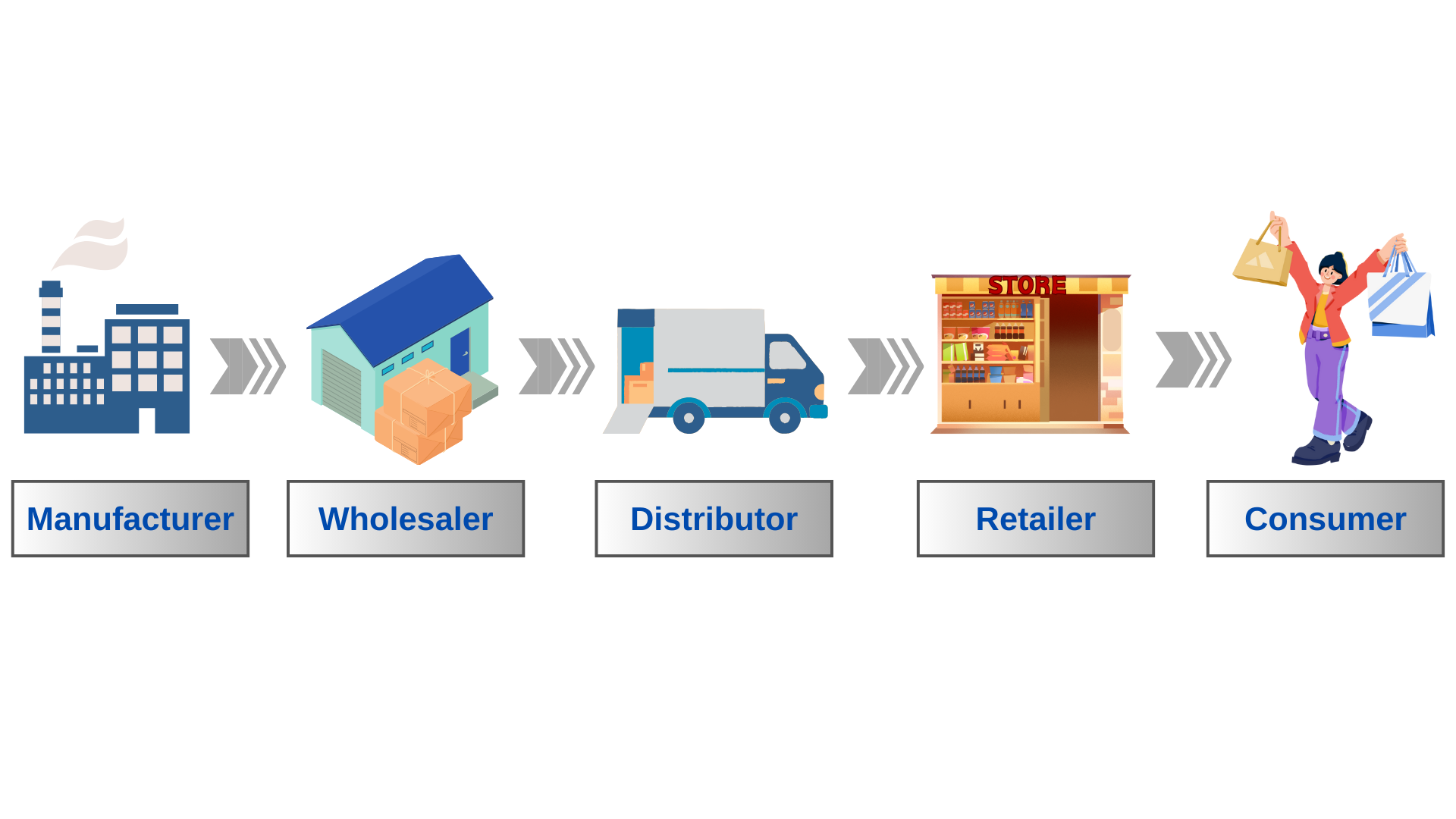
| Supply Chain Position | Retailers are closer to the end of the supply chain. They purchase products from wholesalers or distributors and sell them to the final consumer. | Wholesalers are in the middle of the supply chain. They purchase products in bulk from manufacturers and sell them to retailers or other wholesalers. |
What is Wholesale
Wholesale is a fundamental concept in the world of commerce, acting as a crucial link in the supply chain between manufacturers and consumers. It involves the sale of goods in large quantities to retailers, other businesses, or professional users, who then sell these products to the end consumers.
Understanding the Wholesale Business Model
The wholesale business model is characterized by its B2B nature. Wholesalers engage in the procurement of goods directly from manufacturers, often acquiring them in substantial quantities at favorable, bulk pricing. Subsequently, these wholesalers proceed to distribute these goods to retailers and other business entities, albeit in reduced quantities compared to their initial purchase, yet marked up at higher price points. It is this disparity between the acquisition cost and the resale price that forms the foundation of their profit margin.
Wholesalers play a pivotal role in the distribution process. They act as intermediaries, reducing the gap between producers and retailers by providing storage, transportation, and an efficient distribution network. This allows manufacturers to focus on production and retailers to concentrate on selling to consumers, thereby streamlining the overall supply chain.
Types of Wholesalers
There are several types of wholesalers, each with its own unique characteristics and roles. These include:
- Merchant Wholesalers: These are autonomous enterprises that assume ownership of the products they offer. They engage in the purchase of merchandise directly from manufacturers and subsequently distribute these products to either other businesses or fellow wholesalers.
- Limited Service Wholesalers: These wholesalers offer fewer services to their suppliers and customers. They may not offer delivery, credit, or advertising services.
- Drop-shippers or Mail Order Wholesalers: These wholesale entities receive orders from buyers and then transmit these orders to manufacturers or other wholesalers. They abstain from the physical handling, storage, or delivery of the merchandise. Instead, their role primarily involves orchestrating the direct shipment of the product from the producer to the buyer.
Benefits of Wholesale
There are several benefits associated with the wholesale business model:
- Economies of Scale: By buying and selling in large volumes, wholesalers can take advantage of economies of scale, which can lead to lower costs per unit and higher profits.
- Risk Reduction: Wholesalers shoulder the risk associated with the storage of substantial quantities of products. In cases where these goods remain unsold or are returned by retailers, the wholesaler assumes the responsibility for managing and addressing these surplus or returned items.
- Efficiency in Distribution: Wholesalers contribute to the efficiency of distribution by providing storage, transportation, and a network of contacts. This can make the distribution process smoother and more efficient for manufacturers and retailers.
Challenges in Wholesale
Despite the benefits, there are also challenges associated with the wholesale business model:
- Inventory Management: Effectively overseeing substantial inventories of products presents inherent challenges. Wholesalers must strike a delicate balance, ensuring they maintain adequate stock levels to satisfy market demand while avoiding the accumulation of surplus, unsold merchandise.
- Price Fluctuations: Wholesalers must deal with fluctuations in prices. If the price of a product decreases after a wholesaler has purchased it, they may have to sell it at a lower price and make less profit.
- Competition: The wholesale industry operates within a notably competitive landscape. To stand out amidst their peers, wholesalers must seek avenues for differentiation, be it through the provision of superior services, competitive pricing strategies, or the availability of top-tier product quality.
In summary, wholesale trade stands as an integral facet of the worldwide commerce network. Despite its challenges, it bestows a multitude of advantages and prospects for those prepared to adeptly navigate its intricacies.

What is Retail
Retail is a vital component of the commerce ecosystem, acting as the final touchpoint in the supply chain that connects manufacturers and consumers. It involves the sale of goods and services from businesses to end-users (consumers) for their personal, non-business use.
Understanding the Retail Business Model
The retail business model functions within a business-to-consumer (B2C) framework. Retailers engage in the procurement of merchandise, either from wholesalers or directly from manufacturers, often in substantial quantities. Following this, they proceed to offer these goods to consumers in smaller, more manageable quantities, albeit at a higher price per individual unit. The differential between the purchase cost for the retailer and the subsequent selling price to consumers comprises their profit margin.
Retailers occupy a pivotal role in the distribution chain. They provide consumers with a convenient point of access, which can be in the form of physical stores or online platforms, to explore and acquire a diverse range of products. Additionally, retailers deliver essential services including sales guidance, product demonstrations, and post-purchase customer support.
Types of Retailers
There are several types of retailers, each with its own unique characteristics and roles. These include:
- Department Stores: These are large retail establishments that offer a wide variety of goods divided into different sections or "departments". Examples include Macy's and Nordstrom.
- Supermarkets: These are large self-service stores selling groceries and household items.
- Specialty Stores: These retailers focus on selling a specific category of products, like electronics, furniture, or clothing.
- E-commerce Retailers: These are online platforms that sell goods directly to consumers. Examples include Amazon and eBay.
Benefits of Retail
There are several benefits associated with the retail business model:
- Customer Interaction: Retailers engage in direct interactions with their clientele, affording them an invaluable opportunity to gain deeper insights into customer preferences and requirements. This direct engagement proves instrumental in customizing their product offerings and enhancing overall customer satisfaction.
- Value Addition: Retailers add value by providing additional services like sales assistance, product demonstrations, home delivery, and after-sales service.
- Variety of Offerings: Retailers often carry a wide variety of products from different brands, giving customers a wide range of choices.
- Convenience and Accessibility: Retailers excel in simplifying and enhancing the shopping experience for customers, offering both physical brick-and-mortar establishments and online platforms where individuals can effortlessly explore and procure a diverse array of products.
In summary, the retail sector assumes a pivotal role in the economy, serving as a conduit for the sale of goods and services to end consumers. It acts as a bridge, enabling manufacturers to connect with their intended audience while granting consumers the convenience of accessing an extensive range of products and services tailored to their personal needs.

Wholesale vs. Retail, What's the Difference
Wholesale and retail are two fundamental pillars in the world of commerce, representing different stages in the distribution of goods from manufacturers to end consumers. While they may appear similar at a glance, they function differently across various dimensions, including their target markets, pricing strategies, volume of goods handled, customer interaction, and position in the supply chain. This article provides an in-depth comparison of wholesale and retail across these dimensions.
Target Market
The most distinguishing factor between wholesale and retail lies in their target markets. Wholesalers operate on a business-to-business (B2B) model, selling goods in large quantities to businesses such as retailers, other wholesalers, or professional users. Their customers are typically businesses that intend to resell the goods or use them for operations.
On the other hand, retailers operate on a business-to-consumer (B2C) model. They sell goods directly to the end consumer for personal use. Retailers are often the final link in the supply chain, providing consumers with a platform to purchase goods for their personal use.
Pricing Strategy
Wholesale and retail pricing strategies are significantly different due to their distinct roles in the supply chain. Wholesalers buy directly from manufacturers or large distributors in bulk, enabling them to negotiate lower prices per unit. They then sell these goods to retailers or other businesses at a higher price but still lower than the final retail price.
Retailers buy goods from wholesalers or sometimes directly from manufacturers and sell them to consumers at a higher price per unit. The retail price includes operational costs such as rent, salaries, utilities, and marketing expenses, plus a profit margin. Thus, retail prices are typically higher than wholesale prices.
Volume of Goods
The volume of goods handled is another critical difference between wholesale and retail. Wholesalers deal with large volumes of goods, buying in bulk from manufacturers and selling in bulk to retailers or other businesses. This bulk handling allows wholesalers to benefit from economies of scale, reducing the cost per unit and increasing profitability.
Retailers, conversely, sell goods in small quantities to consumers. They break down the bulk quantities purchased from wholesalers into smaller, consumer-friendly quantities. This process is sometimes referred to as "breaking bulk."
Customer Interaction
The level of customer interaction also varies significantly between wholesale and retail. Retailers interact directly with end consumers, providing services such as sales assistance, product demonstrations, and after-sales service. This direct interaction allows retailers to understand consumer preferences and needs better, enabling them to tailor their offerings accordingly.
Retailers invest heavily in creating a customer-centric shopping experience, where personalized attention and customer satisfaction are paramount. They must stay attuned to consumer trends, engage in market research, and adapt their offerings to changing tastes and preferences.
Wholesalers, on the other hand, have limited interaction with end consumers. Their primary customers are businesses, and their interactions focus on negotiating prices, delivery schedules, and payment terms rather than understanding individual consumer preferences.
Wholesalers excel in building strong B2B relationships, understanding the supply chain dynamics, and meeting the specific needs of their business clients. They often work behind the scenes, ensuring a seamless flow of goods to retailers and other businesses.
Position in the Supply Chain
Wholesalers and retailers occupy different positions in the supply chain. Wholesalers are intermediaries between manufacturers and retailers. They purchase goods in bulk from manufacturers, store them, and then distribute them in smaller quantities to retailers or other wholesalers.
Retailers are closer to the end of the supply chain. They purchase products from wholesalers or distributors and sell them to the final consumer. Retailers provide a platform for consumers to browse and purchase a wide variety of products, often in a single location.
Product Packaging
Product packaging plays a pivotal role in the distinction between wholesale and retail operations. Wholesalers often receive products from manufacturers or distributors in bulk packaging. This packaging is typically designed with practicality and efficiency in mind, as wholesalers aim to streamline storage and transportation. These bulk packages may contain items grouped together, devoid of the branding and attractive design that consumers typically encounter in retail settings. The primary objective of wholesale packaging is to facilitate ease of handling, stacking, and shipment.
In contrast, retailers engage in a more elaborate process of packaging. When products are purchased from wholesalers or distributors, retailers often repackage them into smaller, consumer-friendly packaging for display and sale. This repackaging is where branding, labeling, and visual appeal come into play. Retailers strive to create an enticing shopping experience by presenting products in eye-catching, informative packaging. The aim is to attract consumers, communicate product features, and establish a brand identity.
The difference in product packaging strategies reflects the varied priorities of wholesalers and retailers. Wholesalers prioritize efficiency and logistics, while retailers prioritize consumer engagement and branding. Retail packaging serves as the first point of contact between a product and a consumer, and it plays a critical role in influencing purchasing decisions.
Minimum Order Requirements
Minimum order requirements represent another significant difference between wholesale and retail operations. Wholesalers typically impose minimum order quantities, obliging businesses to purchase goods in larger quantities. These minimums are set to ensure that wholesalers can efficiently manage their operations and meet the demands of their B2B clients. For example, a restaurant owner looking to source ingredients from a wholesaler may need to buy cases or pallets of products, depending on the item.
This minimum order requirement is a characteristic feature of wholesale transactions. It stems from the economics of bulk purchasing, where wholesalers can offer lower per-unit prices due to the larger quantities involved. It also aligns with the practicality of wholesale logistics, as handling numerous small orders would be inefficient.
Retailers, in contrast, do not typically enforce minimum order quantities for their customers. They are attuned to the diverse preferences and needs of individual consumers. Retailers cater to a broad spectrum of consumers, each with unique buying habits and requirements. Whether a consumer is purchasing a single item or a basket full of products, retailers aim to provide flexibility and convenience in the shopping process.
This flexibility in ordering is a fundamental aspect of the retail experience. It allows consumers to browse, select, and purchase products based on their immediate needs and preferences, without being constrained by minimum order quantities. It also underscores the adaptability of retailers in serving the ever-changing demands of consumers.

Inventory Management
Inventory management practices in wholesale and retail operations differ significantly due to their distinct roles in the supply chain. Wholesalers typically manage fewer product varieties in larger quantities. Their focus is on efficient storage, inventory turnover, and distribution. Wholesalers deal with the intricacies of bulk logistics, optimizing warehouse layouts to accommodate pallets and cases of products. The primary objective is to ensure that they can fulfill the needs of their business clients promptly and consistently.
The streamlined inventory management approach of wholesalers aligns with their role as intermediaries. They bridge the gap between manufacturers and retailers, ensuring a smooth flow of products from the source to the final point of sale. By maintaining manageable stock levels and high turnover rates for a limited range of products, wholesalers can meet the demands of retailers without the complexities of diverse consumer-facing inventory.
Retailers, on the other hand, have a more intricate inventory management task. They are responsible for curating a wide range of product varieties, often in smaller quantities. Retailers aim to provide consumers with an extensive selection, catering to diverse tastes and preferences. This diversity necessitates a sophisticated approach to inventory management.
Retailers must strike a delicate balance between stocking sufficient quantities of each product to meet consumer demand and avoiding overstocking, which can lead to financial losses due to unsold items. Additionally, they must closely monitor product turnover to ensure that their shelves remain stocked with fresh and desirable goods. Inventory management systems and demand forecasting are critical tools in the retail sector, enabling retailers to optimize their product offerings and minimize stockouts.
In summary, wholesalers focus on efficiency and turnover for a limited product range, while retailers prioritize diversity and consumer choice, necessitating advanced inventory management techniques.
Delivery and Shipping
The logistics of delivery and shipping represent another area where wholesale and retail operations diverge. Wholesalers often take a more autonomous approach to transportation and shipping. Given the substantial quantities involved in wholesale transactions, wholesalers frequently have dedicated logistics teams or partnerships with transportation providers. They may have their own fleet of trucks or utilize freight services to move bulk shipments from manufacturers or distributors to their warehouses and, subsequently, to their business clients.
The logistics challenges faced by wholesalers primarily revolve around managing bulk shipments efficiently and cost-effectively. This includes optimizing delivery schedules, coordinating multiple deliveries, and ensuring that products are received, stored, and distributed in a timely manner. Wholesalers prioritize the reliability of their logistics operations to maintain strong B2B relationships and meet their clients' demands consistently.
Retailers, on the other hand, often rely on suppliers or third-party logistics providers for their transportation and shipping needs. Retail operations typically involve smaller, more frequent shipments to keep shelves stocked with diverse products. Retailers receive deliveries from multiple suppliers, each specializing in specific product categories, which further complicates the logistics process.
Retail logistics focus on coordinating the flow of products from various sources to the retail store or e-commerce fulfillment center. This involves managing delivery schedules, inventory tracking, and quality control. Retailers must ensure that the right products arrive at the right time to meet consumer demand while minimizing the costs associated with transportation and storage.
The differences in delivery and shipping strategies reflect the scale and complexity of operations in the wholesale and retail sectors. Wholesalers optimize for bulk shipments, while retailers emphasize the agility and coordination needed to manage diverse, smaller deliveries.
Payment Terms
Payment terms are a critical aspect of the financial relationships between wholesalers, retailers, and their respective clients. Wholesalers often offer more extended payment terms to their business customers. This means that businesses purchasing goods from wholesalers may have the flexibility to pay invoices on a delayed schedule. Extended payment terms can range from net-30 (payment due 30 days after invoice) to even longer periods, depending on the terms negotiated between the parties.
The provision of extended payment terms serves several purposes for wholesalers. Firstly, it can be a competitive advantage, attracting business clients by offering financial flexibility. Secondly, it aligns with the realities of B2B transactions, where businesses may require time to process orders, receive and inspect goods, and generate revenue before settling invoices. Finally, extended payment terms contribute to building strong, long-term relationships between wholesalers and their clients.
Retailers, in contrast, typically operate on shorter payment cycles with their suppliers. The nature of retail transactions, characterized by frequent and varied purchases, requires retailers to manage their cash flow efficiently. Suppliers expect prompt payment for the products delivered to maintain their own operations. Retailers often adhere to terms such as net-15 (payment due 15 days after invoice) or net-7 to ensure timely settlements.
Shorter payment cycles in retail transactions are driven by the need to maintain liquidity and financial stability. Retailers must balance their outgoing payments with incoming revenue streams, which may fluctuate based on consumer demand and seasonal variations. Timely payment to suppliers is essential to secure a reliable supply chain and maintain healthy supplier relationships.
The contrast in payment terms reflects the financial dynamics of B2B and B2C transactions. Wholesalers prioritize building trust and accommodating the financial needs of business clients, while retailers focus on cash flow management and supplier relationships to ensure consistent product availability.
Branding and Marketing
Branding and marketing strategies vary significantly between wholesale and retail operations, reflecting their different approaches to engaging with customers. Retailers invest heavily in branding and marketing efforts to attract individual consumers. Retail stores and e-commerce platforms are consumer-facing environments where brand recognition and consumer loyalty are paramount. Retailers strive to create a compelling brand identity that resonates with their target audience.
Retail branding encompasses various elements, including store design, logos, slogans, and advertising campaigns. Retailers aim to establish an emotional connection with consumers, making them feel attached to the brand and its products. Visual merchandising is another crucial aspect of retail branding, where products are strategically displayed to captivate consumers and encourage purchases.
Marketing efforts in the retail sector are multifaceted, involving digital marketing, social media engagement, email campaigns, and promotions. Retailers continually analyze consumer behavior and preferences to tailor their marketing strategies. They seek to create a seamless omnichannel shopping experience that integrates physical stores with online platforms, ensuring that consumers can interact with the brand in various ways.
Wholesalers, on the other hand, often have a more discreet brand presence. Wholesaling is primarily a B2B activity, with wholesalers serving as intermediaries between manufacturers and retailers. While wholesalers may have a brand identity, it is less visible to the end consumer. Instead, wholesalers focus their branding and marketing efforts on businesses within their industry.
Wholesalers aim to position themselves as reliable suppliers and partners for retailers and other businesses. Their marketing efforts may involve trade shows, industry publications, and direct engagement with potential clients. Wholesalers emphasize their ability to provide cost-effective sourcing solutions, timely deliveries, and consistent product quality.
In essence, the branding and marketing strategies of retailers and wholesalers reflect their target audiences and roles within the supply chain. Retailers prioritize consumer engagement, loyalty, and brand recognition, while wholesalers emphasize industry relationships and B2B reputation.
Returns and Customer Service
Returns and customer service represent critical aspects of the customer experience, and they differ significantly between wholesale and retail operations.
Retailers deal directly with consumer returns and provide customer service to address various concerns and inquiries. The direct interaction between retailers and consumers necessitates a robust customer service infrastructure. Retail employees are trained to assist customers in making informed purchasing decisions, resolving issues with products, and ensuring overall satisfaction.
Managing returns is a significant responsibility for retailers. Consumer-oriented return policies are designed to enhance the shopping experience, providing consumers with confidence in their purchases. Retailers often accept returns of products, offer refunds or exchanges, and address concerns about product defects or dissatisfaction. This commitment to customer service contributes to building trust and brand loyalty.
Wholesalers, on the other hand, handle returns primarily from retailers or other businesses. When a retailer encounters damaged or faulty goods in their inventory, they may initiate a return to the wholesaler or distributor from whom the products were sourced. Wholesalers, in turn, work with businesses to process these returns efficiently.
Wholesalers prioritize maintaining strong B2B relationships and ensuring the smooth flow of products within the supply chain. While they may address issues related to product quality or discrepancies, their interactions primarily revolve around business transactions, negotiations, and logistics coordination.
In summary, returns and customer service in the retail sector are consumer-focused, driven by the need to provide a positive shopping experience and build brand loyalty. In contrast, wholesalers concentrate on managing returns within the B2B context, with a focus on supply chain efficiency and business relationships.
Store Layout and Merchandising
Store layout and merchandising are integral components of the retail experience, distinguishing retail operations from wholesale practices. Retailers invest significant effort and expertise in designing store layouts that create an appealing shopping environment. The layout of a retail store is strategically planned to maximize consumer engagement, navigation, and product visibility. Every aspect, from the placement of aisles and shelving to the arrangement of products, is carefully considered.
Effective store layout enhances the shopping experience by guiding consumers through the store, encouraging exploration, and promoting impulse purchases. Retailers aim to create a seamless flow that intuitively leads consumers to different product categories and encourages them to discover new items.
Visual merchandising is another critical aspect of retail operations. Products are meticulously arranged and displayed to capture the attention of consumers. Visual merchandising techniques include eye-catching product displays, signage, seasonal decorations, and well-designed window displays. These elements combine to create an enticing and immersive shopping environment that encourages consumer interaction.
Wholesalers, in contrast, prioritize efficient warehouse organization and accessibility. Their facilities are primarily designed for storage and distribution rather than creating a consumer-friendly shopping experience. Wholesalers focus on optimizing their warehouse layouts to accommodate pallets, cases, and bulk quantities of products.
The emphasis on efficiency extends to product handling and accessibility. Wholesalers utilize storage systems that facilitate easy retrieval of products for order fulfillment. Accessibility is essential to the timely processing of orders and deliveries to their business clients.
In essence, store layout and merchandising are fundamental aspects of retail operations, geared toward creating a visually engaging and consumer-friendly shopping environment. Wholesalers, on the other hand, concentrate on the practicality of warehouse organization and the efficient handling of bulk quantities.
Inventory Turnover
Inventory turnover is a crucial metric that varies significantly between wholesale and retail operations. Retailers aim for higher inventory turnover rates. The reason is simple: they need to keep products fresh and appealing to consumers. Stale or outdated products can result in financial losses and damage to a retailer's reputation. Retailers continuously assess consumer demand, monitor product popularity, and adjust their inventory accordingly.
High inventory turnover is particularly essential for retailers in industries with rapidly changing trends and seasonal fluctuations. Retailers must be agile in responding to shifts in consumer preferences and emerging product trends. They need to maintain a dynamic inventory that reflects current market dynamics and consumer behavior.
In achieving high inventory turnover, retailers implement strategies such as sales promotions, clearance events, and seasonal discounts to encourage the sale of products within a relatively short period. Timely inventory turnover ensures that consumers encounter fresh and desirable products during each visit to a retail store or e-commerce platform.
Wholesalers, conversely, may have slower inventory turnover rates. This is because they handle large quantities of goods in bulk. Wholesalers purchase products from manufacturers or distributors and serve as intermediaries in the supply chain. Their role is to ensure a steady supply of products to retailers and businesses, even if this means holding inventory for longer periods.
Slower inventory turnover aligns with the economics of wholesale operations. Wholesalers benefit from economies of scale by purchasing and storing products in bulk quantities. This bulk purchasing enables them to negotiate lower prices per unit, reducing the overall cost of goods. While slower turnover rates may lead to longer inventory holding periods, wholesalers focus on the cost-effectiveness of their operations and their ability to supply products consistently.
In summary, inventory turnover rates reflect the different objectives and dynamics of retail and wholesale operations. Retailers prioritize frequent product turnover to meet consumer expectations, while wholesalers emphasize cost-efficiency and maintaining a consistent supply of products.
Regulatory Compliance
Regulatory compliance is an essential aspect of both wholesale and retail operations, but the specific requirements and focus areas differ significantly. Retailers often face more complex and stringent regulatory requirements, primarily related to consumer safety, labeling, and consumer protection. The consumer-facing nature of retail operations places retailers in direct contact with individuals who have specific rights and expectations when purchasing products.
Consumer safety regulations encompass a wide range of concerns, including product quality, safety standards, and recalls. Retailers must ensure that the products they sell meet these safety standards and that consumers are adequately informed about product risks and proper usage.
Labeling requirements are another critical area of focus for retailers. Products must be accurately labeled with essential information, such as ingredients, nutritional facts, allergen warnings, and expiration dates. Retailers are responsible for ensuring that the labeling of products in their inventory complies with local, national, and international regulations.
Consumer protection laws also play a significant role in retail operations. These laws cover areas such as pricing transparency, refund policies, and warranties. Retailers must adhere to these regulations to maintain consumer trust and avoid legal consequences.
Wholesalers, on the other hand, primarily need to comply with business-to-business regulations and standards. While they are still subject to various regulatory requirements, the nature of their interactions with businesses differs from the direct consumer interactions encountered by retailers.
Wholesalers focus on ensuring that their products meet industry-specific standards and specifications. They must comply with regulations related to product quality, packaging, and labeling when supplying products to retailers and other businesses. However, the emphasis is on meeting the needs and expectations of their business clients, rather than addressing the broader array of consumer protection concerns.
Conclusion
In conclusion, while wholesale and retail are both integral parts of the supply chain, they serve different roles and operate differently across various dimensions. Understanding these differences is crucial for businesses to effectively navigate the commercial landscape, whether they are manufacturers looking to distribute their products, entrepreneurs planning to start a retail store or an existing business considering a shift in their sales strategy.

FAQs: Wholesale vs. Retail
What is the difference between retail and wholesale?
Retail and wholesale are two different types of business models that refer to the process of selling goods. The main difference between them lies in the volume of goods sold and the end consumer.
Retail involves selling goods directly to the end consumer for their personal use. It usually involves selling smaller quantities of goods at a higher price per unit. Retailers typically have a physical or online store where consumers can browse and purchase products.
On the other hand, wholesale involves selling goods in large quantities to businesses, such as retailers or industrial, commercial, institutional, or professional business users, or to other wholesalers. These goods are then resold to consumers. Wholesalers usually sell goods at a lower price per unit but in larger volumes.
What is better retail or wholesale?
The choice between retail and wholesale hinges on a multitude of considerations, including the product category, market dynamics, business objectives, available resources, and operational capacity. Retail offers businesses the advantage of direct customer engagement, fostering an enhanced understanding of customer requirements and preferences. Furthermore, retailers have the latitude to command higher prices per individual unit, translating into elevated profit margins.
Conversely, wholesale operations enable businesses to offload substantial product quantities in a single transaction, potentially yielding higher overall profits, notwithstanding lower profit margins per unit. It is noteworthy that wholesalers typically maintain a more streamlined customer base compared to their retail counterparts, which can streamline their operational processes.
What is an example of a wholesaler and retailer?
An example of a wholesaler could be a company that purchases large quantities of electronics directly from manufacturers and sells them to retail stores or other businesses.
An example of a retailer could be a grocery store that purchases a variety of products from different wholesalers and sells them directly to consumers.
Is a wholesale or retail business model more profitable?
The profitability of a wholesale or retail business model can depend on various factors such as the type of product, market demand, pricing strategy, operational costs, and the efficiency of the supply chain.
Wholesale can be more profitable if there is high demand for large volumes of a product and the business is able to negotiate low purchase prices from manufacturers. However, wholesale typically involves lower profit margins per unit compared to retail.
Retail can be more profitable if the business is able to attract a large number of customers and sell products at higher prices per unit. However, retail typically involves higher operational costs, such as store rent and staff salaries, compared to wholesale.
What are the benefits of wholesale?
Wholesale presents numerous advantages. It enables enterprises to distribute substantial quantities of products in a single transaction, potentially resulting in elevated overall profits, even if the profit margin per individual unit is comparatively modest. In general, wholesalers maintain a smaller customer base than retailers, streamlining their operational processes. Additionally, the wholesale sector tends to entail lower inherent risks than retail, given that wholesalers typically do not contend with selling to individual consumers, instead concentrating on cultivating relationships with a select group of major clients.
What are the benefits of retail?
Retail also has several benefits. It allows businesses to have direct interaction with customers, which can lead to a better understanding of customer needs and preferences. Retailers can also charge higher prices per unit, leading to higher profit margins. Retail allows businesses to build their own brand and customer loyalty. Moreover, retail provides the opportunity for businesses to diversify their product offerings and cater to a wide range of customer needs.
Also Read:
- Supply Chain Trends 2024
- Supply Chain Resilience & Technology
- Logistics Industry Trends
- Future of Supply Chain Management
- Sourcing Strategy Examples
- Sole vs Single vs Multiple Sourcing
- Strategic Sourcing Framework
- Bullwhip Effect Explained
- Value Chain vs Supply Chain
- Wholesale vs Retail Strategies
- Develop Supply Chain Stability
- Key Supply Chain Trade Shows

