
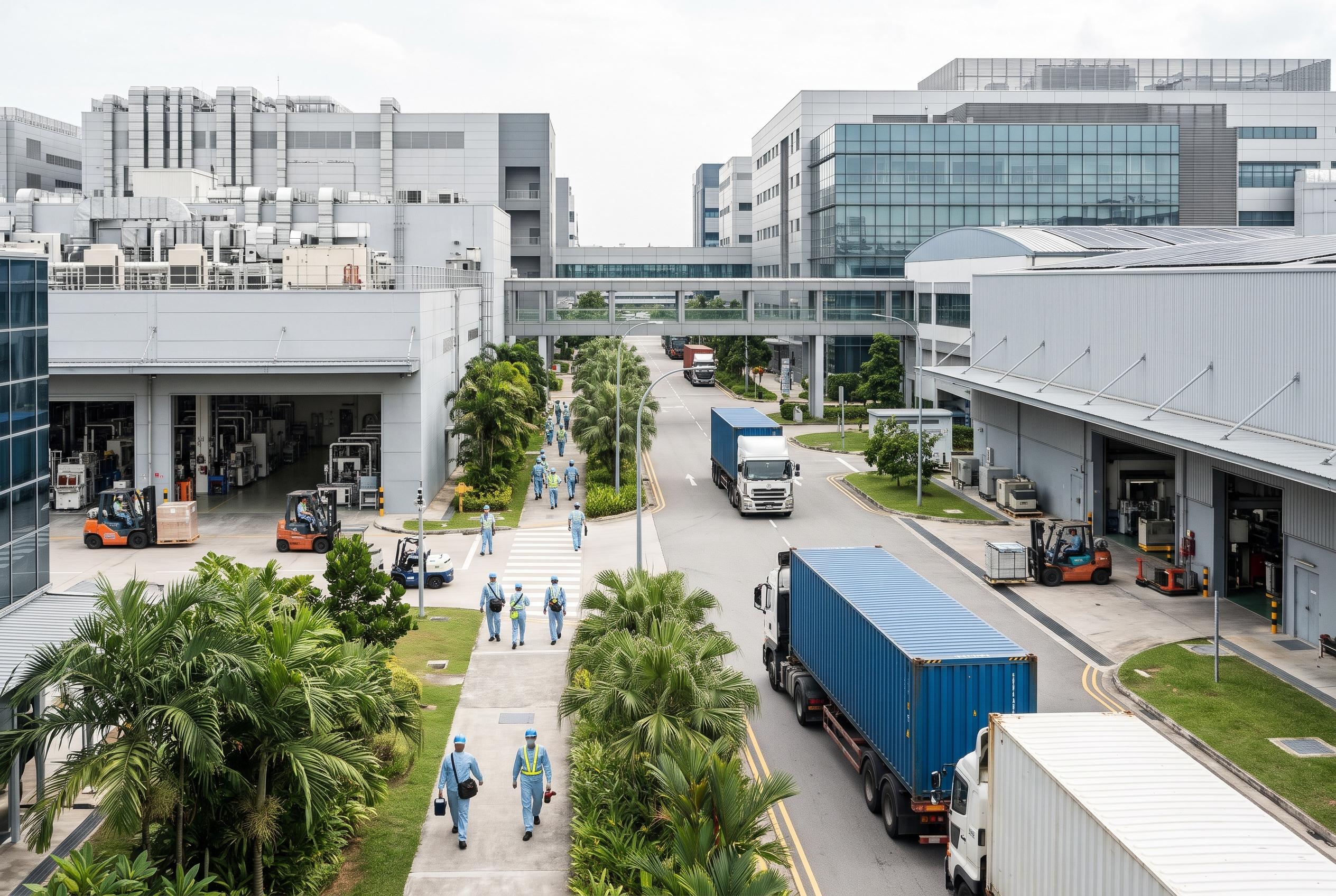
Southeast Asia is becoming a crucial semiconductor hub as AI demand and U.S.-China tensions push companies to diversify production. From Singapore’s research strengths to Malaysia and the Philippines’ packaging ambitions, the region is building a connected chip ecosystem that could create jobs, attract investment and reshape how the world makes electronics.
AI Demand Gives Southeast Asia a Timely Opening
The strongest force behind Southeast Asia’s semiconductor rise is simple: the world wants more chips, and AI has made that appetite even bigger. At the same time, companies are looking for alternatives to concentrated production in China, creating a powerful opening for countries across the region.
According to Fortune, Southeast Asia’s chip export industry is worth roughly $258 billion. Semiconductor and component exports to China reached $42.2 billion in 2023, while exports to the United States totalled $15.1 billion.
That combination of demand and geopolitical caution is pulling investment toward Singapore, Malaysia, Vietnam, Thailand and the Philippines. As the Lowy Institute has noted, the region sits between major powers while offering a broad mix of industrial capacity, trade links and investment destinations.
The opportunity feels particularly important because Southeast Asia doesn’t need to win every part of chipmaking. It can instead become the place where multiple stages connect smoothly, from research and design to packaging, testing and logistics.
One Region, Many Specialties
Southeast Asia’s advantage lies in its variety. Singapore has developed deep expertise in semiconductor research, manufacturing and high-value operations, with major facilities operated by companies including Micron Technology and GlobalFoundries.
Malaysia and the Philippines, meanwhile, have long been associated with assembly, testing and packaging. Those jobs may once have been treated as the less glamorous end of the industry, but the picture is changing as chips become more complex and advanced packaging becomes central to performance.
Industry analysis from Singapore’s Economic Development Board highlights the region’s ability to combine manufacturing experience, strategic location and multiple investment options. That mix can appeal to companies pursuing a “China plus one” strategy, particularly when they want flexibility rather than a complete break from existing networks.
The result is less a single factory floor than a sprawling regional workshop. One country may handle design, another packaging and another logistics, with components crossing borders several times before reaching a customer.
ASEAN’s Chip Framework Has Promise, but It Isn’t a Single Market
In 2025, ASEAN launched the ASEAN Framework for an Integrated Semiconductor Supply Chain, or AFISS. The initiative is intended to encourage countries to coordinate their roles and strengthen the region’s position as chip investment expands.
But ASEAN doesn’t operate like the European Union. Its members guard national sovereignty closely, so a regional plan can guide cooperation without guaranteeing that governments will align their industrial policies, regulations or spending decisions.
The practical details may matter more than the branding. Easier customs procedures, shared technical standards and smoother movement for skilled workers could lower the cost of producing chips across several Southeast Asian countries.
Research from the Lowy Institute and other regional analysts points to the same strategic tension: Southeast Asia wants greater integration, but it also wants to preserve room for national priorities. That balance won’t always be comfortable.
A fully self-sufficient ASEAN chip industry could also be the wrong goal. As Asia University economist Arata Kuno has warned, trying to replicate every stage of production within the region might raise costs and reduce competitiveness. The smarter approach is likely to build a flexible network that remains connected to global suppliers and customers.
Advanced Packaging Could Be the Region’s Next Big Move
Moving up the semiconductor value chain doesn’t necessarily mean building the world’s most advanced wafer fabs. Those facilities require enormous capital, dependable supplies of power and water, and a deep bench of highly trained specialists.
Advanced packaging offers a more realistic route. It helps combine and connect chip components, improving performance while allowing manufacturers to create sophisticated systems without placing every bet on a new leading-edge factory.
Reports from Southeast Asia-focused industry groups suggest the region’s existing experience in assembly and testing gives it a useful foundation. Packaging is becoming more technically demanding, so established facilities and trained workers can provide a head start.
Malaysia has already been trying to expand into front-end manufacturing and chip design through its National Semiconductor Strategy. The Philippines has also set ambitious export goals, targeting $110 billion in annual chips and electronics exports by 2030.
Still, big targets need more than announcements. Reuters reported that Vietnam’s first semiconductor plant could miss its planned 2027 trial-production date, with limited experience among the project’s operators cited as one concern. That’s a reminder that semiconductor expansion is a marathon of engineering, training and execution, not a quick investment headline.
The Real Test Is Building Local Chip Champions
Foreign investment has brought money, technology, customers and valuable training to Southeast Asia. Major companies such as Micron and Intel have helped establish the region’s manufacturing credibility.
But attracting multinational factories doesn’t automatically create strong local semiconductor companies. Technology can remain inside the global parent company, while local businesses handle production without developing their own intellectual property or products.
That’s why patient financing, sustained research and development and access to international customers will be essential. Analysts cited by Fortune argue that policies must also survive changes in political leadership, which is easier said than done.
The warning from Japan’s past is worth remembering. A once-dominant industry lost ground after relying too heavily on a vertically integrated model while the global market shifted toward different chip types and more international production.
Southeast Asia may have a better chance if it embraces specialization rather than trying to do everything itself. Its most valuable asset could be the ability to connect different strengths across borders, quietly and efficiently, while giving homegrown companies time to grow.
Southeast Asia’s Chip Moment Is Still Being Built
The region has momentum, but momentum isn’t the same as permanence. Skills shortages, regulatory friction and uneven infrastructure could all limit how much investment turns into lasting capability.
For now, though, AI demand and supply-chain diversification have placed Southeast Asia in an unusually strong position. The region doesn’t need to replace Taiwan, South Korea or China to matter; it needs to become harder for global chipmakers to operate without.
That’s an achievable ambition, and perhaps the most commercially sensible one. As one regional analyst put it, Southeast Asia’s strength is its role as a connector across global supply chains.
Disclaimer: This article may have been created with AI assistance and reviewed by our editorial team. It is provided for general informational purposes only. Readers should verify information independently before relying on this content.
