
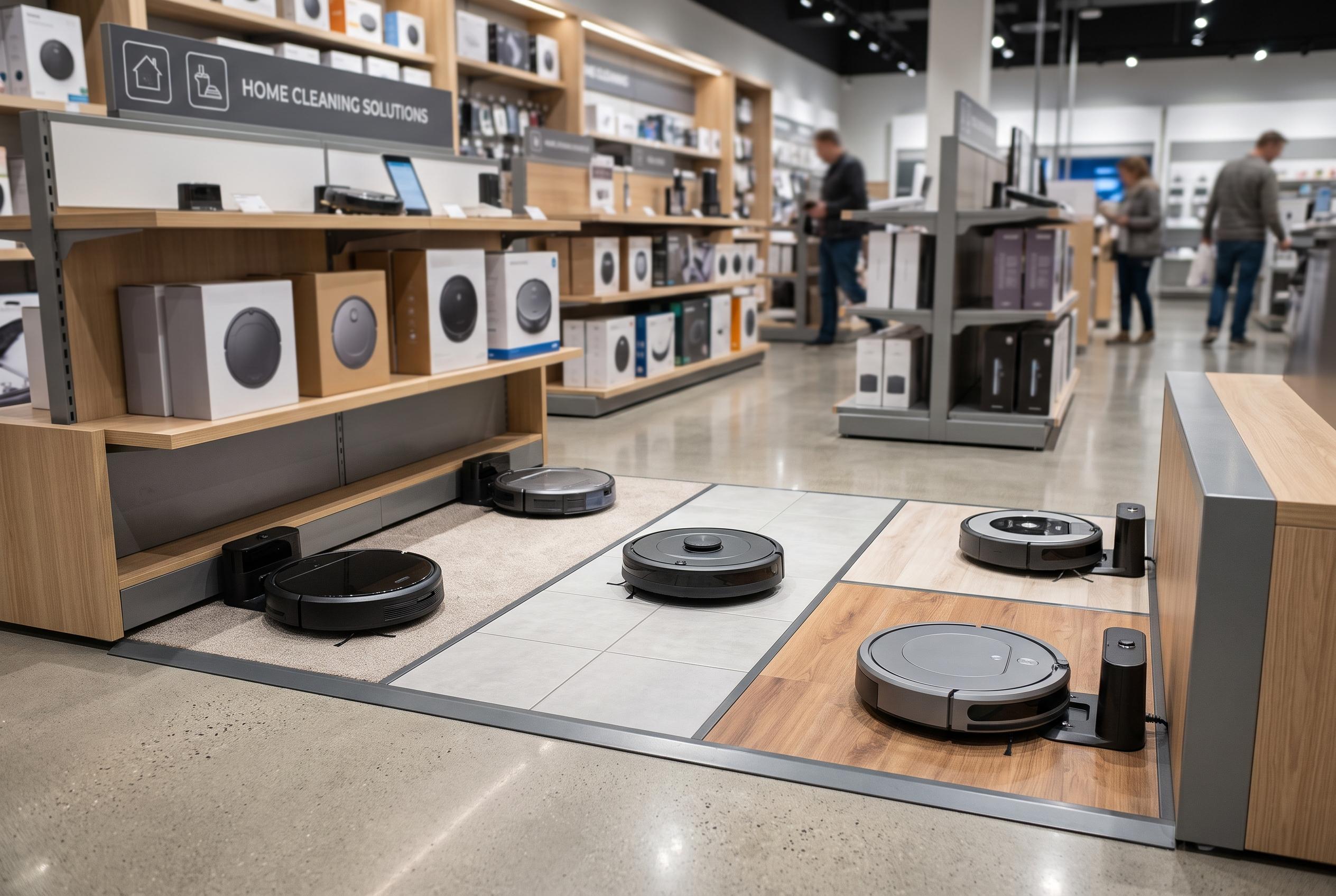
The FCC's new restrictions on advanced robotic devices threaten to impact international manufacturing and supply chains, raising questions about future availability and market dynamics for smart home appliances.
The FCC’s latest move to tighten control over wireless equipment authorization is beginning to reach beyond routers and drones. According to PCMag, the agency has told the publication that its restrictions on "advanced robotic devices" also include robot vacuums, a category that has become a staple in many homes. The result could be significant for a market that relies heavily on overseas manufacturing, even if the immediate effect for shoppers is far more limited than the word "ban" suggests.
Under the rules described by PCMag, the key issue is not whether a robot vacuum is futuristic, but whether it contains the kinds of features that most modern models already use: sensors, network connectivity and software for autonomous movement. The FCC also says the category includes devices over a certain combined weight threshold, including some models with self-emptying bases. Because the agency requires authorization for electronic products that emit radio frequencies, any foreign-made device on the Covered List cannot receive approval for U.S. sale, which would effectively block importation and distribution.
For consumers who already own a robot vacuum, the practical message is reassuring. Existing devices that have already cleared FCC review are not affected, and they can continue to operate normally. PCMag reports that currently available models can still be sold if they already have authorization, while the risk falls mainly on future models that have not yet been cleared. The publication also notes that some products in the near-term launch pipeline may already have approval, which could delay any visible disruption for months.
The bigger question is how much the policy could reshape sourcing and manufacturing. PCMag says most major robot vacuum brands build overseas, including well-known names such as Dreame, Dyson, Ecovacs and Roborock, while U.S.-based iRobot was acquired in January 2026 by China’s Picea. Shark is also described as a U.S.-based brand that manufactures in China and Southeast Asia. If the regulation remains unchanged, those companies could face pressure to shift production.
There are still ways around the restriction, but they are narrow. According to PCMag, companies can seek conditional approval, and products not intended for consumer sale, such as government or development units, may be exempt. Replacement parts for already approved vacuums are also expected to remain available. That means consumers should still be able to buy dust bags, brushes and other maintenance items for current machines even if the market for new models becomes harder to navigate.
For buyers, the near-term advice is less urgent than the headline may suggest. PCMag says shoppers do not need to panic-buy immediately, especially if they are waiting for seasonal discounts, but they should watch the category closely in case the FCC expands the policy or courts get involved. For now, the clearest takeaway is that today’s robot vacuums are still legal to buy, own and repair, even as the policy clouds the future supply of new models.
What this could mean for sourcing and supply chains
Beyond the consumer headline, the deeper story is about sourcing. Robot vacuums sit at the intersection of electronics, mobile connectivity, autonomous software, and global logistics. That makes them a useful example of how a regulatory change can ripple through a product category that most people think of as simple home convenience.
For manufacturers, the immediate challenge is not just compliance paperwork. It is the possibility that a device designed for one market may no longer be easy to move through the approval pipeline if key hardware, firmware, or production steps take place overseas. In practice, that can affect everything from contract manufacturing decisions to component selection, certification timelines, and inventory planning. Even brands with strong consumer recognition may need to revisit sourcing strategies if they want to keep U.S. distribution steady.
This is especially relevant in the electronics sector, where supply chains are often optimized for speed, cost, and scale. A robot vacuum is not just a motor and a dust bin. It is a connected device that often includes Wi-Fi radios, mapping sensors, lidar or camera-based navigation, firmware updates, and cloud-connected companion apps. Each of those elements can increase the complexity of authorization and make regulatory uncertainty more expensive to manage. When a product category depends on rapid refresh cycles, even modest friction can alter launch schedules.
The logistics angle matters too. If a foreign-made device cannot receive authorization, then importation and distribution become harder to forecast. That can force brands and retailers to adjust warehouse orders, preorder campaigns, and seasonal promotions. Retailers may become more cautious about listing future models until they know whether a device can be cleared for the U.S. market. In turn, that may limit consumer choice in the short term, especially for premium models that rely on advanced automation features.
For shoppers, the lifestyle impact may be subtle at first but noticeable over time. Robot vacuums have become part of the modern home because they fit into busy routines and reduce daily chores. Consumers often shop for them like other mobile or connected devices: they compare app controls, smart-home compatibility, battery life, mapping accuracy, and noise levels. If the policy narrows which models can reach shelves, then the selection of features available at different price points could shrink. That does not mean the market disappears. It does mean the market may become less dynamic.
There is also a competitive implication. If some companies can adapt more quickly than others, the regulation may create an advantage for firms with flexible manufacturing, established compliance teams, and strong distribution partners. Brands that already have authorized stock in the pipeline may be able to continue selling longer than rivals that still need clearance. Over time, that can influence which names remain prominent in U.S. retail channels.
Why the consumer reaction may be calmer than the headlines
The word “ban” gets attention, but it can be misleading if read too broadly. Based on PCMag’s reporting, the FCC action is better understood as an authorization issue than an instant removal from households. That distinction matters because a device already in a home is not suddenly useless. Existing ownership, repairs, and normal use are not the same thing as future import approval.
This is why the near-term consumer response should probably be measured rather than alarmed. Buyers who already own a robot vacuum can continue using it. People shopping for one may still find plenty of approved units on the market. The more important question is whether future product launches stay available at the same pace and at the same price level. If sourcing shifts are required, some costs could rise, and some product refreshes could take longer to arrive.
The consumer electronics industry has seen this kind of pattern before: a regulatory change begins with a narrow interpretation, then expands market consequences through supply chain behavior, retailer caution, and slower launches. That is why companies often watch policy shifts as closely as they watch component shortages. In a connected device market, manufacturing and compliance are tightly linked.
What brands may do next
If the policy stays in place, brands may look at several responses. One option is to seek approval earlier in the product development cycle so that authorization is not a last-minute hurdle. Another is to diversify manufacturing locations so that no single sourcing path creates a bottleneck. Some companies may also simplify features or shift hardware combinations to better align with regulatory requirements.
That said, these are not small changes. A robot vacuum is a lifestyle product, but it is also an advanced electronics platform. Altering its design can affect cleaning performance, app integration, navigation accuracy, and cost. For that reason, companies are likely to weigh market access against engineering tradeoffs. A rushed redesign may not be worth it if it weakens the product.
Retailers may also become more selective. If future availability becomes uncertain, they may place greater emphasis on approved inventory and replacement accessories. That could make the secondary ecosystem, filters, brushes, dust bags, and maintenance kits, more important than the launch of a new flagship model. For many consumers, the ecosystem matters because it extends the useful life of a device they already own.
Takeaways
- - The FCC’s move is more about authorization than an immediate consumer ban.
- - Existing robot vacuums already approved for U.S. sale can continue operating.
- - The biggest pressure point is sourcing, especially for overseas manufacturing.
- - Electronics with wireless functions and autonomous software are more exposed to compliance risk.
- - Consumers should watch future availability, but there is no need to panic-buy right now.
- - Replacement parts and maintenance items should remain available for current models.
FAQ
Are current robot vacuums illegal now? No. PCMag says already approved devices can still be sold, owned, and used.
Will this affect replacement parts? PCMag reports that parts for approved vacuums are expected to remain available.
Does this mean every robot vacuum is banned? No. The issue is authorization for certain foreign-made devices on the Covered List.
Should shoppers buy immediately? Not necessarily. The article suggests there is no need to panic-buy, though buyers should follow the policy closely.
Could brands move production? Yes, if they want to keep U.S. market access under the current rules, sourcing changes may become more important.
Disclaimer: This article may have been created with AI assistance and reviewed by our editorial team. It is provided for general informational purposes only. Readers should verify information independently before relying on this content.
