
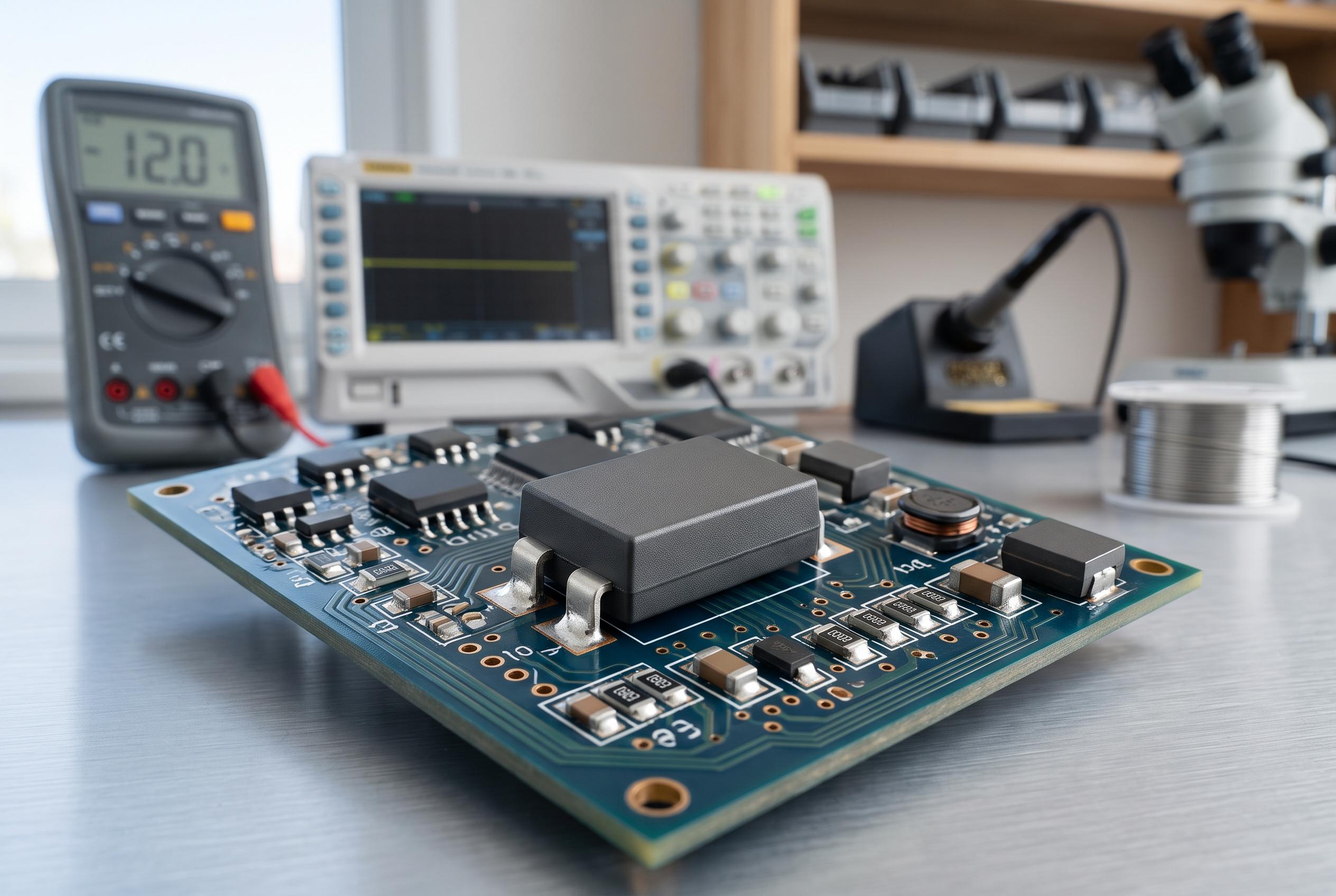
- Market shifts from niche to mainstream industrial component by 2035
- Growth driven by automation, renewable energy, EV charging, and digital features
- Supply chain constraints in SiC and GaN substrates may impact adoption and pricing
The global market for solid state fuses is shifting from a niche kind of protection device into a wider-scale industrial component that’s gaining real traction. According to IndexBox, this trend is expected to continue strong through 2035, as manufacturers, utilities, and equipment producers are all looking for faster fault detection and smarter protection systems. The report estimates the market was around $1.2 billion in 2025, and projects it could rise to about $4.5 billion by 2035. This shift is mainly driven by moving away from traditional electromechanical fuses, especially in sectors like automation, renewable energy, and EV charging systems. And, just to add, that growth is bolstered by a broader move toward semiconductor-based protection platforms built on MOSFET, IGBT, silicon carbide, and gallium nitride tech.
Now, industrial automation remains the biggest end market overall. Still, the fastest growth is coming from semiconductor and precision manufacturing applications where the need for protection is much more exacting, and even a small downtime can be really costly. IndexBox reports that about 40% of demand stems from factory automation and instrumentation, but applications related to semiconductors are growing much more quickly, especially as chipmakers increase capacity and move to more advanced process nodes. The report also highlights that solid state fuses are increasingly being specified with digital communication features, like IO-Link and CAN bus, which allow for remote reset, diagnostics, and predictive maintenance, beyond just simple interruption.
Looking at the larger picture, the outlook for this market is heavily influenced by the same power-electronics trends that are pushing other sectors forward. The broader circuit breaker market report from DataM Intelligence points to similar demand drivers, such as the need for super-fast disconnection in data centers, EV charging stations, and renewable installations. Also, EE Times Japan reports that the overall power semiconductor industry is expected to grow significantly by 2035. Devices made from silicon carbide and gallium nitride are expanding quickly, thanks to their adoption in EV inverters, automotive systems, and server hardware. Semiconductor Today added that wide-bandgap devices are becoming key players in the next wave of power electronics because they offer better efficiency, higher density, and smaller size.
Of course, supply conditions continue to be a big hurdle even as demand spreads wider. IndexBox points out that most production and consumption take place in Asia-Pacific, but North America and Europe still mainly depend on importing. The report notes that there’s some production expansion happening in Thailand, Vietnam, and Poland, attempts to diversify away from a narrow supply base, basically. Yet, shortages of high-voltage SiC and GaN substrates are still causing delays and extended lead times, which might keep prices high for premium products and slow down adoption in markets where cost definitely matters.
For buyers and suppliers in this space, the key takeaway is that solid state fuses are turning into part of a broader overhaul of power protection strategies, rather than just replacing older hardware. The biggest opportunities seem to be in high-uptime manufacturing facilities, renewable energy converters, EV charging infrastructure, and OEM platforms that are willing to pay more upfront for faster fault isolation and digital monitoring. IndexBox expects fierce price competition for standard silicon-based products, but premium semiconductor systems, those with advanced certification, better integration, and available substrates, are likely to keep their pricing power pretty handy, despite the market’s overall trends.
Takeaways
- - Solid state fuses are moving from a niche electronics component into a mainstream industrial protection solution.
- - Growth is being driven by automation, renewable energy, EV charging, and semiconductor manufacturing.
- - Digital features like IO-Link and CAN bus are making these devices more useful for remote diagnostics and predictive maintenance.
- - Supply chain constraints in SiC and GaN substrates may continue to affect logistics, pricing, and lead times.
- - Buyers focused on uptime, precision, and long-term reliability may be most likely to adopt premium platforms.
Frequently Asked Questions
What is driving demand for solid state fuses? Demand is rising because industries want faster fault detection, better protection, and more digital control in power systems.
Which markets are growing the fastest? Semiconductor manufacturing, precision industrial applications, EV charging, and renewable energy are among the fastest-growing areas.
Why do SiC and GaN matter? They support higher efficiency, smaller size, and better performance in advanced electronics and power systems.
What is the biggest challenge for the market? Supply constraints, especially around high-voltage substrates, continue to affect availability and cost.
Disclaimer: This article may have been created with AI assistance and reviewed by our editorial team. It is provided for general informational purposes only. Readers should verify information independently before relying on this content.
Source Reference Map
Inspired by the headline at: [1]
Sources by paragraph: - Paragraph 1: [2], [3] - Paragraph 2: [2], [4] - Paragraph 3: [5], [6] - Paragraph 4: [1], [7] - Paragraph 5: [1], [2], [4], [6]
