
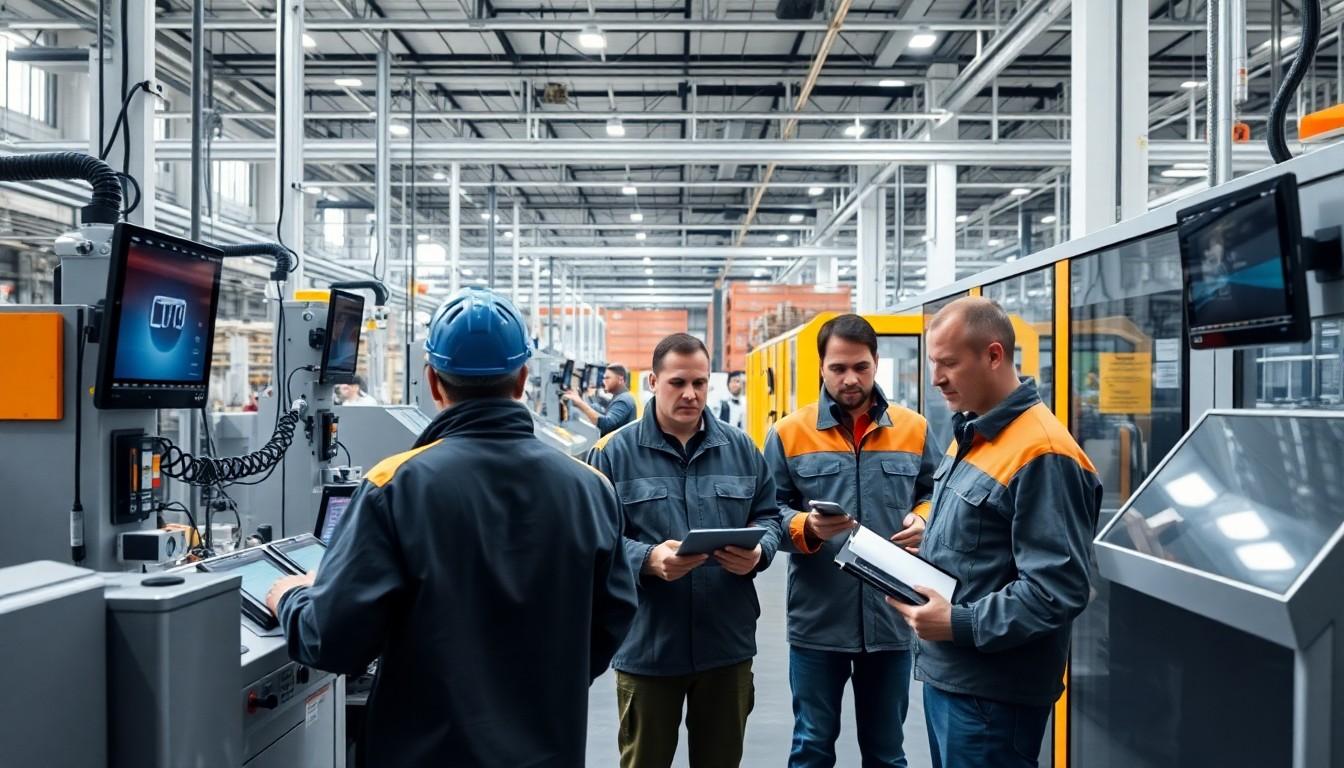
Manufacturers are shifting from testing industrial AI on isolated projects to rebuilding the everyday processes around it. That matters because the biggest gains may come less from futuristic robots than from faster sourcing, cleaner quality records, and better decisions across the factory floor. The challenge now is turning useful predictions into actions people can trust.
Industrial AI's pilot phase is running out of road
For years, manufacturers have trialed industrial AI in contained settings, from machine monitoring to computer vision on one production line. Those experiments helped prove the technology could work, but many stopped short of changing how the wider business operated.
Now the more revealing question is what happens after the demonstration. A predictive alert has little value if nobody knows who should respond, where the relevant information lives, or which decision should follow. As manufacturing technology companies such as Route42 and Predco focus on operational applications, the conversation is moving closer to execution.
That shift is important because production systems aren't forgiving. A poor recommendation can create scrap, disrupt delivery schedules, or introduce a compliance problem. Manufacturers need AI that fits the work already happening, not another impressive screen competing for attention.
The quiet processes may deliver the biggest gains
When people imagine industrial AI, they often picture robotic arms, automated inspection, or software that designs a clever new component. Those tools have a place, but the less glamorous work between departments may offer a faster return.
Consider sourcing. Teams may need to compare supplier quotations, verify certifications, reconcile technical requirements, and check lead times across several systems. Quality teams face a similar tangle of inspection records, nonconformance reports, standards, and historical documentation. AI can help organize that information and return valuable hours to people who currently spend them matching fields and chasing files.
Actual AI and Autologiq represent the broader push toward applying automation to operational workflows rather than treating AI as a standalone novelty. It's not flashy, but reducing small delays across purchasing, engineering, and quality can create a surprisingly large cumulative effect.
Why factory AI needs a higher standard of trust
Industrial AI isn't simply consumer AI wearing a hard hat. A mistaken entertainment recommendation is annoying; an incorrect manufacturing recommendation can affect safety, product quality, regulatory obligations, or a customer's delivery.
The underlying data is often difficult, too. It may be scattered across enterprise resource planning software, computer-aided design files, supplier portals, inspection systems, and paper records. Before a model can produce useful guidance, organizations may need to standardize names, fill gaps, and establish which version of a specification is authoritative.
That work can feel less exciting than choosing a model, but it's often the foundation of a reliable deployment. Companies exploring industrial AI through providers such as Actual AI, Route42, and Predco are part of a market where traceability and human review matter as much as speed.
The best systems support skilled people
The strongest case for industrial AI isn't that it can replace every expert. It's that it can strip away repetitive tasks so experienced employees have more time for decisions that genuinely require judgment.
An engineer shouldn't need to spend an entire afternoon reformatting supplier spreadsheets or checking hundreds of part numbers by hand. A useful system might narrow the search, highlight an unusual result, or flag a likely quality issue. The person still decides what to do, but they're starting with a clearer, shorter list.
That distinction could make or break adoption. Manufacturing workers are understandably wary of technology framed mainly as a headcount-cutting exercise. Tools that protect time for troubleshooting, design, supplier negotiations, and process improvement feel more practical, and they're far more likely to earn trust on the floor.
How manufacturers can make the next step stick
The practical starting point isn't necessarily the most dramatic use case. Manufacturers should look for a workflow with visible friction, reliable enough data, and a clear owner who can act when the system produces a result.
From there, teams need to define the handoff. Who receives the alert? What information supports it? How quickly should they respond? When is human approval required? These questions turn an AI experiment into an operating process.
Companies including Autologiq and Predco point to a wider industry direction: AI is becoming more useful when it sits inside the decisions teams already make. The winners won't simply deploy the most sophisticated model. They'll connect trustworthy insights to the right people at the right moment, then measure whether the work actually gets easier.
The next industrial AI advantage will be operational
The next phase will likely be won in the unseen middle of manufacturing, where specifications are reconciled, records are checked, and decisions move between departments. Those tasks may not make a dramatic product demo, but they shape cost, speed, quality, and resilience every day.
Manufacturers that treat AI as a workflow redesign rather than a software add-on will have a better chance of seeing lasting value. The goal isn't to add one more dashboard. It's to make the next sensible action easier to find and safer to take.
A quieter, more practical AI revolution may be exactly what factories need.
Disclaimer: This article may have been created with AI assistance and reviewed by our editorial team. It is provided for general informational purposes only. Readers should verify information independently before relying on this content.
