
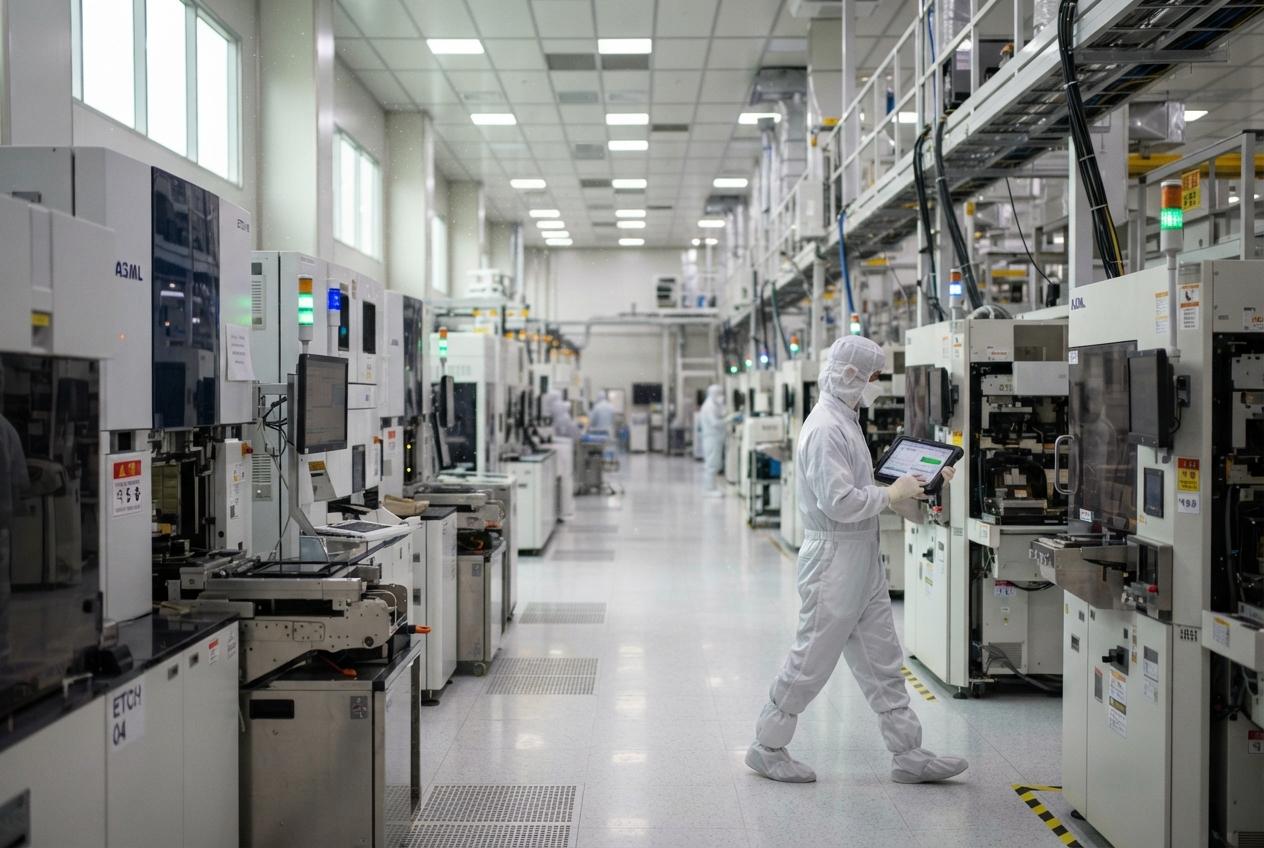
South Korean startup Mithril is shifting industrial AI from defect detection to real-time process management, promising higher accuracy and autonomous factory operations by integrating foundation models into manufacturing systems.
Mithril, a South Korean startup founded in November 2023, is betting that industrial AI will move well beyond inspection and into real-time process control. The company says its systems do not merely flag defects after production; instead, they analyze equipment and sensor data while manufacturing is still underway, estimate the chance of failure before a product is finished, and can help guide corrective action with human approval.
Chief executive Cho Jung-hyun said the aim is to make factory equipment behave less like fixed machinery and more like a thinking system that can analyze conditions and respond on its own. Mithril’s software is built around industrial foundation models, a category of AI designed to learn the language of engineering and manufacturing rather than only classify images or spot obvious faults. That broader approach reflects a wider industry push to build models that understand complex production environments instead of relying on narrow, task-specific tools.
The company says it first built its business around industrial safety, installing cameras, sensors and edge computing devices at existing sites so AI could assess hazards without replacing machinery. It has since shifted toward equipment autonomy, especially in semiconductors and displays, where it works with equipment makers rather than end manufacturers. By linking AI to control software, Mithril says it can read signals from sensors, motors and other systems, then infer process state and defect risk.
Cho said the technology has already shown promising results on production lines. In one case, Mithril says it identified a defective outcome nine minutes before the end of a process with 89% accuracy. In another demonstration involving semiconductor materials, the company says anomaly prediction improved from about 40% using conventional methods to nearly 100% after applying its AI. The broader research picture suggests why such claims matter: studies on time-series foundation models and industrial defect detection have argued that predicting faults before they occur is more useful than simply spotting them afterward, though other research has also warned that models that perform well in public benchmarks can struggle badly on real factory data.
For now, the system is not left to act entirely on its own. Mithril says human experts still review the AI’s judgment before a line is stopped or conditions are changed, a setup often described as human-in-the-loop. The company is also building explainable AI tools so engineers can see which sensor readings and process conditions drove a prediction, an important requirement when a false alarm could mean costly downtime or scrap. That emphasis on explanation and verification aligns with the reality of advanced manufacturing, where inline metrology and other high-precision systems already play a central role in keeping semiconductor processes under control.
Mithril’s business model is built around software licensing and subscriptions tied to equipment sales or usage, not direct sales to factories. The company says that arrangement allows equipment makers to turn existing products into AI-enabled systems while giving Mithril recurring revenue. It also leaves the hardware largely unchanged, which could help adoption in industries where replacing installed equipment is expensive and disruptive.
The startup currently employs about 40 people, roughly 70% of them in research and development. It says last year’s revenue was about 1 billion won, with cumulative contracts and orders since launch totaling about 3.3 billion won. Mithril is targeting 6 billion won in revenue this year and more than 10 billion won next year, while its ongoing Series A round is expected to bring cumulative investment to about 16 billion won.
Looking ahead, the company is preparing for an initial public offering in 2028 and has chosen Mirae Asset Securities as lead underwriter. Japan is its immediate overseas priority, followed by North America, where semiconductor and advanced manufacturing investment remains strong. For Mithril, the long-term ambition is not just better defect prediction, but a broader industrial AI operating system that helps factories analyze, decide and act with far less human intervention than before.
Source Reference Map
Inspired by headline at: [1]
Sources by paragraph: - Paragraph 1: [2] - Paragraph 2: [3] - Paragraph 3: [2] - Paragraph 4: [5], [6] - Paragraph 5: [2], [7] - Paragraph 6: [2] - Paragraph 7: [2] - Paragraph 8: [2]
