
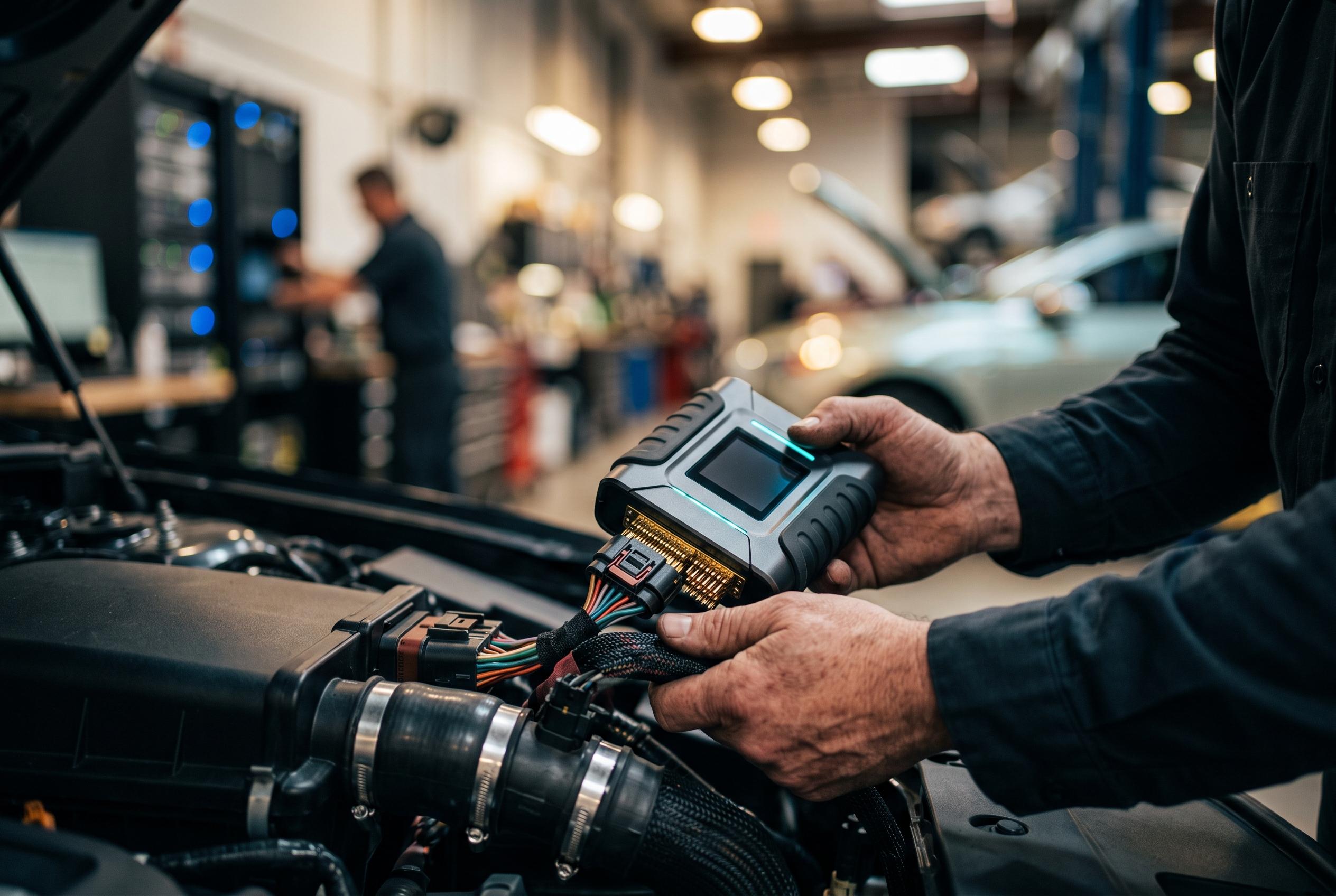
Automakers are turning vehicles into rolling software platforms, and the shift is changing everything from supplier relationships to repair skills. As software-defined vehicles gain ground across the industry, cybersecurity, updates, cloud systems, and lifelong digital support are becoming just as important as engines, brakes, and bodywork.
Essential Takeaways
- - Software now shapes the driving experience: Performance, safety, connectivity, and entertainment increasingly depend on code.
- - Tier-1 suppliers face a reset: Automakers are separating hardware from software and seeking more specialized partners.
- - Regulation is accelerating change: UN rules require stronger cybersecurity controls and safer software-update processes.
- - Technicians need broader skills: Digital diagnostics, network security, and software validation are becoming valuable career tools.
- - The vehicle's life doesn't end at delivery: Updates, subscriptions, monitoring, and support can create years of ongoing business.
Cars are becoming software platforms on wheels
The most important change in the software-defined vehicle isn't visible from the curb. Under the familiar sheet metal, software is taking over functions that once depended almost entirely on fixed hardware. A quiet update could improve a feature, alter a vehicle setting, or close a security gap without a visit to a dealership.
That makes the car feel less like a finished product and more like a connected device. Strategy&, part of PwC, describes the move as a major restructuring of automotive development, with digital architecture becoming central to how manufacturers design, build, and support vehicles.
For drivers, the appeal is easy to understand. A vehicle can gain new capabilities after purchase, while manufacturers can respond more quickly to problems. But there's a catch: every added connection creates another responsibility to protect, test, and maintain.
Tier-1 suppliers are losing their old black-box role
For decades, major suppliers delivered ready-made systems that automakers could integrate with relatively little visibility into the underlying technology. That arrangement worked well when the value sat primarily in the physical component. In the SDV era, however, manufacturers want more control over the vehicle's central software and digital experience.
The result is a gradual separation of hardware and software. Instead of buying one sealed package, automakers can choose chips, operating systems, middleware, cloud tools, and specialist applications from different partners. According to Strategy&, this is encouraging a more open ecosystem and changing the balance of power between automakers, traditional suppliers, and technology companies.
That shift won't make established suppliers irrelevant overnight, but it does raise the stakes. Companies that once earned revenue from a single installed component may increasingly need to provide updates, monitoring, validation, and other services throughout the vehicle's life.
Cybersecurity rules are speeding up the transition
Software-defined vehicles can't be treated like ordinary products once they're connected to the internet. A vulnerability can affect thousands of vehicles in the field, while a poorly managed update could create safety or reliability problems. That's why cybersecurity and software governance have moved from technical concerns to boardroom priorities.
The United Nations regulations known as UN R155 and UN R156 are key parts of that change. R155 focuses on vehicle cybersecurity management, while R156 addresses software updates and the systems needed to control them. The UK's Vehicle Certification Agency says manufacturers must show that these processes are managed across the vehicle life cycle, not simply checked before production.
In practical terms, that means automakers need documented procedures, traceable updates, risk controls, and evidence that systems work as intended. It also opens doors for companies offering secure development tools, automated testing, deployment systems, and continuous monitoring. The less glamorous side of software may prove to be one of the industry's biggest growth areas.
What the SDV shift means for automotive workers
The modern technician won't necessarily need to become a full-time programmer, but digital fluency is becoming harder to avoid. Diagnosing a vehicle may increasingly involve examining communication networks, interpreting software logs, checking update histories, and understanding how cloud services interact with onboard systems.
That creates a genuine training challenge. Mechanical knowledge remains essential, especially for safety-critical systems, but it now sits alongside cybersecurity awareness and data literacy. The strongest professionals may be those who can move comfortably between a physical inspection and a digital diagnostic screen.
The same applies to businesses. A service company built around one-off repairs may need to think about recurring support, remote diagnostics, software validation, or fleet monitoring. Industry guidance around UN R156 makes clear that update management isn't a one-time task. Someone has to keep those systems safe and functional long after the vehicle leaves the factory.
A new automotive ecosystem is taking shape
The old supply chain was comparatively linear: automaker, Tier-1 supplier, component maker, then vehicle. Software-defined vehicles create something far more interconnected, with automakers working directly with chip designers, cloud providers, cybersecurity specialists, and software firms.
This arrangement can speed innovation, but it also makes coordination more difficult. A small change in one layer may affect several others, so testing and accountability become crucial. Itemis notes that R156 requires manufacturers to manage software updates systematically, including their impact on vehicle safety and compliance.
For consumers, the upside could be more capable and adaptable vehicles. The trade-off is that ownership may feel increasingly similar to managing a smartphone or home network, with update notices, permissions, compatibility issues, and subscription decisions. It's a little strange, perhaps, but the dashboard is becoming a software storefront as much as a control panel.
The winners will think beyond the sale
The software-defined vehicle market is still developing, but its commercial logic is already clear. Value won't be created only when a vehicle is assembled or handed over. It can continue through feature upgrades, security services, data-based tools, fleet support, and long-term digital maintenance.
That makes recurring relationships more important for automakers and suppliers alike. Companies that can combine dependable hardware with secure, easy-to-manage software will be better positioned than those relying solely on a traditional parts business.
For trade professionals, the message is straightforward: keep learning, build partnerships, and treat software as part of the vehicle rather than an optional extra. The next generation of automotive expertise may be found wherever a wiring harness meets a cloud connection.
The car may still smell like rubber and upholstery, but its future is increasingly written in code.
Disclaimer: This article may have been created with AI assistance and reviewed by our editorial team. It is provided for general informational purposes only. Readers should verify information independently before relying on this content.
