
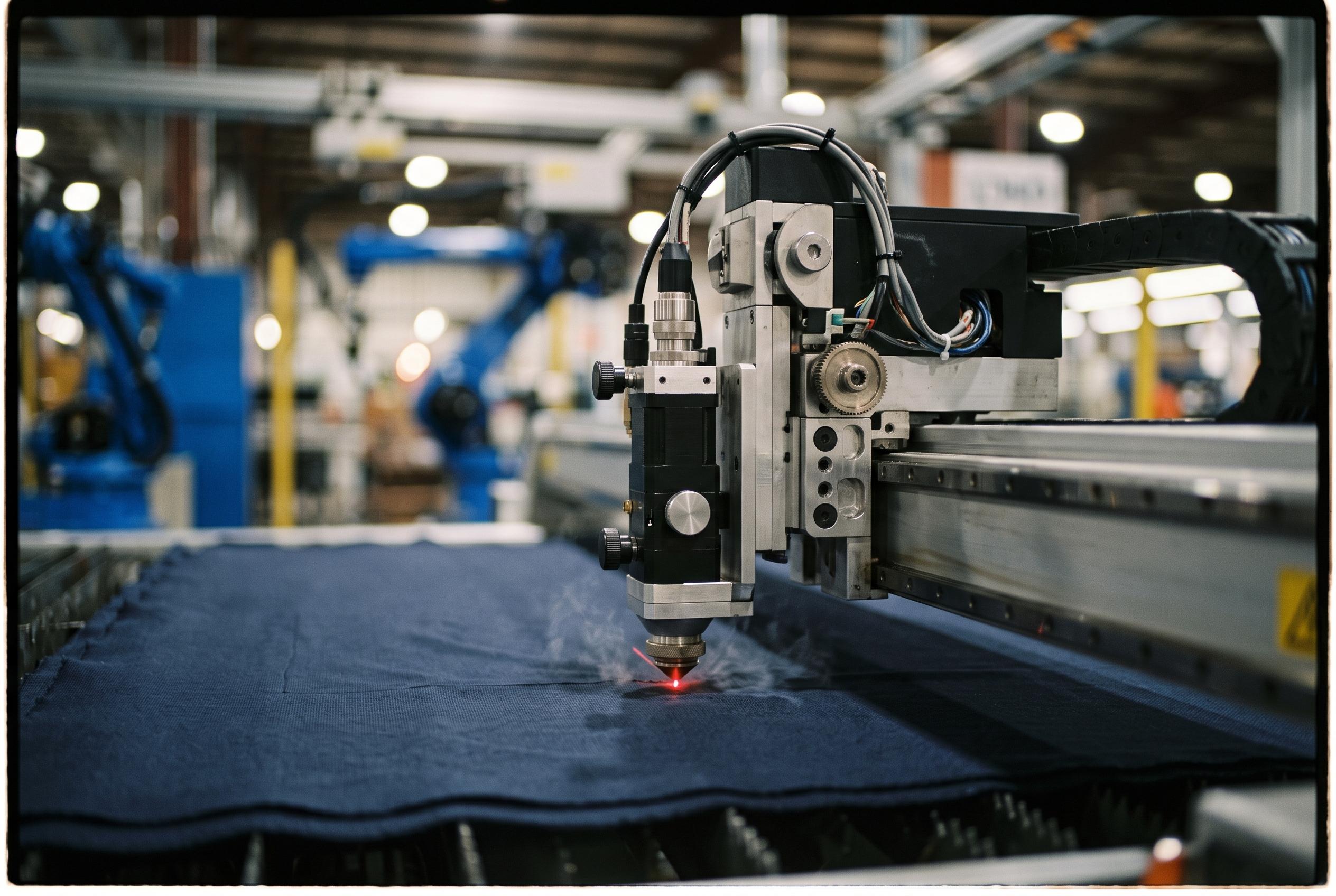
Vietnam’s textile industry is betting on greener factories, smarter technology, and broader markets to keep export growth moving. With orders secured at several major manufacturers and exports already reaching $33.66 billion by mid-September, the sector is positioning itself for a demanding but promising 2026.
Essential Takeaways
- - Ambitious target: The industry is aiming for $47 billion to $47.5 billion in exports in 2026, with a possible push toward $48 billion if late-year demand improves.
- - Global reach: Vietnamese textile products now reach 137 countries and territories, with the US accounting for roughly 40% of export value.
- - Digital investment: Many companies are directing about 65% to 68% of investment toward automation, artificial intelligence, and robotics.
- - Greener production: Solar power, improved wastewater treatment, and environmentally friendlier materials are becoming central to factory planning.
- - Pressure remains: Buyers are demanding tougher technical standards, faster delivery, and sharper prices, even when factories have full order books.
Vietnam’s textile exports are growing, but the easy wins are gone
Vietnam’s textile and garment industry has reached a pivotal stretch. Export earnings stood at an estimated $33.66 billion by September 15, putting the sector within sight of its 2026 target, but the road ahead is hardly effortless. According to VietnamPlus, companies are balancing rising costs, demanding buyers, and stricter international trade requirements while trying to protect production momentum.
The sector’s strategy is built around diversification. Vietnamese products are sold across 137 markets, including the US, European Union, South Korea, Japan, China, and ASEAN economies. New opportunities are also emerging in Africa and the Middle East, giving manufacturers more room to spread risk when demand softens in one region.
That broader reach matters because the US remains the dominant destination, representing about 40% of export turnover. Industry leaders are keenly aware that relying too heavily on one market can leave factories vulnerable to policy changes, shifting consumer spending, or sudden changes in retailer orders.
Green factories are becoming a competitive advantage
For Vietnam’s textile manufacturers, sustainability is no longer a glossy promise reserved for annual reports. It is increasingly part of the basic cost of doing business. Vietnam News reported that companies are investing in renewable energy, rooftop solar, stronger wastewater systems, and more environmentally responsible materials as customers scrutinize the environmental footprint of their supply chains.
The shift also reflects Vietnam’s national goal of reaching net-zero emissions by 2050. Textile production, particularly dyeing and finishing, can be resource-intensive, so better water treatment and cleaner energy could make a meaningful difference. It may also help factories qualify for higher-value contracts from brands that now expect detailed environmental data from suppliers.
Industry representatives have called for specialized industrial parks with centralized wastewater facilities meeting international standards. That could help attract investment in domestic fabric and dyeing capacity, one of the sector’s long-standing weak spots.
The practical benefit is straightforward: stronger local supply chains can reduce reliance on imported materials while making it easier for exporters to prove where and how products were made. It is less glamorous than a runway launch, but it could be one of the industry’s most important upgrades.
AI and automation are moving from experiment to factory floor
Vietnam’s textile companies are also turning to technology to make production faster, more predictable, and less wasteful. VnEconomy reported that automation, robotics, and AI are now being applied to manufacturing and management, with digital investment representing roughly 65% to 68% of total investment at many businesses.
That spending can support everything from production planning and quality control to inventory management and machine operation. For factories facing tight delivery windows and more complex orders, even small efficiency gains can protect margins.
May 10, one of the sector’s major manufacturers, is expanding automation across its production lines to meet tougher expectations around quality and delivery. The company says combined digital and green investments have helped stabilize operations, manage costs, and support employment, according to VOV.
The broader lesson is that Vietnamese manufacturers are trying to compete on precision rather than simply low prices. That is especially important as Bangladesh and India remain formidable rivals with large labor pools and extensive production capacity.
Higher-value orders could be Vietnam’s clearest path forward
Vietnam’s advantage is increasingly tied to the kind of work it can deliver, not just the amount of clothing it can produce. Industry leaders say the country is targeting mid-range and premium orders that require skilled labor, complex specifications, reliable delivery, and strict quality control.
Its network of 17 next-generation free trade agreements adds another layer of appeal. These deals can support market access and improve the commercial case for sourcing from Vietnam, provided manufacturers can meet rules of origin and sustainability requirements.
But full order books do not mean factories can relax. Vietnam News reported that buyers are extending delivery schedules, pressing harder on prices, and shifting toward garments with more complicated technical requirements. That combination can squeeze manufacturers even when demand appears healthy.
For companies choosing suppliers, the message is equally clear. The best textile partner may not be the cheapest one, but the factory that can document materials, maintain consistent quality, adjust quickly, and deliver without drama.
Order visibility is improving, yet cost control still matters
Several major businesses, including May 10, May Nha Be, and Hue Textile, have secured orders through the end of the year. May 10 has reportedly booked production through 2026 and is already discussing contracts for early 2027, a sign that some buyers continue to value Vietnam’s reliability.
Still, Vinatex leaders have warned that strong bookings don't remove financial pressure. Companies must control expenses, manage cash flow, improve productivity, and prioritize orders with better added value. In other words, a busy factory isn't automatically a profitable factory.
The industry is also encouraging closer cooperation across the supply chain. Better coordination between spinning, weaving, dyeing, and garment production could help companies use capacity more efficiently and respond faster when orders change.
With current momentum, the $47 billion to $47.5 billion export goal for 2026 looks achievable. A more favorable fourth quarter could even take the sector near $48 billion, although global demand, pricing pressure, and trade conditions will have the final say.
What the next phase means for shoppers and brands
The transformation underway may eventually show up in ways consumers can feel, even if they never see the machinery behind a garment. More efficient production can improve consistency, while cleaner energy and better wastewater treatment may reduce the environmental impact of everyday clothing.
For international brands, Vietnam is presenting itself as a flexible, increasingly sophisticated sourcing base rather than a low-cost workshop. For manufacturers, that means the race is shifting toward traceability, technical skill, speed, and resilience.
The next few years will test whether investment in digital systems and greener facilities can translate into stronger margins. For now, the industry appears to be making the right bet: build smarter, source more locally, and compete on value.
A greener, more automated textile sector could help Vietnam turn export momentum into lasting strength.
Disclaimer: This article may have been created with AI assistance and reviewed by our editorial team. It is provided for general informational purposes only. Readers should verify information independently before relying on this content.
