
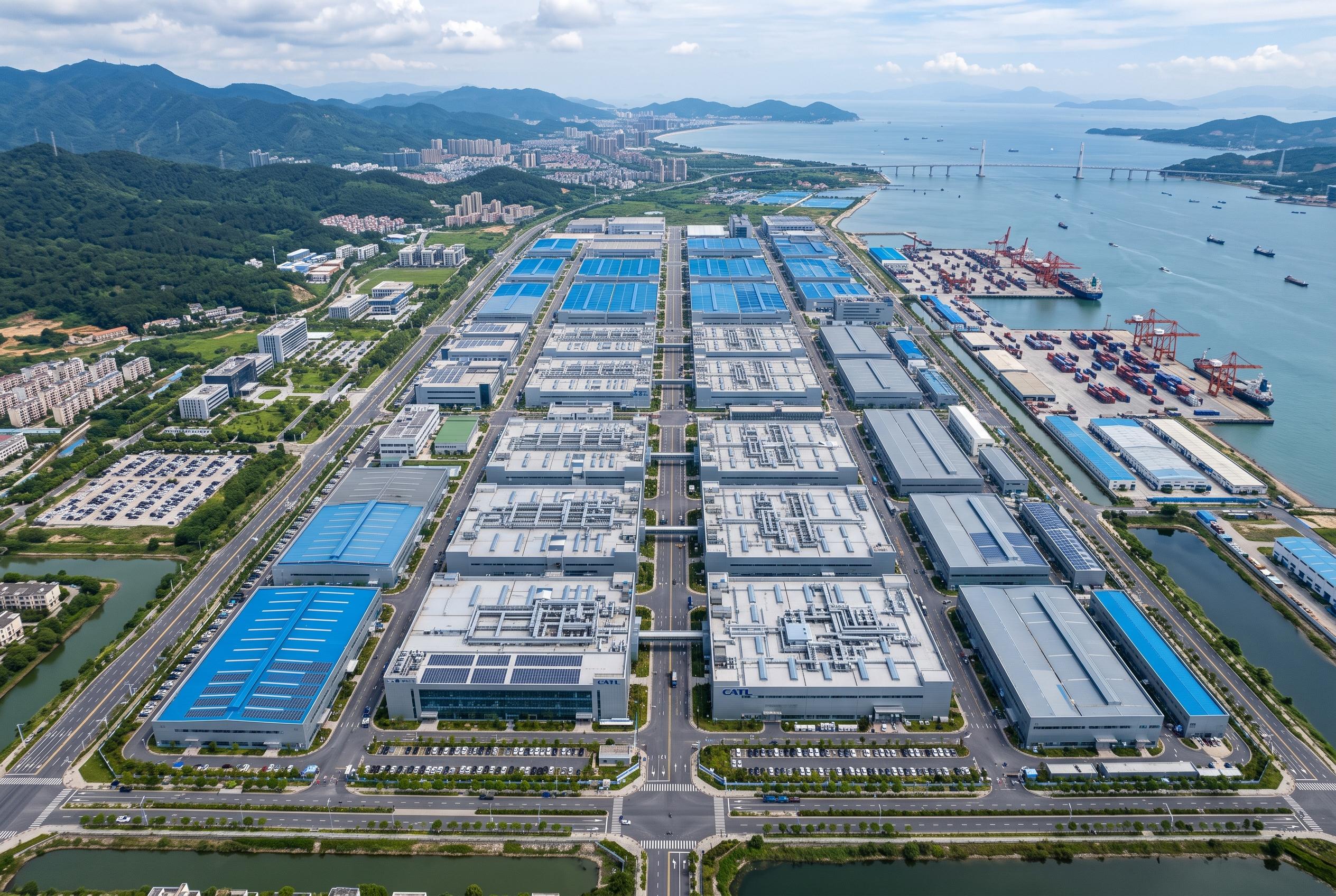
- Starting next year, companies bidding for CATL projects must report their carbon footprint data
- Suppliers' environmental scores will influence future orders and business ties
- CATL aims for net zero across its value chain by 2035, emphasizing supply chain emissions management
Contemporary Amperex Technology, better known as CATL, is stepping up its oversight of suppliers as it tries to cut emissions throughout its battery business, which has become a key part of the global shift toward electric vehicles.
Starting next year, companies bidding on CATL projects will have to reveal their carbon footprint data, including raw material sourcing, manufacturing, and sales. CATL also plans to add details about renewable energy use and energy intensity into their yearly supplier reviews. The company states that suppliers with better environmental scores will be more likely to secure orders and build stronger business ties with CATL.
This new policy puts sustainability right into the company's procurement and supplier management processes. Instead of viewing emissions reporting as a separate environmental task, CATL is linking carbon performance directly to business opportunities. For suppliers involved in battery materials, parts, manufacturing, logistics, or related services, this could mean that emissions data will become an increasingly vital part of their dealings with one of the world's biggest battery manufacturers.
This initiative builds on CATL’s broader carbon-neutrality plan. The company has set a target to reach net zero in its core operations by 2025, and across its entire value chain by 2035.
In August 2026, CATL announced that it had already achieved carbon neutrality in its main operations. The company also mentioned that all 20 of its battery plants had received certifications as carbon neutral. Furthermore, CATL aims to standardize emissions accounting throughout the battery lifecycle and use that as a benchmark for the global lithium-ion supply chain.
This ambitious goal aligns with the growing emphasis on lifecycle emissions in the electronics, automotive, and energy sectors. Sure, an electric vehicle does not emit tailpipe pollutants when driven, but its overall environmental impact also depends on how its battery materials are sourced, how cells are produced, the transportation involved, and the energy used at every stage.
For CATL, this means that the supply chain is a big part of tackling emissions. The company states that more than 80 percent of the lifecycle emissions of its products happen upstream, that is, before the product even hits the road. This helps explain why CATL is focusing so much on its suppliers instead of just limiting its efforts to its own factories.
Carbon data now a key factor in sourcing decisions
The new rules will make carbon footprint info part of how suppliers are chosen for CATL projects. They’ll need to reveal emissions tied to raw material sourcing, manufacturing, and sales. Additionally, CATL will review how much renewable energy suppliers use and their overall energy intensity during annual assessments.
This approach offers CATL a way to compare suppliers based on environmental standards, alongside traditional factors like price, quality, capacity, reliability, and delivery. While those usual criteria remain crucial, CATL’s policy clearly indicates that carbon performance could become a new, critical element in supplier evaluation.
Better environmental scores could help suppliers land future orders. This creates a direct link between emission performance and potential business growth. Suppliers working to boost their renewable energy use, cut energy intensity, or improve their emissions data might gain an advantage when CATL decides on upcoming projects.
It also puts pressure on companies that might not have previously measured their emissions consistently or thoroughly. Emissions accounting isn't simple, emissions are spread across various stages of the supply chain. Raw materials might come from one country, processing could happen elsewhere, and finished parts may travel through multiple logistics networks before reaching a battery plant or customer.
By asking for data on sourcing, manufacturing, and sales, CATL is seeking a fuller picture of their suppliers’ emissions footprint. Their goal of standardizing accounting across the entire battery lifecycle shows they want comparable data across different companies and stages of production.
A key move in the competitive battery landscape
CATL’s emissions strategy isn’t just about internal policies; it’s tied directly to their position in the global EV battery market. The company controls about 40 percent of the worldwide EV battery capacity, and its international sales have increased sharply in recent years as it pushed into new markets.
This scale of operation means CATL has considerable influence over the supply chain. The requirements they establish can shape how their suppliers prioritize environmental goals, if they want to keep or grow their relationship with CATL, that is. So, these emissions reporting requirements aren’t just internal controls but also serve as signals to other businesses involved in battery materials, equipment, parts, and services.
The company has argued that sourcing batteries with low carbon footprints will become a competitive necessity in the future. Chairman Robin Zeng has predicted that batteries lacking carbon neutrality will eventually get overtaken in the marketplace. Procurement chief Huang Bin has indicated that CATL intends to push its emissions accounting framework as an industry standard.
Those statements frame the whole emissions issue as a future market challenge, not just a regulatory requirement. When consumers, regulators, investors, and partners start comparing the carbon footprint of batteries, manufacturers might need to show not only their production capacities but also the environmental characteristics of their products.
For CATL, keeping a close eye on suppliers links directly to their net zero ambitions. They acknowledge that lowering emissions in their own factories isn’t enough, indeed, over 80 percent of their “product footprint” actually comes from upstream sources.
European regulations adding to the pressure
The push for greener batteries is also driven by stricter regulations, especially in Europe, where authorities are demanding more disclosure and reduction of embedded emissions. Such regulations mean that consistent reporting across the entire battery supply chain has become more critical than ever.
For companies expanding globally, environmental info influences things like market access, regulatory compliance, and relationships with local authorities. This is particularly true for firms serving the EV market, where the supposed environmental benefits hinge heavily on production emissions.
CATL’s effort to create a unified accounting framework reflects how tough it can be to compare emissions when different suppliers use different methods or scope boundaries. A standard framework could make it easier to evaluate emissions from raw materials, manufacturing, and transportation all along the supply chain.
The company has said it hopes this framework will act as a reference for the global lithium-ion supply chain. Huang Bin’s remark about promoting it as an industry benchmark indicates they want widespread adoption. But whether it becomes widely used remains uncertain. Still, given CATL’s major role, its supplier requirements might carry significant weight across the industry.
Expanding outside China brings added challenges
As CATL grows internationally with projects like its factory in Hungary, additional scrutiny has arrived. Authorities there have signaled a tougher stance on permits and environmental compliance.
In fact, one permit application was rejected because officials expressed concerns about workers’ exposure to nickel. This shows how CATL’s European expansion is deeply intertwined with tighter environmental and safety regulations.
This example highlights how emissions accounting is just one part of the larger environmental picture faced by battery manufacturers. They also have to contend with workplace safety, permit approvals, community concerns, and local legal standards.
It creates a more complex operating environment. Developing a factory isn’t just about investment and production targets, it has to harmonize with local rules and regulations. The increased scrutiny can slow project timelines and force companies to implement extra safeguards.
For CATL, the links between supplier carbon reviews and international compliance highlight a bigger question: how can the company grow its battery production while also reducing the overall environmental footprint of both the products and the processes behind them?
What all this means for suppliers
CATL’s new policy puts a few demands on suppliers. First, they’ll need to improve their data quality around carbon footprints, covering sourcing, manufacturing, and sales. Second, they will have to track renewable energy use and energy intensity well enough to provide details during annual reviews. And third, they should recognize that environmental performance could impact future order opportunities with CATL.
This affects a wide range of companies, from those handling raw materials and industrial manufacturing to equipment providers and logistics services. The focus on upstream emissions means suppliers can’t just assume their environmental impact is unrelated to CATL’s net-zero targets.
The message is clear: CATL expects its suppliers to manage emissions like they’re part of normal business performance. Carbon data might soon be just as important as delivery schedules, product quality, cost, or capacity when relationships are evaluated.
This shift also signals a broader change in how companies think about sustainability. More than just their own operations, they’re increasingly examining emissions across their entire value chain. For CATL, their heavy reliance on upstream data makes this shift especially relevant.
Key takeaways
- - CATL plans to make carbon footprint data part of supplier selection and annual reviews.
- - Suppliers may need to report emissions connected to sourcing, manufacturing, sales, renewable energy use, and energy intensity.
- - Battery materials, electronics, manufacturing, and logistics companies could all be affected.
- - CATL’s approach reflects growing pressure to measure emissions across the full battery lifecycle.
- - Stronger environmental performance may increasingly influence commercial opportunities in the battery supply chain.
Disclaimer: This article may have been created with AI assistance and reviewed by our editorial team. It is provided for general informational purposes only. Readers should verify information independently before relying on this content.
Sources:
- - KR-Asia
- - Taiyang News
- - CATL official news
- - CATL update
- - CNEVPost
- - CATL news
- - CNEVPost
