
India’s push into semiconductor manufacturing is drawing increasing attention these days, probably because it’s sitting right at the nexus of industrial policy, supply chain security, and a pretty hefty capital requirement. The logic behind all this is pretty straightforward: India uses huge amounts of chips, imports nearly all of them, and now it’s trying to build a domestic base for fabrication, assembly, and packaging. IMARC Group’s market overview paints this opportunity as both strategically vital but also quite demanding financially, with project economics varying quite a bit depending on whether the focus is on a back-end ATMP or OSAT unit, a compound-semiconductor line, or a full wafer fab.
That’s a critical distinction because the initial costs can fluctuate widely, from just a few hundred crore rupees for smaller or more limited setups, to tens of thousands of crore for advanced wafer factories. Basically, India’s semiconductor story isn’t just one market, it’s a layered set of possibilities that span sourcing, electronics manufacturing, logistics, and industrial execution. Some projects aim at the lower-risk bits of the chain, like packaging and testing, which can help bootstrap early manufacturing capabilities. Others, however, are much more ambitious, requiring heavy investment, stronger tech partnerships, and a more complex operational environment. For investors, suppliers, and industrial strategists, the pressing question isn’t just whether India needs semiconductors but which part of the chain can be built sustainably first.
India Briefing highlights that the India Semiconductor Mission (ISM) can provide fiscal support covering up to half of project costs for fabs, compound-semiconductor plants, and ATMP or OSAT projects. There’s also support linked to chip design activities. That kind of government backing has become a central piece of the investment case, honestly. Without it, the economics of a semiconductor plant would be pretty tough to justify, especially since the payback periods tend to run long and the upstream ecosystem remains a work in progress. With support, however, the prospects become far more realistic, particularly for firms willing to align their expansion plans with public policy objectives and the broader goal of reducing import reliance in electronics.
The latest policy signals are even more aggressive. As reported by The Indian Express and Business Standard, the Union Cabinet has approved a second phase of the semiconductor mission, called ISM 2.0, which has a planned outlay of ₹1.27 lakh crore over six years. This isn’t simply a continuation of earlier efforts; it’s apparently broadening the scope of the policy conversation. The new phase aims not just at chips themselves but also at the entire surrounding supply chain, covering gases, chemicals, and other inputs that fabs need. Basically, the focus is shifting from just manufacturing to building a more comprehensive industrial ecosystem.
That shift really makes sense because semiconductor manufacturing isn’t a “standalone” activity. A factory is only as viable as the ecosystem supporting it. Clean production depends on a steady flow of materials, reliable utilities, solid engineering support, and efficient logistics. You can’t just build a fab and expect it to run smoothly like any other industrial plant. It needs a carefully managed environment, specialized tools, and a consistent supply of high-quality inputs that are often quite sensitive to timing and quality. This is part of why policymakers are zooming in not only on the headline goal of building fabs but also on the deeper supply chain architecture that supports production from day one.
For companies thinking about entering India’s semiconductor scene, the advice seems pretty clear: the opportunity is real, but the early opening is still narrow. The most accessible places to start, at least right now, are in assembly, testing, packaging, and specialized compound-semiconductor facilities. These require less capital than full-blown logic fabs but still serve as anchors for the growing domestic value chain. Plus, they naturally fit into an industrial build-out that’s still taking shape. In the short term, this might be where the best mix of policy support, feasibility, and operational likelihood exists.
This also ties into a bigger story about electronics manufacturing overall. Semiconductor plants don’t operate in a vacuum, they’re deeply interconnected with the broader mobile and electronics supply chains. Their success heavily depends on high-quality inputs, disciplined procurement, and tight coordination between manufacturing and logistics. Site selection is crucial because a project must be located where infrastructure, utilities, transportation, and regulation are all ready to support it. Sourcing matters too; delays or quality issues in materials can drag down ramp-up speed. Equipment procurement is just as critical because the specialized machinery used in semiconductor production isn’t easy to switch out once the project’s underway. All of these decisions influence costs, timelines, and the long-term stability of the operations.
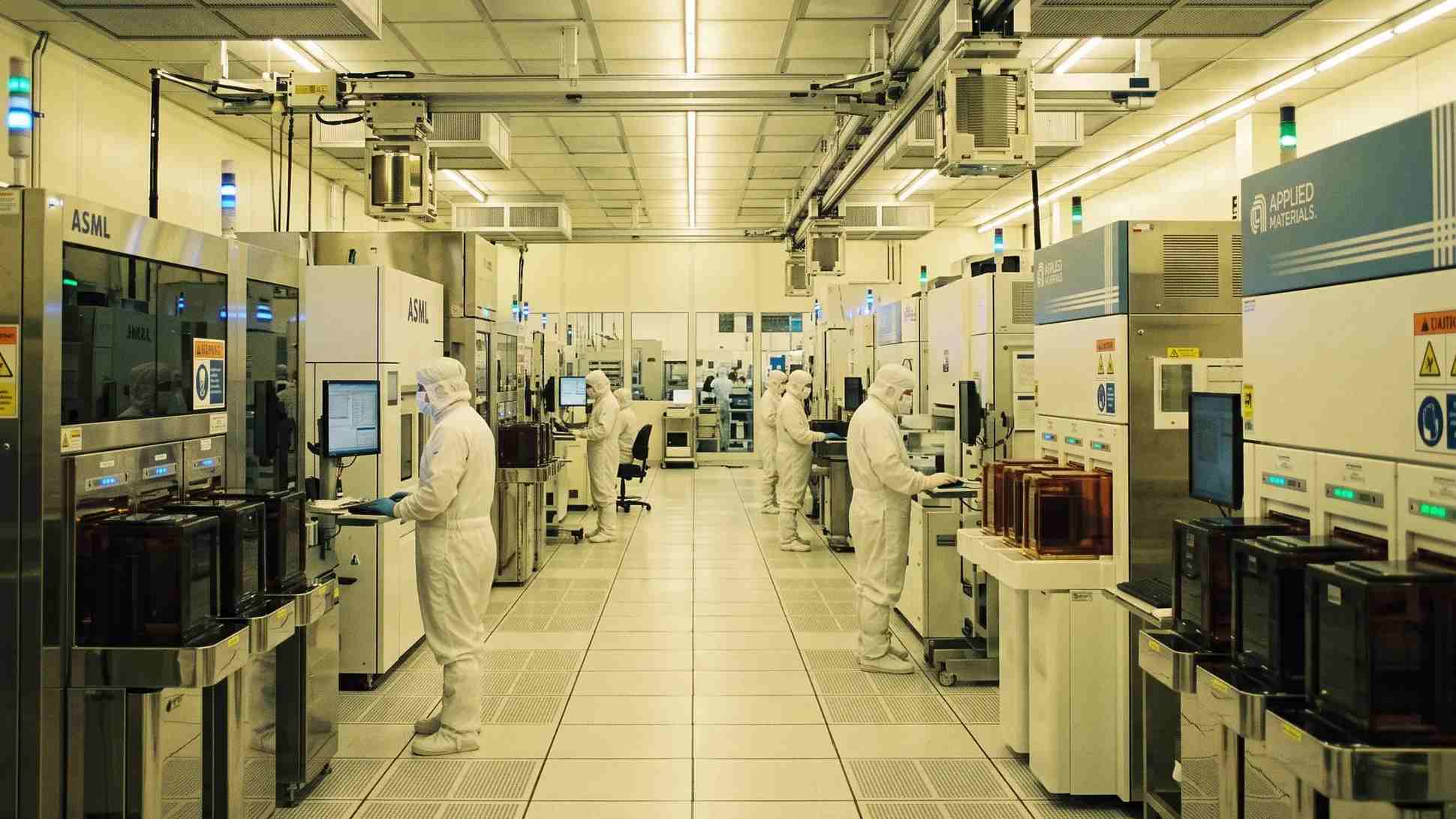
Infrastructure remains one of the biggest hurdles, honestly. Fabs need ultra-pure water, stable power supplies, meticulously controlled cleanroom environments, and strict environmental controls. These aren’t just nice-to-haves, they’re essentials. A project that looks promising on paper can run into trouble if the physical environment isn’t prepared. That’s why discussions around India’s semiconductor ambitions must go beyond just incentives and headline investment figures. They must also confront the harder realities, like plant design, utilities, environmental compliance, and the readiness of vendors.
Industry guides and sources, including IMARC’s plant-level analysis, drive home that sourcing strategies, site selection, equipment procurement, and regulatory clearance are everything, long before production even kicks off. This is especially true in a field where timelines are lengthy, and margins for error are slim. Any delay in sourcing or infrastructure readiness can be costly, not only in terms of money but also strategically, since, in semiconductors, delays can impact market position and competitiveness. So, the operational side of things is just as vital as the policy environment.
The same thinking explains why a detailed project report isn’t just a way to secure financing; it’s also a strategic blueprint. It needs to model incentives, tech partnerships, output quality targets, utilization rates, compliance costs, and supply chain assurance, over many years. Unlike typical industrial projects, which might focus mainly on land, machinery, and demand forecasts, a semiconductor project must also account for evolving technological dependencies, yield improvements, and market pressures.
This convergence of industrial policy and private capital really underscores how complex this ecosystem is. Yes, India’s support frameworks lower some barriers, but they don’t remove the core challenges, high capital needs, demanding operational standards, and niche technology requirements remain. Still, the potential rewards are huge because the market demand is strong, import dependence is high, and India’s large consumer electronics and mobile sectors keep growing.
The broader policy approach hints that India isn’t just after quick capacity boosts. By including chemicals, gases, and other inputs in the broader scope, policymakers are recognizing that the health of the entire semiconductor sector hinges on its supply chain. That’s a critical shift, if the ecosystem matures, sourcing bottlenecks could ease over time. But if it doesn’t, even well-funded factories could face operational bottlenecks. So, yes, the focus on the surrounding industrial base is every bit as important as the chips themselves.
For companies wanting to get involved, the key takeaway is that India’s semiconductor market should be viewed as a long-term ecosystem building opportunity, not just a quick factory investment. Success likely depends on those who can operate cross multiple parts of the chain, whether it’s fabrication, packaging, testing, design, or supply chain support. It’s not just about funding and technology; patience, coordination, and deep local knowledge will be essential too.
In many ways, India’s semiconductor efforts are part of a larger shift towards digital and technological resilience. Chips power the mobile phones, consumer electronics, and networked systems that increasingly define daily life. Building domestic capacity isn’t just an industrial goal; it’s a strategic move to bolster resilience, access markets better, and build technological independence. The policy push aims to speed up that transition, but ultimately, how well industry turns support into actual production will decide the outcome.
Right now, India stands at a moment full of potential and discipline in equal measure. It has the market demand, the policy drive, and the strategic rationale to push semiconductor manufacturing more aggressively than ever before. But it also faces the challenge of making projects work within an ecosystem that still needs to ripen. The companies that are most likely to succeed will be those with a clear sourcing plan, realistic logistics, strong partner networks, and a many-years-long view of their investment.
Because in this sector, where scale, reliability, and good policy matter just as much as the machinery itself, the overall lesson is kind of simple: building chips in India isn’t just about planting a plant. It’s about creating an entire ecosystem.
Key Takeaways
- India’s semiconductor strategy is mostly driven by import dependence, broader industrial policy, and supply chain security.
- Entry costs can vary widely, from a few hundred crore rupees to tens of thousands of crore.
- The India Semiconductor Mission offers to support up to half of project costs for certain types of projects.
- ISM 2.0 has been approved, with a planned budget of ₹1.27 lakh crore spread over six years.
- In the early stages, opportunities are more likely in areas like ATMP, OSAT, packaging, testing, and compound semiconductors.
- Success hinges heavily on good sourcing, logistics, utilities, site choice, and long-term planning.
