
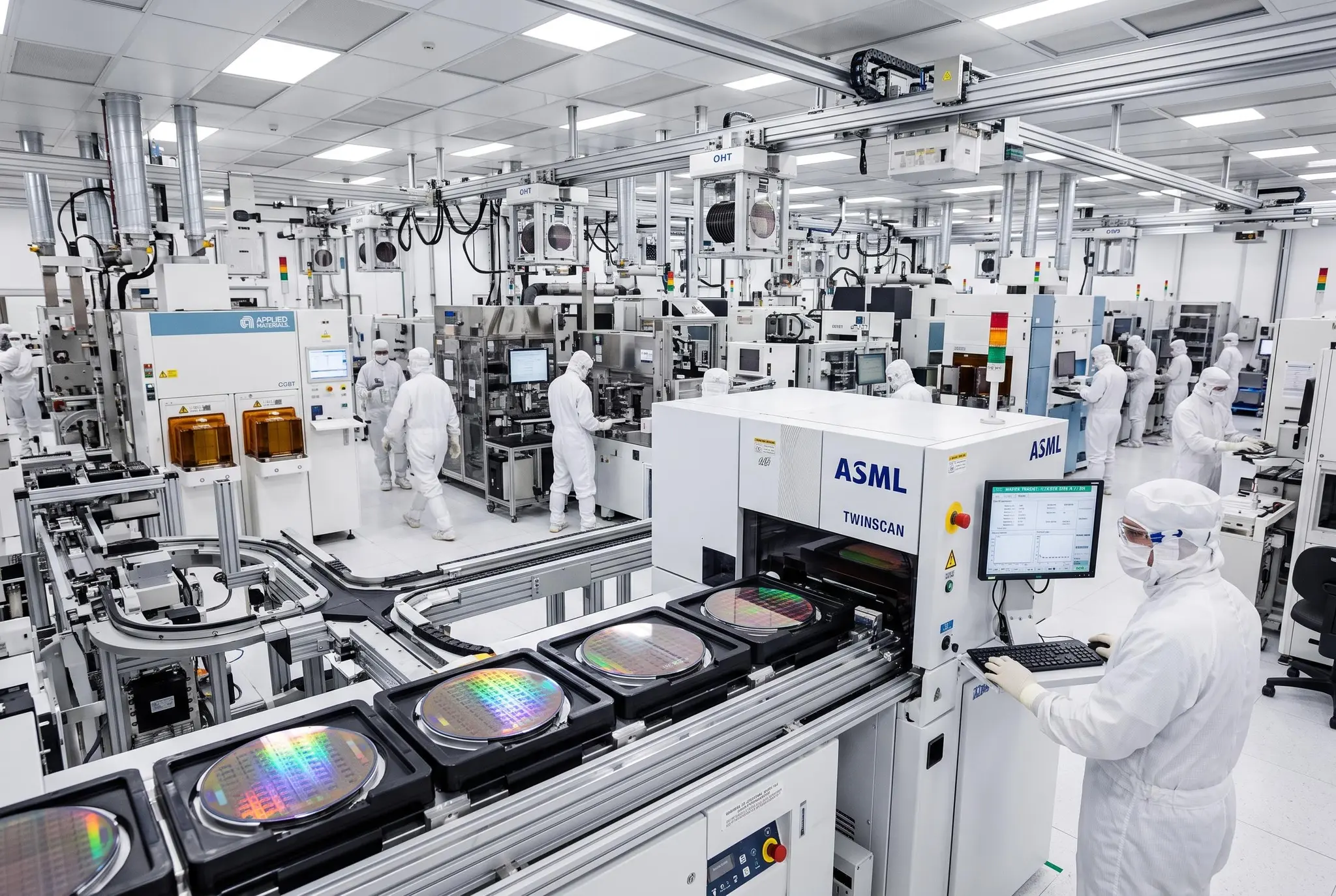
Semiconductor Manufacturing International Corp. is leaning into its pricing strategies, especially as the buzz around artificial intelligence keeps its factories humming along. They’ve been raising wafer prices after dialog with customers, which hints that the Chinese foundry sees some room to ask for more cash for its most limited capacity. Honestly, it’s a pretty clear shift toward a stronger commercial stance, one that’s becoming more obvious, even as they’re still dealing with supply constraints while trying to grow their production.
The Beijing-based chipmaker reported that its revenue for the second quarter surpassed $3 billion for the first time, and their net profit attributable to shareholders tripled to $479.2 million. Looking at their earnings update, both figures beat what analysts were expecting, which really underscores how fast demand driven by AI is transforming the market for contract chip manufacturing in China. That’s pretty remarkable, I mean, considering how quickly the landscape is changing.
SMIC also pointed out that wafer shipments climbed 14% from the previous quarter to reach 2.9 million units, each equivalent to an 8-inch wafer, while their average selling prices went up by 5.7%. They explained that this increase was thanks to tighter supply across the industry, stronger orders from Chinese customers, and an earlier-than-expected demand surge, particularly for chips used in AI systems beyond just CPUs and GPUs. Interesting enough, a report from Tom’s Hardware mentioned that SMIC had actually increased wafer prices by about 10% in late 2025, so the latest move looks like part of a broader trend of firmer pricing strategies.
All these comments come after a strong first half of the year, which already pointed to a better-than-expected order environment. Back in May, China Biz Insider reported that SMIC raised its revenue guidance for the second quarter well above consensus forecasts, driven by domestic spending on semiconductor self-sufficiency and improving customer demand. Those latest figures seem to confirm that positive momentum, especially with AI demand still fueling bookings.
Of course, growth isn’t without its hurdles. SMIC shared that its monthly production capacity marginally increased to about 1.1 million 8-inch-equivalent wafers, with utilization at around 93.7%, and they added 8,000 wafers of monthly 12-inch capacity during the quarter. They also noted that first-half amortization hit $2.3 billion, and the full-year estimate is around $5 billion, with $3.4 billion spent on capital expenditures in the first six months. China remains its primary market, making up about 90% of second-quarter revenue, while the US only accounts for 8%.
It’s pretty interesting, right? You see, even with these improvements, the company's expansion still faces some hurdles, but overall, the positive demand, especially from AI sectors, seems to be driving a pretty strong outlook.
What stands out most here is that this is not just a simple earnings beat. It reflects a broader change in how Chinese semiconductor manufacturing is being priced and allocated. When a foundry like SMIC can push wafer prices higher after customer discussions, it suggests that the balance between supply and demand has shifted enough to support firmer terms. In the world of electronics sourcing, that matters because customers don’t just buy capacity, they compete for it, especially when the capacity can serve high-growth applications in AI, mobile devices, and industrial electronics.
For sourcing teams, the message is clear: planning is becoming more strategic. Companies that rely on foundry output have to think farther ahead about logistics, inventory positioning, and product mix. If a customer is building for mobile hardware, edge AI, or other electronics segments with tight launch windows, then securing wafer supply early can become just as important as negotiating price. The result is a supply chain environment where lead times, allocation discipline, and long-term partnerships increasingly shape costs as much as the wafer itself.
This also highlights how domestic demand is influencing the industry in ways that go beyond pure volume. A market that is trying to strengthen its semiconductor self-sufficiency can create a different pricing floor for local production, especially when local demand is intense and outside sourcing options are limited. That can reshape how manufacturers decide where to place orders, how they manage logistics across fabrication and packaging, and how they hedge against future shortages. In other words, the commercial side of chipmaking is becoming more dynamic, and firms that understand that shift will likely be better positioned.
The AI angle is especially important because it is not confined to traditional data-center chips. As the article notes, demand is spreading to chips used in AI systems beyond CPUs and GPUs, which means the opportunity set for foundries is wider than many expected. That has implications for mobile and lifestyle electronics too, since more consumer products are beginning to incorporate embedded intelligence, on-device inference, and advanced connectivity. As a result, sourcing decisions in electronics are being influenced by a new class of demand that is still evolving but already large enough to affect capacity planning.
There is also a broader macro layer to this story. A strong order book can support higher utilization, but once utilization stays elevated, every additional wafer becomes more valuable. That is why foundries often gain leverage when the market tightens: customers become more willing to accept price increases in exchange for certainty. For logistics and supply chain managers, that may mean more complex allocation decisions, more attention to backup sourcing, and tighter coordination between design teams and procurement teams. The companies that can align those functions quickly are usually the ones that adapt best when pricing power shifts.
In that sense, SMIC’s results are about more than one quarter of performance. They reflect a changing electronics manufacturing landscape in which AI demand, domestic industrial policy, and limited supply are all pushing in the same direction. If that continues, the market may remain favorable for foundries with available capacity, while buyers across mobile, consumer electronics, and enterprise hardware will need to manage costs and sourcing risk more carefully. The next few quarters will show whether this pricing strength is a temporary adjustment or the start of a longer-lasting shift.
Takeaways
- SMIC’s stronger pricing shows how tight capacity can translate into leverage in semiconductor sourcing.
- AI demand is reshaping electronics manufacturing far beyond CPUs and GPUs.
- Higher wafer prices and utilization levels may increase pressure on logistics and procurement planning.
- Mobile, consumer, and industrial electronics buyers may need to secure supply earlier and diversify sourcing strategies.
- The company’s momentum suggests China’s domestic chip market is still expanding, but supply constraints remain a key factor.
FAQ
Why is SMIC raising wafer prices?
Because demand is strong and limited capacity gives the foundry more room to increase pricing.
What industries are driving demand?
AI-related electronics, including applications beyond CPUs and GPUs, plus broader domestic Chinese demand.
Why does this matter for sourcing teams?
It affects cost, lead times, and supply security across the electronics supply chain.
Is this only about AI chips?
No. The impact can extend to mobile, industrial, and other electronics products that depend on foundry outp
