
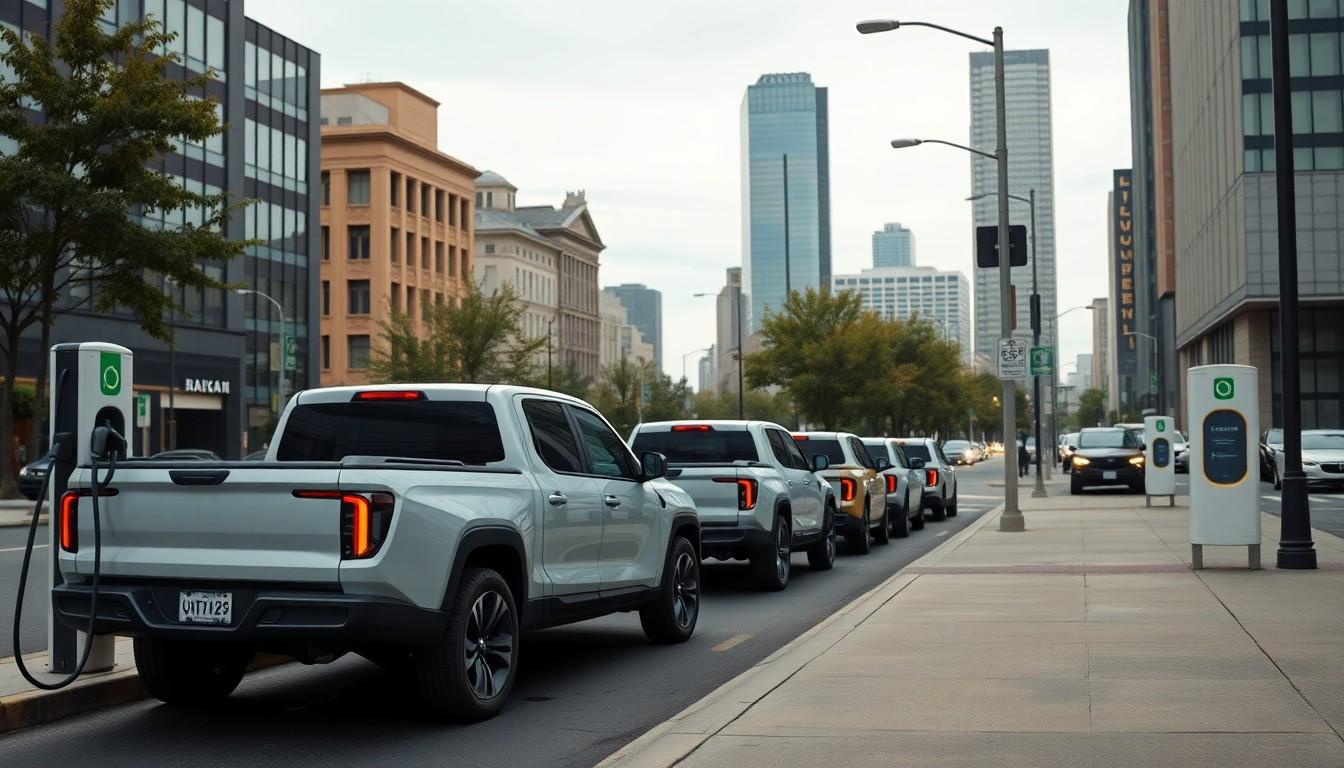
Rivian is exploring third-party AI agents for its electric vehicles, potentially bringing services from companies such as OpenAI or Anthropic into the cabin. The idea could make everyday tasks feel more natural, from adjusting climate settings to planning dinner, while Rivian keeps AI away from steering and braking controls.
Rivian wants its cars to understand more than commands
Rivian's latest AI push goes beyond asking a vehicle to turn up the heat. According to TechCrunch, CEO RJ Scaringe says the company is considering support for third-party AI agents that could sit alongside Rivian's own assistant.
That could turn the cabin into a more flexible digital space. Instead of memorising exact commands, a driver might speak naturally, ask for information, manage a calendar appointment or combine several requests in one conversation. It's a small shift in wording, but a noticeable one when you're sitting in a quiet EV with your hands on the wheel.
Rivian's current assistant already handles selected vehicle tasks, including temperature changes and seat heating, while also offering features such as news summaries. The company has built much of this software itself rather than depending heavily on Apple CarPlay or Android Auto, TechCrunch reported.
The clever part is happening behind the dashboard
Rivian's system works less like a single chatbot and more like a traffic controller for different AI models. Straightforward requests can be handled locally in the vehicle, while more complicated questions may be sent to cloud-based systems, according to TechBeat.
That approach could help balance speed, privacy and computing power. A simple request, such as changing the cabin temperature, shouldn't need a long trip to a remote server. A more involved question, meanwhile, might benefit from a larger model with broader knowledge.
The company has also connected the assistant with selected external services, including Google Calendar, as reported by GazeWire. Bringing in agents from major AI labs would be a much bigger step, because those services could add new abilities without Rivian having to build every feature itself.
Why third-party AI agents could feel useful
The most interesting possibilities aren't necessarily flashy. A driver could ask the car to prepare the ventilated seats, then follow up with a question about planning a meal for guests. If the same AI service already knows about a conversation on the driver's phone, the vehicle might eventually continue that discussion in the cabin.
That kind of continuity is where in-car AI starts to feel less like a novelty and more like a personal assistant. It could help with travel plans, reminders, restaurant ideas or messages, although the convenience would depend heavily on clear permission settings and sensible data controls.
Rivian hasn't explained how personal context, account access or conversation history would be shared between the car and outside AI providers. As GenAI Daily noted, the technical plumbing may be complicated even before questions about privacy and consent enter the picture.
Safety has to stay outside the chatbot
Rivian appears to be drawing a firm line around vehicle control. General-purpose AI agents might help with information, planning and selected comfort features, but they wouldn't be allowed to decide when the car should brake or steer.
That separation matters. A conversational assistant can misunderstand a question without putting the vehicle at immediate risk. A system connected to steering or braking is a very different proposition, especially when drivers expect predictable behaviour in fast-moving situations.
The challenge will be making the experience feel seamless without blurring that boundary. If an assistant can control the temperature but not the vehicle's motion, its permissions need to be clear enough that drivers aren't left guessing. In cars, a little restraint is often more reassuring than a dazzling demo.
Rivian is joining a fast-moving automotive AI race
Rivian isn't alone in expanding voice assistants inside electric vehicles. Tesla has already brought its Grok chatbot into its vehicle software, creating another example of automakers experimenting with broader conversational tools, TechCrunch reported.
For Rivian, the appeal is strategic as well as practical. Opening the door to outside agents could give owners access to faster-moving AI services while allowing Rivian to retain control of its core vehicle software and safety architecture.
There still isn't a confirmed launch date for third-party integrations. The company's planned AI and Autonomy Day could offer more detail, but for now, Rivian's direction is clear: the car's assistant may soon become less of a fixed feature and more of a platform.
It's an intriguing future, provided convenience never outruns clarity.
Disclaimer: This article may have been created with AI assistance and reviewed by our editorial team. It is provided for general informational purposes only. Readers should verify information independently before relying on this content.
