
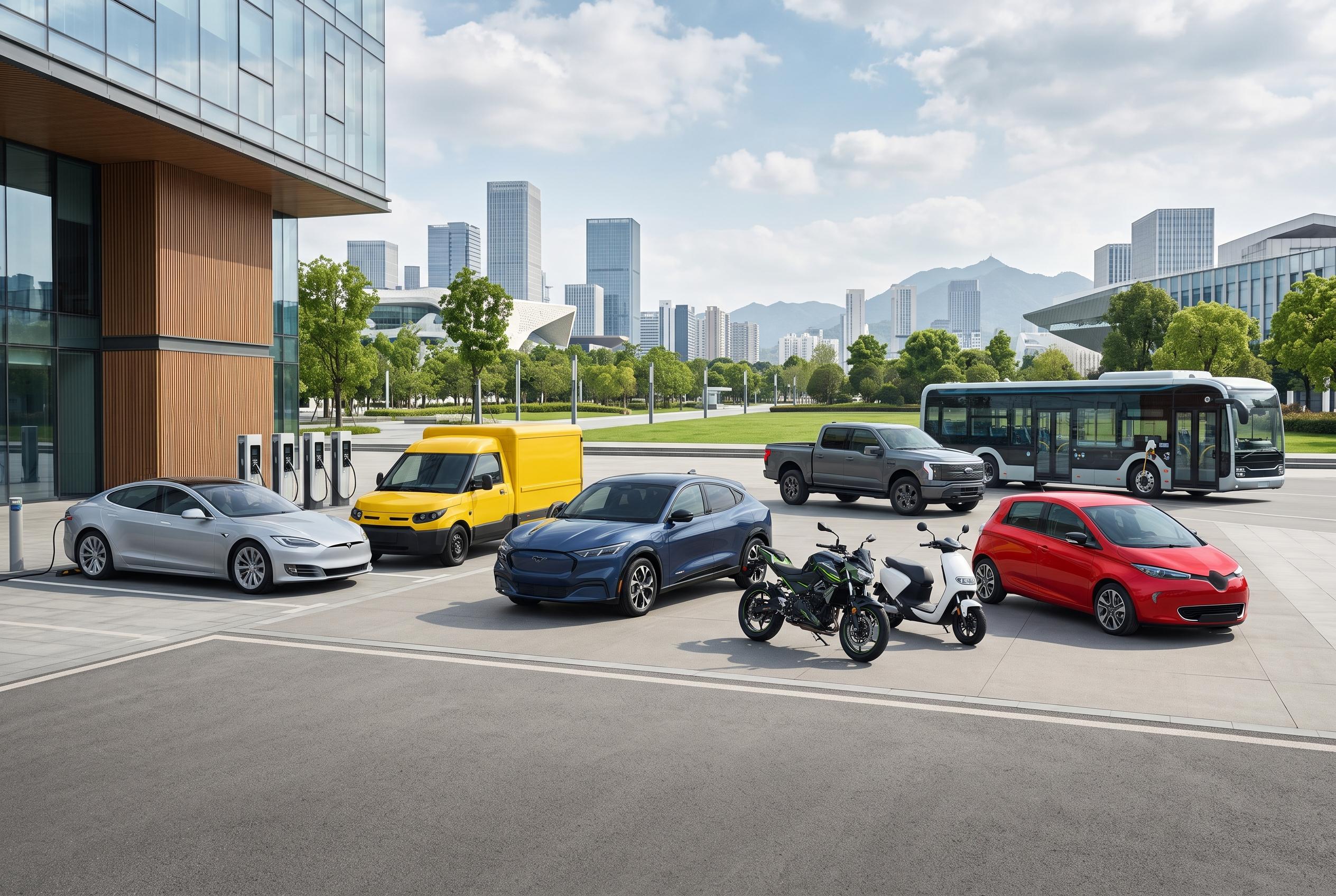
- Thailand has approved nearly 200 EV-related projects worth over Rp73.9 trillion (approximately $4.14 billion), signaling a swift industrial push.
- The country is developing a comprehensive EV ecosystem, including batteries, charging stations and supply chains.
- Major international automakers are already establishing production bases, transforming Thailand into a regional automotive hub.
Thailand is rapidly and on quite a large scale trying to set itself up as Southeast Asia’s main automotive hub, and what's interesting is that the whole effort seems to be driven by a two-pronged strategy. One part is about protecting the strength of its long-established car manufacturing industry, while the other is all about pushing forward a new electric vehicle ecosystem. For Thailand, it’s not just about adding EV assembly lines; it’s a bigger industrial push that touches everything from sourcing and electronics to logistics, lifestyle trends and what consumers are demanding in this mobile era. Basically, they’re trying to snag a bigger slice of the value pie that comes with the next-generation mobility.
According to The Nation, the Board of Investment (BOI) had already approved 198 EV-related projects by May 2026. These projects collectively amount to over 137 billion baht, that’s roughly Rp73.9 trillion (about $4.14 billion). That figure really highlights how quickly Thailand’s EV plans have shifted from mere policy talk into a visible and active industrial pipeline. It’s kind of a practical indicator, Thailand isn’t treating electric mobility as some tiny niche anymore. Instead, they’re building a framework meant to back production, supply chains, and the infrastructure needed to support the widespread adoption of modern vehicles.
This strategy goes far beyond just putting together electric cars. Thailand is aiming to develop an entire supply chain encompassing batteries, key components, energy storage systems, charging networks, all of that in an effort to keep more of the value within the country as they produce these next-gen vehicles. And it’s important to understand why this matters, because the EV shift isn’t solely about the vehicle itself. It’s about the whole ecosystem that surrounds it, covering material sourcing, electronics manufacturing, energy storage management, logistics and all the services that make electric mobility something you can actually use day-to-day.
The Nation reports that battery electric vehicles alone have attracted around 39.5 billion baht ($1.2 billion) worth of investment across 18 projects. There are also additional investments in hybrids and plug-in hybrids, plus smaller projects for electric buses and motorcycles. This mixture of projects really suggests that Thailand isn’t putting all its eggs in one basket. It’s supporting a variety of technologies and types of vehicles, an approach rooted in the reality that the market is in transition. Battery electric vehicles are getting the biggest share of the investment pie, but hybrids and plug-ins are still part of the picture, along with commercial vehicles and two-wheelers, which are vital for regional mobility patterns.
That broader perspective really matters, especially when it comes to sourcing. Building an EV ecosystem requires reliable access to specialized parts and systems that are different from those used in traditional vehicles. It also demands a manufacturing base that can handle complex, electronics-heavy components. Batteries, traction motors, battery management systems and charging tech are not just extras, they’re core to competing in this space. Thailand’s push indicates an understanding that the future of auto manufacturing no longer relies solely on engines, but now involves an integrated mix of mechanical parts, software controls and energy systems.
Investments are also flowing into supporting infrastructure. The BOI has poured in about 33.5 billion baht ($1 billion) into batteries and energy storage, around 12.5 billion ($378.1 million) into key parts like traction motors and battery management systems, and almost 9.8 billion ($296.4 million) into charging stations and battery swapping facilities. These figures are especially significant because they show Thailand isn’t just focusing on the big brands in cars. Instead, it is also developing the logistics and technical base needed to make large-scale EV manufacturing and deployment workable and sustainable.
This infrastructure plays a crucial role not only for industry but also for everyday life. Batteries and energy-storage systems are fundamental to EV manufacturing and the broader transportation shift. The key parts, such as traction motors and battery management systems, are basically the electronics backbone of electric drivetrains. And then there are charging stations and swapping points, which determine how readily people can actually use electric vehicles in real-world situations. A solid EV strategy has to cover all of these layers simultaneously, and Thailand seems to be doing just that by investing in multiple categories at once.
And it’s not just about manufacturing, planning for the future includes more than 22,900 charging points all over the country, inclusive of over 10,000 fast chargers. That’s a big deal, not just for automakers but for what this means in terms of daily life. A vehicle ecosystem truly becomes meaningful only when drivers can rely on convenient, practical charging for their routines, commuting, business trips, city errands or longer trips. The planned network indicates Thailand is gearing up for that kind of everyday use, not just some trial runs or small pilot projects.
And here’s where logistics come into play. Vehicle production isn’t only about assembling parts, it relies heavily on moving components smoothly through supply chains. Likewise, EV deployment depends heavily on dependable charging networks and service facilities. If a country wants to be a regional automotive hub, it has to manage both these sides effectively. Thailand appears to understand that: they’re all about building a coordinated, system-wide buildout, factories, parts, batteries and charging stations, rather than isolated projects. The end goal, creating a more complete industrial platform, not just a handful of separate initiatives.
The country’s strategy has already drawn in a pretty impressive roster of international manufacturers. According to The Nation and other reports, companies like Mercedes-Benz, Great Wall Motor, SAIC Motor-CP, BYD, AION, Changan and EV Primus have kicked off production there. This lineup shows that Thailand’s approach is resonating across different sections of the market, covering established legacy brands and newer EV-focused companies alike. That kind of diverse presence is important because it speaks to Thailand’s ambition to stay relevant in both the traditional and the emerging EV sectors.
The confidence from these companies also says something about how Thailand’s industrial landscape is viewed globally. Car manufacturers don’t pick a production location just on a whim, they look at supply chain reliability, infrastructure, workforce, policy support and regional market reach. Thailand’s progress in sourcing EV-specific parts and setting up logistics seems to make it an attractive choice. Remember, a factory isn’t just about having a spacious building; it needs dependable access to crucial components, electronics, and transportation networks that can support ongoing manufacturing and distribution.
BOI investments have created over 16,000 jobs, which proves that Thailand’s automotive scene is evolving from a traditional manufacturing hub into a broader regional platform for EVs and related tech. That employment figure is a reminder, this isn’t just an abstract transition. It has tangible impacts, job creation, industrial proliferation and changes in the economic landscape. Moving from conventional vehicles to a more diversified EV ecosystem will influence training, factory operations, technical roles, and the range of supporting services in the sector.
In many ways, this transformation isn’t only about technology; it’s also about the country’s industrial identity. Thailand remains rooted in a long-standing vehicle manufacturing heritage, but it’s now leveraging that foundation to attract future-oriented investments. The new EV content isn’t replacing the old overnight, it’s more like an overlay, a layered approach that helps Thailand stay relevant both as a traditional manufacturing hub and as a forward-looking player in global cleaner, more tech-rich vehicle markets.
Highlighting batteries, energy storage, traction motors, battery management, charging stations and swapping facilities underlines just how central electronics and energy management have become. Modern vehicles are increasingly defined by their electronic features and energy systems, blurring the lines between automotive and electronics industries. Thailand's investments seem to acknowledge that shift. Their industrial plan isn’t limited to just building car bodies or assembly lines; it digs into the very architecture of mobility itself.
And from a consumer perspective, electric mobility touches everyday lifestyles, city travel, work commutes and errands, especially in urban or growing regions. The plan for thousands of charging points, including fast chargers, suggests Thailand’s preparing for a future where EVs are seamlessly integrated into daily routines. It’s not only about factories and big numbers; it’s about how well electric vehicles fit into people’s normal lives.
Putting all this together, the approvals, the projects and the infrastructure plans, tells us that Thailand is making a clear, deliberate push for regional leadership. It’s not just reacting to a wave; it’s trying to build a full-blown ecosystem encompassing sourcing, manufacturing, logistics, electronics and consumer access. If everything unfolds as they intend, Thailand could deepen its role in Southeast Asia’s automotive scene and become a key player in EV-related investments and tech.
And let’s not forget, the sheer volume of approved projects underscores that this isn’t a flash-in-the-pan effort. Building a true automotive hub takes persistence, long-term planning, continuous investment, and commitment. The figures from The Nation, 198 projects and over Rp73.9 trillion ($4.14 billion) pledged, point to a country willing to stay the course. The ongoing infrastructure buildup and international manufacturer presence all tell the same story: they’re aiming for a sustained, strategic position in the future of mobility.
To sum up the key point for industry watchers, Thailand’s EV strategy isn’t just about putting cars together. It’s about redefining its industrial DNA, building out batteries, core parts, charging tech, and energy storage, so that it can capture more of the value chain and keep its long-term relevance. This layered approach could be Thailand’s way of staying competitive as sourcing patterns shift and regional markets evolve toward cleaner, smarter and more electronics-driven mobility.
Key Takeaways
- - Thailand is building an EV ecosystem, not merely attracting car assembly.
- - The strategy covers batteries, key components, charging networks, and energy storage.
- - Over 22,900 charging points are planned across the country, including more than 10,000 fast chargers.
- - Global automakers like Mercedes-Benz, BYD, and Changan already began production locally.
- - The shift is helping Thailand transition from a traditional manufacturing hub to a broader regional automotive platform.
FAQ
Why is Thailand so focused on EVs lately? Thailand wants to strengthen its role as Southeast Asia’s auto hub by blending its established car industry with a growing EV ecosystem.
What kinds of projects have been approved? The BOI approved 198 projects by May 2026, including EV models, batteries, energy storage, charging stations, and related parts.
How much investment is committed? Over 137 billion baht, roughly Rp73.9 trillion.
How many charging stations are planned? More than 22,900 across the country, with over 10,000 being fast chargers.
What’s the broader goal behind all this? It’s about capturing more of the EV value chain, covering sourcing, electronics, logistics, and consumer infrastructure.
