
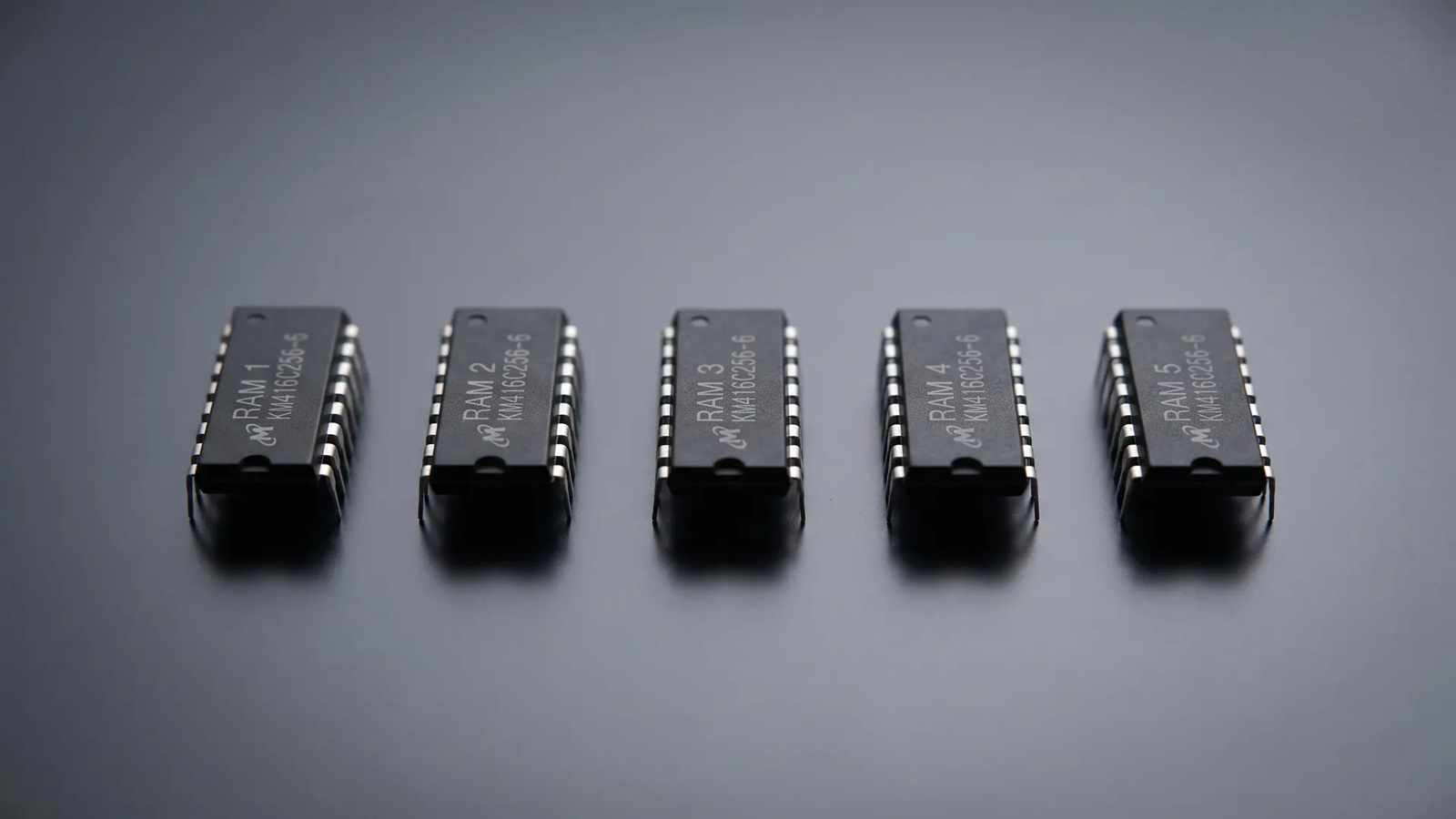
The memory shortage that’s been squeezing everything from laptops to gaming consoles isn’t showing much sign of easing. According to Tom’s Hardware, one SK hynix customer was offered a refund instead of a replacement SSD because the company had no stock left. Digital Camera World also reported that memory card prices are still climbing as manufacturers redirect capacity toward AI data centers. That’s a sign this problem has spread well beyond a single product category.
At the center of it all are Samsung Electronics and SK hynix, the two South Korean giants that control much of the world’s memory supply. Their decisions about what to produce and how much to allocate to each product line are affecting the prices of devices that rely on DRAM or NAND flash memory. What was once a background component is now a strategic input.
What makes this cycle different is that it isn’t being driven by a fire, flood or trade ban. Instead, production is being steered toward High Bandwidth Memory, or HBM, which is used in AI accelerators and brings in far more revenue per wafer than chips for laptops, phones or gaming systems. That economic reality is pushing manufacturers to favor premium AI-related products, leaving less capacity for lower-cost components.
This trade-off is already affecting hardware prices across categories. IDC warned that memory now makes up a much larger share of a PC’s bill of materials than it did before the AI boom, helping push up average selling prices and reduce shipment volumes. The same trend is showing up in mobile devices, where rising memory costs are forcing manufacturers to rethink configurations and price points. The market demand is still there; it’s the cheap supply that’s missing.
These ripple effects are visible on store shelves and during product launches. Console makers, PC brands and small-board computer manufacturers are all feeling the squeeze. Sony and Microsoft have already increased prices on some of their major gaming consoles, while Raspberry Pi has raised prices on higher-memory models. Apple, which usually keeps prices steady on existing models, has also raised prices for some Mac and iPad configurations this year.
This pressure isn’t limited to consumer products. Enterprise storage is feeling it too, and that matters because business buyers depend on predictable replacement cycles and warranty coverage. When a supplier can’t deliver a new SSD and instead offers a refund, the issue becomes more than inconvenience, it turns into a logistics and sourcing challenge.
The shortage is also changing how manufacturers think about product design. In the PC and mobile sectors, memory has become so expensive that it can affect configuration choices before products even reach store shelves. That can mean fewer basic models, more aggressive pricing on entry-level devices or a wider gap between low- and high-memory versions of the same product.
Relief does not appear to be coming quickly. Korea JoongAng Daily reported that Samsung and SK hynix are investing heavily, but much of that capital is going into infrastructure such as advanced packaging and cleanroom facilities rather than immediate wafer output. The industry says it will take time for those efforts to translate into meaningful supply relief.
Even within their own expansion plans, the constraints are clear. SK hynix is expanding production in Dalian, China, through Solidigm’s fab, with equipment installation expected to start late 2026 and production of data-center storage products likely to increase in 2027. But that will not help the consumer market anytime soon.
The shift has practical consequences for logistics planning across the electronics industry. When suppliers allocate more capacity to one product line, say, high-margin enterprise memory, every part of the supply chain has to adapt. Distributors may need more inventory, retailers may have to adjust prices more often, OEMs may need to rethink procurement contracts and warranty teams may face shortages that turn replacements into refund conversations.
The pricing upheaval is also drawing legal attention. A class action lawsuit in California has accused Samsung, SK hynix and Micron of using the AI boom as cover to restrict low-end DRAM output and keep prices high. Whether that claim succeeds or not, the case reflects a broader suspicion that suppliers have unusual control over what consumers pay.
For buyers and procurement teams, the takeaway is simple: memory can no longer be treated as a cheap background component that stays stable from one product cycle to the next. Sourcing teams now have to think more defensively, locking in supply wherever they can and adjusting warranty and resale assumptions accordingly.
At a broader level, Korea’s memory giants are benefiting from the AI boom, and export data shows it. But relying so heavily on two companies also makes the economy more exposed to booms and busts in a single sector. When a few firms control so much of a crucial input, their strategies can reset the price of computing for everyone else.
What does that mean for the hardware ecosystem? It means demand is still strong, but cheap supply is no longer guaranteed. Whether it’s a laptop, a gaming console, a camera card or a replacement SSD, memory has become powerful enough to influence retail prices, procurement strategy and
warranty handling.
For consumers, that may mean rethinking upgrade timing and paying closer attention to base configurations before buying. For businesses, it means memory should be treated like any other strategic input in electronics sourcing, not as an afterthought that can be replaced quickly at the last minute. And for the broader lifestyle market, from mobile devices to portable cameras to home entertainment equipment, the lesson is the same: the AI-driven memory squeeze is no longer a niche supply-chain story, but a pricing reality that reaches into everyday tech decisions.
Looking ahead, the most important question is not whether memory prices will eventually stabilize, but how long the current imbalance will reshape product strategy before that happens. If AI demand continues to pull capacity away from mainstream parts, the electronics industry may have to operate with a new normal in which higher-memory products are prioritized, lower-cost models become harder to maintain, and logistics teams build more flexibility into sourcing plans. In that sense, the shortage is doing more than raising prices, it is changing how the entire market thinks about memory.
Disclaimer: This article may have been created with AI assistance and reviewed by our editorial team. It is provided for general informational purposes only. Readers should verify information independently before relying on this content.
