
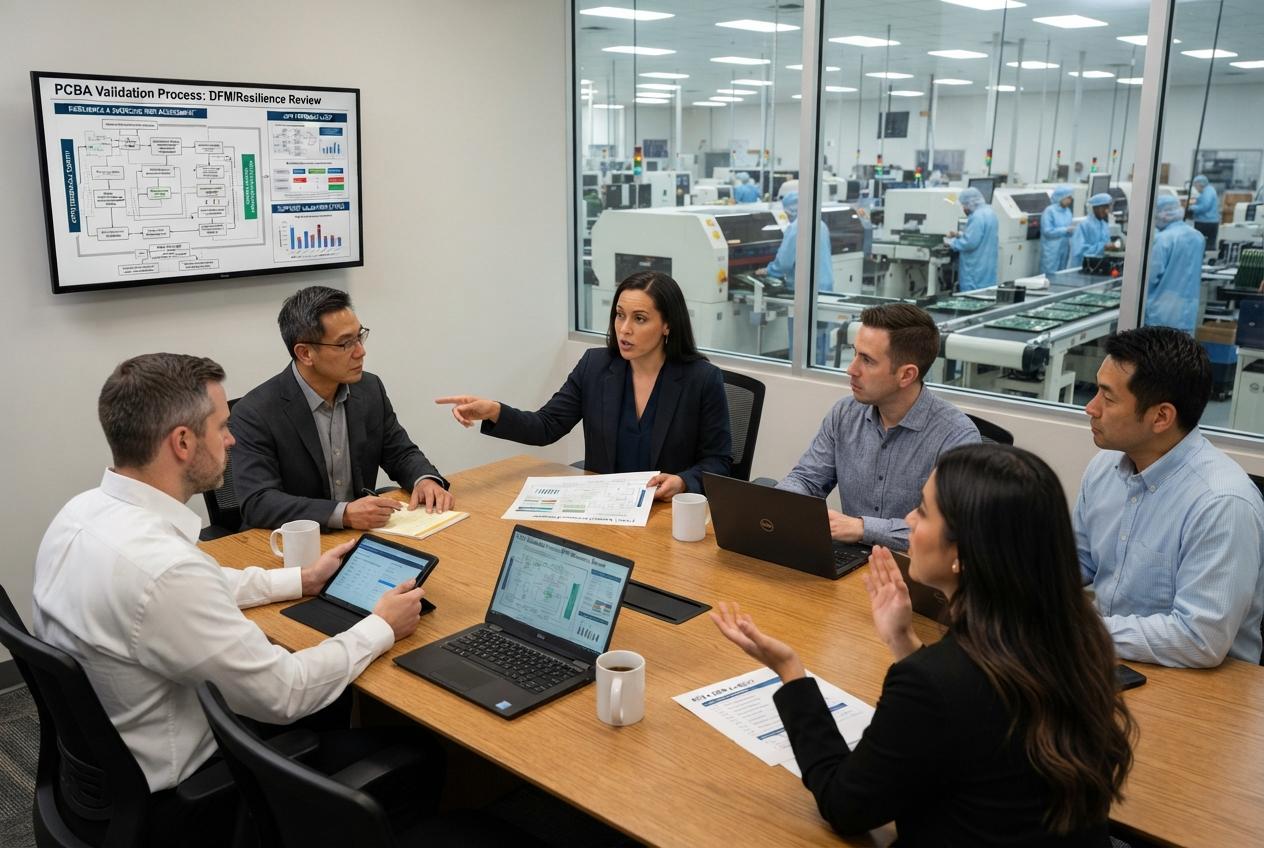
- Prototype success doesn't guarantee production readiness, as scale issues often emerge later
- Early validation should include sourcing resilience, manufacturability, and real-world testing
- Integrating design-for-manufacturability reviews reduces costly redesigns and delays
In electronics development, the gap between a promising prototype and a reliable production board is often wider than teams expect. A design may work perfectly on the bench, pass a basic functional test, and still fail when it enters the realities of sourcing, logistics, assembly, inspection, and high-volume manufacturing. That is why prototype validation has become such a critical part of modern hardware launch planning. For teams building mobile devices, consumer electronics, industrial systems, or connected lifestyle products, the prototype is not just a proof of concept, it is the first real checkpoint for production readiness.
What makes this stage so important is that prototype success can create a false sense of security. Early builds are often assembled under conditions that are more flexible than those used in full-scale factory runs. Engineers may rely on quick-turn fabrication, hand assembly, limited test coverage, or components that are easier to source in small quantities than in volume. Those choices are practical during development, but they can hide risk. A board that functions in a lab setting may still reveal issues later with solderability, board finish, tolerances, component availability, reflow behavior, or inspection visibility. In other words, the prototype may prove the circuit works, but not yet prove the product can be manufactured consistently.
This is where design-for-manufacturability thinking becomes essential. DFM reviews are not just paperwork exercises; they are a way to align engineering intent with factory reality. By checking layout details, stackup choices, spacing, drill quality, solder mask coverage, silkscreen placement, and assembly clearances early, teams reduce the chance of expensive redesigns later. The same logic applies to sourcing strategy and logistics planning. If a design depends on a part with unstable supply, long lead times, or limited alternates, the prototype may still succeed while the production line stalls. Validation should therefore include not only electrical performance but also component sourcing resilience and supply chain readiness.
There is also a growing recognition that the path from prototype to production is a systems problem, not a single-test problem. A well-functioning board does not automatically mean the enclosure fits, the assembly line can place the parts reliably, or the final inspection process can verify quality efficiently. For lifestyle and mobile products especially, the industrial design, mechanical packaging, thermal behavior, and user experience all influence whether the final product can scale. A validation program that ignores those factors may save time upfront but create costly delays during launch, especially when the factory begins running at the speed and volume required for mass production.
Another reason this stage matters is that prototype builds are often optimized for speed rather than repeatability. Quick-turn services are valuable when teams need fast feedback, but speed can come at the cost of realism. The challenge is not to abandon prototyping, it is to make sure the prototype is representative enough to be meaningful. That means using realistic materials, realistic assembly parameters, and realistic documentation wherever possible. It also means recognizing that a board assembled in a one-off lab workflow may not behave exactly like the same design built on a production line with different equipment, process controls, and quality checks.
For this reason, many hardware teams now treat prototype validation as an early launch discipline. The goal is to uncover risks before they become factory problems. That may include checking whether the design is easy to source at scale, whether assembly instructions are unambiguous, whether the PCB fabrication tolerances are appropriate, and whether the inspection process can catch defects reliably. These checks may feel slower at first, but they usually protect schedule, budget, and reputation later. In electronics, the cost of discovering a problem after tooling, procurement, and line setup is usually much higher than the cost of discovering it during validation.
The broader takeaway is simple: prototype approval is not the finish line. It is a checkpoint that confirms the design is moving in the right direction. A strong validation process gives teams more than confidence in the circuit, it provides confidence in the build process, the sourcing plan, the logistics chain, and the factory workflow that will support the product after launch. That is why the smartest teams do not ask only, “Does it work?” They also ask, “Can we build it again, at scale, with consistent quality?” And in modern electronics manufacturing, that second question is often the one that determines whether a product succeeds.
A board that passes a bench test isn't necessarily ready for a full-scale factory run, and honestly, that's a lesson hardware teams keep re-learning as they move from early prototypes into mass production. Industry experts say that the main goal of early validation isn't just making sure a circuit powers up, it’s really about uncovering electrical, mechanical, and manufacturing risks before they turn into costly rework. Basically, in practice, this means treating prototype validation as part of the overall product launch, not as a separate step. Several PCB manufacturing guides point out that the jump from a working sample to a scalable build often reveals issues related to design rules, component sourcing, assembly yields, and the quality of documentation.
That’s why many engineering teams now make design-for-manufacturability reviews a frontline checkpoint. PCB DFM advice from manufacturers recommends checking layouts for trace spacing, hole quality, annular ring sizes, stackup, solder mask, silkscreen, board outline, and assembly clearances before releasing fabrication files. Similar suggestions show up in guides about prototyping and production transition, emphasizing that prototype boards are often built with looser tolerances and faster turnaround times than the final product, which means they’re not always good stand-ins unless the build process is intentionally aligned with the actual production line.
The next step, and it’s a pretty important one, is to validate the prototype under conditions that resemble what will happen on the real production line, not just a one-off lab setup. Manufacturing guides mention that quick-turn prototype services are useful if you need speed, but teams should still test using realistic materials, assembly parameters, and documentation, otherwise, the first full production run might encounter totally avoidable process surprises. Also, the materials used for New Product Introduction (NPI) tend to warn that this kind of abbreviated validation could leave the design technically functional but still not suitable for high-volume output. The assembly process, component control, and inspection strategies may not have been properly proven at scale yet.
Inspection, in particular, is an area where prototypes might give a false sense of confidence. Industry guidance points out that a PCB can look successful in a small batch and still hide weaknesses in assembly, weaknesses that only become apparent during broader qualification, especially if component sourcing changes or if solder joints can’t be visually checked. That’s why validation programs increasingly combine functional testing with manufacturability reviews, supplier consistency checks, and tests aimed at revealing yield issues before going into mass production.
The overall message to buyers and suppliers is pretty straightforward: approving a prototype should be seen as a controlled bridge, an important step towards production, but not proof that your design is finished. Resources from PCB manufacturers consistently frame prototyping as a way to cut risk, speed up development, and catch issues early on. But, at the same time, they make a clear distinction between engineering builds and the full, high-volume production. Ignoring that difference might save a little time upfront but could lead to costly delays, unnecessary scrap, and redesigns down the line.
Takeaways
- - Prototype success does not equal production readiness.
- - Treat sourcing, logistics, and manufacturability as part of validation.
- - Use DFM reviews early to reduce rework and yield problems.
- - Confirm that test and inspection methods can support scale, not just a lab build.
- - The best validation programs answer both “does it work?” and “can we build it repeatedly?”
Sources by paragraph:
- - Paragraph 1: Advanced PCB, 86 PCB
- - Paragraph 2: Advanced PCB, Best PCBs
- - Paragraph 3: Advanced PCB, PCA SB
- - Paragraph 4: 86 PCB, Electronics PCBs, PCA SB
- - Paragraph 5: Advanced PCB, Advanced PCB, Electronics PCBs, PCA SB
