
- Cross-border logistics now crucial for Vietnam’s factory growth
- Electronics and mobile industries rely on rapid transit for competitiveness
- Infrastructure and customs processes are key to resilient supply chains
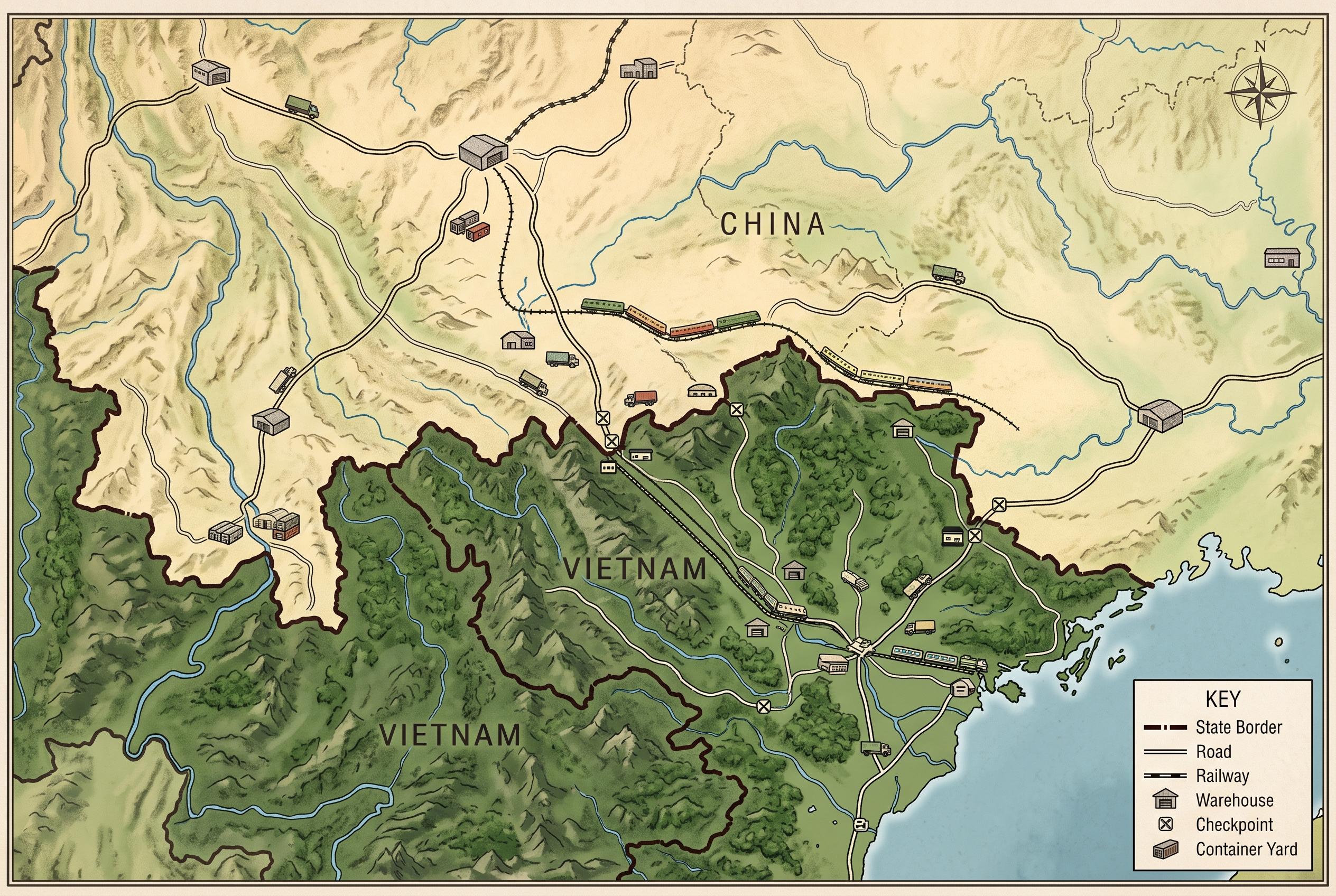
At the border crossings connecting China and northern Vietnam, trucks move regularly between the two countries carrying parts, machinery, and raw materials that support manufacturing activity in Vietnam. Trade across the border has become an extension of regional production networks, with businesses on both sides relying on road connections, supply chains, and relatively short transit times to support production.
This relationship has expanded significantly. China and Vietnam’s commercial ties have developed through their shared border and expanding logistics networks, supporting the movement of goods used across Vietnam’s manufacturing sector.
The importance of this border corridor extends beyond trade volume to its role in modern sourcing strategies. For manufacturers in electronics, mobile devices, and consumer goods, delivery speed can be an important supply-chain consideration alongside cost. Delayed components can affect production schedules, making cross-border logistics an important part of manufacturing operations. In many cases, the border functions as a connection between suppliers and production facilities within a broader regional supply chain.
Vietnam has benefited from this arrangement as manufacturing capacity expands and companies diversify production. As businesses seek additional sourcing options, Vietnam has become a production location for products that depend on regular shipments of parts and materials. This includes electronics manufacturing, where suppliers may require frequent deliveries of specialized components, as well as industries connected to textiles, machinery, and packaged consumer products. These activities contribute to an industrial ecosystem that depends on the movement of goods through northern border gates.
China remains an important source of upstream inputs for this system. Factories in Vietnam obtain machine parts, circuit boards, casings, tools, and other materials from Chinese suppliers for use in manufacturing and assembly. These connections extend beyond heavy industry to lifestyle products, mobile accessories, home devices, and other consumer goods. Cross-border trade supports both factory operations and the products that eventually reach consumer markets.
The logistics supporting this trade have developed alongside demand. Road freight remains an important part of the system because it provides flexibility and relatively fast transit. Trucking routes can accommodate production schedules, while border clearance procedures and warehouse networks support the movement of goods. Cold-chain transport, container handling, and customs processing also contribute to the logistics process. Greater predictability across these links can make it easier for companies to coordinate sourcing and manage inventories.
The structure of this trade also affects how businesses manage supply-chain risk. Reliance on a single manufacturing hub or transportation route can create potential bottlenecks, leading companies to distribute sourcing across multiple suppliers and regions. Vietnam provides proximity to China, an expanding manufacturing base, and logistics connections that support time-sensitive production. These factors are relevant to electronics and mobile supply chains, where component availability and delivery schedules can influence manufacturing operations.
Border trade also reflects broader changes in regional manufacturing. Companies increasingly operate across connected industrial zones rather than within isolated national production systems. A factory in northern Vietnam may receive components from China, assemble products, and dispatch finished goods as part of a coordinated production cycle. This process relies on transportation, customs coordination, and information exchange among suppliers, freight providers, and manufacturers. The border crossing is therefore one component of a larger production network.
For Vietnam, industrial activity associated with cross-border trade contributes to employment, investment, and demand for logistics services. Warehousing, trucking, packaging, and other support industries are connected to cargo movement. Factory clusters also create demand for infrastructure, including roads and border facilities, as well as services supporting workers and business operations. Trade consequently affects both import and export activity and the surrounding business environment.
The system also requires ongoing adjustments as trade volumes and production requirements change. Higher demand can place pressure on logistics capacity, while crossing delays, road congestion, or documentation issues can slow shipments. Businesses using time-sensitive sourcing models can be particularly affected by such disruptions. Companies may therefore use supply-chain visibility tools, forecasting, and multiple transportation options to manage changing conditions. These measures can provide greater flexibility when border operations are affected.
The importance of this corridor is particularly evident in electronics manufacturing. The sector depends on interconnected suppliers and the movement of components at different stages of production. A single product may include materials and subassemblies from several countries, with China supplying upstream inputs and Vietnam handling assembly or other production stages. Because electronics and mobile-device product cycles can be relatively short, cross-border material movement can affect production schedules, costs, and market availability.
Cross-border manufacturing also has implications for surrounding local economies. Manufacturing activity can contribute to employment, urban development, and consumer demand in areas near industrial zones. As workers and businesses establish themselves around these zones, demand can increase for housing, food, transportation, retail, hospitality, and other services. Local economic activity can therefore become increasingly connected to manufacturing and logistics operations.
For companies planning sourcing strategies, geography is one consideration alongside connectivity. Proximity to a supplier is most useful when transportation networks, customs processes, and warehousing capacity can support reliable movement. China-Vietnam border trade illustrates how logistics infrastructure can connect nearby production centers and support manufacturing operations. It also highlights the role of transportation routes, inventory timing, and supplier relationships in supply-chain planning.
The relationship between the two countries remains relevant to regional manufacturing because it supports production requirements on both sides. China provides a large manufacturing base and a broad range of industrial inputs, while Vietnam provides an expanding production platform with connections to international markets. The border crossings linking the two countries form part of a wider regional sourcing network, supported by logistics services, warehouse capacity, and transportation infrastructure.
For global manufacturing, the China-Vietnam border corridor provides an example of how trade, logistics, and industrial development interact. Manufacturing activity depends on the movement of materials, coordination between suppliers and production facilities, and infrastructure capable of supporting regular cargo flows. Whether the goods are machine parts, electronics components, or mobile accessories, transportation and logistics remain key elements of the production process.
The regular movement of trucks across the China-Vietnam border reflects the integration of regional supply chains. Sourcing strategies, electronics production, and cross-border logistics operate as interconnected elements of the manufacturing network. The efficiency of transportation routes, customs processes, and supporting infrastructure can therefore influence how goods move between suppliers, factories, and markets.
Takeaways
- - Border trade is a key part of Vietnam’s factory growth and sourcing strategy.
- - China remains a major upstream supplier for electronics, mobile, and industrial inputs.
- - Efficient logistics and short transit times are critical for modern manufacturing.
- - The trade corridor also supports local jobs, services, and broader lifestyle changes around industrial zones.
FAQ
Why is the China-Vietnam border important for manufacturing? It connects Chinese suppliers with Vietnamese factories through fast road logistics and reliable cross-border sourcing.
Which industries benefit most? Electronics, mobile devices, machinery, and other assembly-based industries benefit heavily from the trade flow.
Why do logistics matter so much here? Because production often depends on timely deliveries, and even small delays can disrupt factory schedules.
